The Saab 9-3, in its current form, has been with us for nearly a decade now, having made its debut in 2002. In that time, it has seen its maker go through tough times, before finally breaking free of parent General Motors' grasp and achieving 'independence', by way of a takeover from Dutch carmaker Spyker.
For quite a while, the 9-3 has had to shoulder the responsibility of being Saab's only new product of the 21st century, and thankfully it is a burden that has been relieved with the launch of the new 9-5. With Saab seemingly on its way to recovery, a new 9-3 is expected to be launched in 2013.
Before that happens though, Saab is giving its loyal servant a final boost, by teaming up with Swiss performance tuner Hirsch to give the 9-3 a powerful sending-off.
Exterior
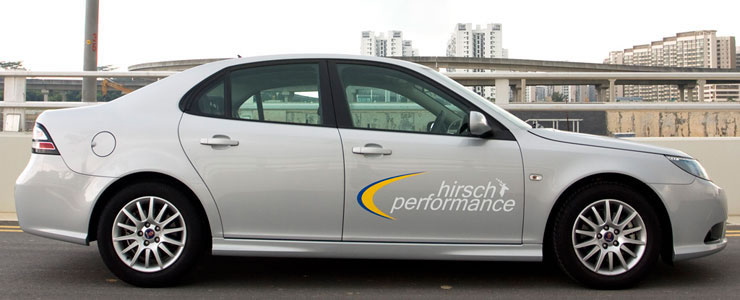
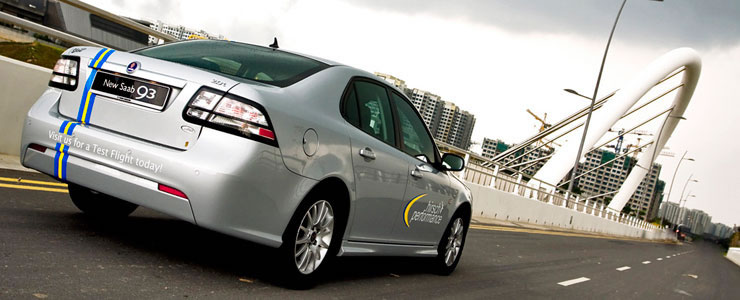
To be honest, I was actually expecting the Hirsch Performance 9-3 to come with a body kit to spruce up its looks. Unfortunately, that's just not how the Swedish roll. Aside from the few badges and stickers on our test car, and the yellow and blue stripes down the bonnet, roof and boot (signifying the Swedish flag), the 9-3 Hirsch looks just like any other 9-3 on the roads.
For quite a while, the 9-3 has had to shoulder the responsibility of being Saab's only new product of the 21st century, and thankfully it is a burden that has been relieved with the launch of the new 9-5. With Saab seemingly on its way to recovery, a new 9-3 is expected to be launched in 2013.
Before that happens though, Saab is giving its loyal servant a final boost, by teaming up with Swiss performance tuner Hirsch to give the 9-3 a powerful sending-off.
Exterior
To be honest, I was actually expecting the Hirsch Performance 9-3 to come with a body kit to spruce up its looks. Unfortunately, that's just not how the Swedish roll. Aside from the few badges and stickers on our test car, and the yellow and blue stripes down the bonnet, roof and boot (signifying the Swedish flag), the 9-3 Hirsch looks just like any other 9-3 on the roads.
 |
Having said that, the 9-3 still looks reasonably handsome despite its age - although in the current age, the car starts to look a bit conservative against its contemporaries.
The 9-3 actually received a facelift about three years ago, to keep it refreshed. Granted it didn't actually help it a whole lot, but if you take into account what Saab was going through at that time, you'll understand why the Swedish carmaker didn't really put in a lot of effort into revising its cars. It simply couldn't afford to.
But, Saabs have always been rather understated cars anyway. They don't have to shout out their prowess, preferring to quietly go along their business whilst letting the Germans boast and brag about their abilities. To that end, the 9-3 fits right into Saab's philosophy of unfussy performance.
 |
Interior
One area where Saab does stand out though, is their interior. Famed for its aeroplane-based designs, the 9-3's dashboard is simply classic Saab.
The look is decidedly simple, but everything works. You plug the ignition 'key' into the floor right by the gearshift lever, and release the handbrake that lies flush with the lower centre console. Feels different, but no less intuitive than most cars. The nifty cup holder design is also another Saab party trick.
The other Saab trademark feature is the Night Panel function. At a push of a button, Night Panel switches off all the lights on the instrument panel except for the speedometer up to 140km/h. Apparently this is to reduce glare when driving at night, and is something that is brought over from Saab's aircraft heritage.
One area where Saab does stand out though, is their interior. Famed for its aeroplane-based designs, the 9-3's dashboard is simply classic Saab.
The look is decidedly simple, but everything works. You plug the ignition 'key' into the floor right by the gearshift lever, and release the handbrake that lies flush with the lower centre console. Feels different, but no less intuitive than most cars. The nifty cup holder design is also another Saab party trick.
The other Saab trademark feature is the Night Panel function. At a push of a button, Night Panel switches off all the lights on the instrument panel except for the speedometer up to 140km/h. Apparently this is to reduce glare when driving at night, and is something that is brought over from Saab's aircraft heritage.
Getting comfortable in the driver's seat takes a while, but once you do, the seats feel snug and soothing, which is what you would expect from the Swedes. Leather upholstery all around gives the interior a reasonably luxurious feel.
For 2011, Saab's authorised distributor in Singapore, Trans Eurokars, has fitted the 9-3 with a multi-function stereo system in place of the factory unit. While it does look a bit odd in the otherwise-classy interior, the system does pack quite a fair bit of features, such as Bluetooth capability, GPS navigation and even a rear view camera.
While as a whole, the Saab 9-3's interior feels quite solidly put together, there are a few bits which seem quite out of place for a car in this price range. The indicator and wiper stalks, in particular, feel like they belong in a car that cost much, much less.
For 2011, Saab's authorised distributor in Singapore, Trans Eurokars, has fitted the 9-3 with a multi-function stereo system in place of the factory unit. While it does look a bit odd in the otherwise-classy interior, the system does pack quite a fair bit of features, such as Bluetooth capability, GPS navigation and even a rear view camera.
While as a whole, the Saab 9-3's interior feels quite solidly put together, there are a few bits which seem quite out of place for a car in this price range. The indicator and wiper stalks, in particular, feel like they belong in a car that cost much, much less.
 |
The Drive
Let's throw out the stats and figures first. The Hirsch Performance-tuned Saab 9-3 produces 195bhp and 310Nm of torque, compared with 150bhp and 240Nm of torque for the standard Saab 9-3 2.0T. Top speed goes up from 210km/h to 230km/h, while the 0-100km/h sprint is dispatched in 8.2 seconds for the 9-3 Hirsch, compared to a leisurely 10.7 seconds for the standard 9-3.
On the go, the car certainly does feel brisk enough, with the power readily available upon the request of your right foot. However, the most impressive thing is the way the power is delivered.
If you are expecting it to come with lots of revs and a huge roar of noise, then sorry, you may be disappointed. The Saab 9-3 Hirsch behaves in a much more disciplined fashion, providing its extra boost in a smooth and controlled manner. There is a teeny weeny bit of turbo lag initially, but that is quickly dispensed with once the power kicks in.
You may be further deceived by the car's on-road behaviour. The Saab is generally a comfortable car to drive, as it soaks ups road bumps and undulations very well. This may come as a surprise considering the way the car is set-up.
The 9-3 Hirsch comes with the same suspension settings as the 9-3 Aero model, which helps it cope with the extra horsepower of the car. And it does help, as the 9-3 Hirsch handles competently, with its nimble chassis and well-weighted and neutral steering. The brakes, with their sharp response, stop the car with much confidence should you need to.
Let's throw out the stats and figures first. The Hirsch Performance-tuned Saab 9-3 produces 195bhp and 310Nm of torque, compared with 150bhp and 240Nm of torque for the standard Saab 9-3 2.0T. Top speed goes up from 210km/h to 230km/h, while the 0-100km/h sprint is dispatched in 8.2 seconds for the 9-3 Hirsch, compared to a leisurely 10.7 seconds for the standard 9-3.
On the go, the car certainly does feel brisk enough, with the power readily available upon the request of your right foot. However, the most impressive thing is the way the power is delivered.
If you are expecting it to come with lots of revs and a huge roar of noise, then sorry, you may be disappointed. The Saab 9-3 Hirsch behaves in a much more disciplined fashion, providing its extra boost in a smooth and controlled manner. There is a teeny weeny bit of turbo lag initially, but that is quickly dispensed with once the power kicks in.
You may be further deceived by the car's on-road behaviour. The Saab is generally a comfortable car to drive, as it soaks ups road bumps and undulations very well. This may come as a surprise considering the way the car is set-up.
The 9-3 Hirsch comes with the same suspension settings as the 9-3 Aero model, which helps it cope with the extra horsepower of the car. And it does help, as the 9-3 Hirsch handles competently, with its nimble chassis and well-weighted and neutral steering. The brakes, with their sharp response, stop the car with much confidence should you need to.
There is, however, something that is really puzzling about this car. At speeds above 110km/h, there is a warning beep, similar to those on commercial vehicles, which tells you that you're above the speed limit. Understandably this is for safety reasons, but it is really strange to have this on a car that has been tuned for performance. There seemed to be no way of switching it off too.
Conclusion
Saabs have always appealed to people who are different, who shy away from the mainstream, yet don't want to be too conspicuous.
In many ways, the Saab 9-3 Hirsch sums up exactly what Saab is all about. It looks subtle and unassuming on the outside, but underneath its modest skin, it packs quite a lot of substance.
If that describes you as well, I can recommend no better car than this.
We don't know what the new Saab 9-3 will be like until it arrives in a couple of years' time, but this could be your last chance to own an old-school Saab with a punch, before it gets pensioned off forever.
What do you think? Jot down your opinions at the comment box below.
Conclusion
Saabs have always appealed to people who are different, who shy away from the mainstream, yet don't want to be too conspicuous.
In many ways, the Saab 9-3 Hirsch sums up exactly what Saab is all about. It looks subtle and unassuming on the outside, but underneath its modest skin, it packs quite a lot of substance.
If that describes you as well, I can recommend no better car than this.
We don't know what the new Saab 9-3 will be like until it arrives in a couple of years' time, but this could be your last chance to own an old-school Saab with a punch, before it gets pensioned off forever.
What do you think? Jot down your opinions at the comment box below.