The modern Internal Combustion Engine (ICE) was first perfected for practical use in 1862. Years later, Karl Benz put the engine into his Benz Patent Motorwagen and in 1885 created the first automobile that could sustain motion entirely on its own.
Since then, the Benz Patent Motorwagen has given birth to larger, safer and more reliable automobiles. While the basic principle of the ICE has not changed much, its power and efficiency has been continually perfected over the last 150 years.
In recent times though, the ICE has become a victim of its own success. As the number of vehicles on the road exceeds 600 million, the threat of carbon emissions pose to the environment is getting the attention of government bodies around the world. And further with the number of vehicles on the roads expected to double by 2030, it has become crucial that our civilisation find cleaner and greener alternatives of propulsion before it is too late.
Mercedes-Benz leads the initiative by investing heavily into their BlueEFFICIENCY technologies through building more efficient ICEs while at the same time exploring new technology frontiers like hybridisation and electric drive technology. The BlueEFFICIENCY technologies take the quest for efficiency further by re-thinking a car's design to maximise its efficiency.
We take a look at some of the latest engine technologies that the German manufacturer is implementing on its current models and what the future of propulsion will be like.
Charged Gasoline Injection (CGI) - Lean, mean & green
In 2006, Mercedes-Benz became the first car manufacturer to implement spray-guided injection technology into mass production. While other manufacturers continue to use wall-guided direction injection systems, the latest C-class and E-class models from Mercedes-Benz are equipped with CGI engines. The reason CGI engines are more superior to conventional fuel injection technologies is that the fuel is sprayed directly onto the cylinders. This allows the engine to spray only the precise amount of fuel required for any given driving situation. Another advantage of this is that every drop of fuel is used in the process with no wastage. CGI technology has helped Mercedes-Benz models to achieve lower fuel consumption and CO2 emissions by up to 10% while improving the power and torque of the engine. While CGI equipped engines come with a smaller capacity, they actually pack more horses and torque than engines with larger capacities.
Natural Gas Technology (NGT) - It's not just hot air
Natural Gas Technology allows drivers to switch between petrol and Natural Gas at the touch of a button. And unlike older gas-powered vehicles, running on Natural Gas has no effect on the engine's power and torque figures. What you get in return are lower emissions, engine noise and running costs. Natural Gas powered vehicles reduce as much as 80% of pollutant emissions and as much as 20% of CO2. This technology is currently available in the B180 NGT.
Diesel technology - No longer dirty
If your memory of diesel powered cars consists of dirty sputtering examples, it is time to change that perception. The modern diesel engine in passenger cars are so refined that they are nearly indistinguishable from their petrol cousins. So well regarded are diesels that some manufacturers have gone on to producing high-performance models based on diesel powerplants.
The latest diesel engines are optimised for better and cleaner combustion while at the same time through complex catalytic converters, produce less carbon monoxide, hydrocarbons and particulate emissions by means of a chemical reaction. In the end, the only by-products of these processes are water, harmless nitrogen and a weight lifted off you knowing you're doing your bit for the environment.
Since then, the Benz Patent Motorwagen has given birth to larger, safer and more reliable automobiles. While the basic principle of the ICE has not changed much, its power and efficiency has been continually perfected over the last 150 years.
In recent times though, the ICE has become a victim of its own success. As the number of vehicles on the road exceeds 600 million, the threat of carbon emissions pose to the environment is getting the attention of government bodies around the world. And further with the number of vehicles on the roads expected to double by 2030, it has become crucial that our civilisation find cleaner and greener alternatives of propulsion before it is too late.
Mercedes-Benz leads the initiative by investing heavily into their BlueEFFICIENCY technologies through building more efficient ICEs while at the same time exploring new technology frontiers like hybridisation and electric drive technology. The BlueEFFICIENCY technologies take the quest for efficiency further by re-thinking a car's design to maximise its efficiency.
We take a look at some of the latest engine technologies that the German manufacturer is implementing on its current models and what the future of propulsion will be like.
Charged Gasoline Injection (CGI) - Lean, mean & green
In 2006, Mercedes-Benz became the first car manufacturer to implement spray-guided injection technology into mass production. While other manufacturers continue to use wall-guided direction injection systems, the latest C-class and E-class models from Mercedes-Benz are equipped with CGI engines. The reason CGI engines are more superior to conventional fuel injection technologies is that the fuel is sprayed directly onto the cylinders. This allows the engine to spray only the precise amount of fuel required for any given driving situation. Another advantage of this is that every drop of fuel is used in the process with no wastage. CGI technology has helped Mercedes-Benz models to achieve lower fuel consumption and CO2 emissions by up to 10% while improving the power and torque of the engine. While CGI equipped engines come with a smaller capacity, they actually pack more horses and torque than engines with larger capacities.
Natural Gas Technology (NGT) - It's not just hot air
Natural Gas Technology allows drivers to switch between petrol and Natural Gas at the touch of a button. And unlike older gas-powered vehicles, running on Natural Gas has no effect on the engine's power and torque figures. What you get in return are lower emissions, engine noise and running costs. Natural Gas powered vehicles reduce as much as 80% of pollutant emissions and as much as 20% of CO2. This technology is currently available in the B180 NGT.
Diesel technology - No longer dirty
If your memory of diesel powered cars consists of dirty sputtering examples, it is time to change that perception. The modern diesel engine in passenger cars are so refined that they are nearly indistinguishable from their petrol cousins. So well regarded are diesels that some manufacturers have gone on to producing high-performance models based on diesel powerplants.
The latest diesel engines are optimised for better and cleaner combustion while at the same time through complex catalytic converters, produce less carbon monoxide, hydrocarbons and particulate emissions by means of a chemical reaction. In the end, the only by-products of these processes are water, harmless nitrogen and a weight lifted off you knowing you're doing your bit for the environment.
The Mercedes-Benz E350, ML350 and GL350 in the BlueTEC line-up reduce nitrogen oxides by as much as 80%. In fact, the latest engines from the BlueTEC line are so advanced, they already comply with EU6 emissions regulations which only come into effect in 2014.
Hybrids - A marriage of two worlds
Hybrids are the interim solution that automotive manufacturers have adopted for greater efficiency in petrol vehicles. The marriage of a conventional petrol engine with an electric drive combined with intelligent technology helps hybrids achieve remarkable consumption figures.
Mercedes-Benz has specially developed a lithium-ion with no less than 25 patents. The 120-volt battery is used in their hybrid models and was the first of its kind to be used in series production. Extremely compact with a high-storage capacity, it has reduced fuel consumption in urban use by as much as 20%.
Diesel hybrids - Guilt free motoring for larger vehicles
In recent years, large vehicles like SUVs have been penalised relentlessly as an unnecessary excess due to their high fuel consumption rates and high CO2 emissions output. When you take the high torque, low fuel consumption and lower running costs of diesel engines and marry it with the highly efficient hybrid electric drive technology, the results can be quite spectacular.
Mercedes-Benz doing just that with their GLK 300 BlueTEC Hybrid SUV has achieved great results. The combination of high torque from the diesel engine and the instant torque from the motor gives the large SUV staggering performance. More importantly, this performance does not come at the price of the environment. The GLK 300 BlueTEC Hybrid reduces fuel consumption and emissions by up to 20%.
Karl Benz would be amazed at the incredible leaps that manufacturers like Mercedes-Benz have made since his Benz Patent Motorwagen. The next critical step for the automotive industry lies in freeing themselves entirely from the guilt of environmental complications caused by fossil fuels. In our next instalment, we take a look at the progress Mercedes-Benz has made towards zero emissions propulsion technologies.
For more information visit www.mercedes-benz.com.sg
Hybrids - A marriage of two worlds
Hybrids are the interim solution that automotive manufacturers have adopted for greater efficiency in petrol vehicles. The marriage of a conventional petrol engine with an electric drive combined with intelligent technology helps hybrids achieve remarkable consumption figures.
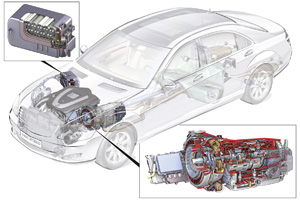 |
Mercedes-Benz has specially developed a lithium-ion with no less than 25 patents. The 120-volt battery is used in their hybrid models and was the first of its kind to be used in series production. Extremely compact with a high-storage capacity, it has reduced fuel consumption in urban use by as much as 20%.
Diesel hybrids - Guilt free motoring for larger vehicles
In recent years, large vehicles like SUVs have been penalised relentlessly as an unnecessary excess due to their high fuel consumption rates and high CO2 emissions output. When you take the high torque, low fuel consumption and lower running costs of diesel engines and marry it with the highly efficient hybrid electric drive technology, the results can be quite spectacular.
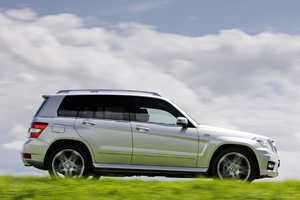 |
Mercedes-Benz doing just that with their GLK 300 BlueTEC Hybrid SUV has achieved great results. The combination of high torque from the diesel engine and the instant torque from the motor gives the large SUV staggering performance. More importantly, this performance does not come at the price of the environment. The GLK 300 BlueTEC Hybrid reduces fuel consumption and emissions by up to 20%.
Karl Benz would be amazed at the incredible leaps that manufacturers like Mercedes-Benz have made since his Benz Patent Motorwagen. The next critical step for the automotive industry lies in freeing themselves entirely from the guilt of environmental complications caused by fossil fuels. In our next instalment, we take a look at the progress Mercedes-Benz has made towards zero emissions propulsion technologies.
For more information visit www.mercedes-benz.com.sg