View page in desktop
|
Report error
  •   Apple app store icon
  • Google play store icon
Terms of Service
|
Privacy Policy
|
PDPA
|
Site Map
©2004-2026 Sgcarmart, Singapore. All rights reserved.
  • Home
  • Car Articles
  • features
  • features Listings
  • Features
  • Right-sizing our 7% public transport fare hike

    13 Oct 2023

    |

    2,807 views

    Beyond just dollar costs, it's only fair to involve commuting pattern shifts, and the safety and efficiency of our public transportation in conversations.

    We may not realise it, but public transportation is integral to our lives. It takes us to places, accompanies us from the first up to the last mile of our journeys, and sometimes functions as moving meeting points for our appointments. Many of us in Singapore grow up travelling via public transport every day and continue to do so well into adulthood. It's little wonder how and why issues relating to our MRT and public buses make their way into our meal discussions most if not all the time. 

    Recently, the spotlight is on the public transport fare hike due to take effect from 23 December 2023. The trigger for alarm is its overall increase by 7% - the steepest since 2019 when fares rose by the same percentage point. It really does not help that the fare hike comes amidst climbing inflation and skyrocketing COE prices. Naturally, we get stuck in a rut thinking that everything is costly these days. And we are not wrong to think so given the almost yearly fare revisions that more often than not lean towards an upward trend. 
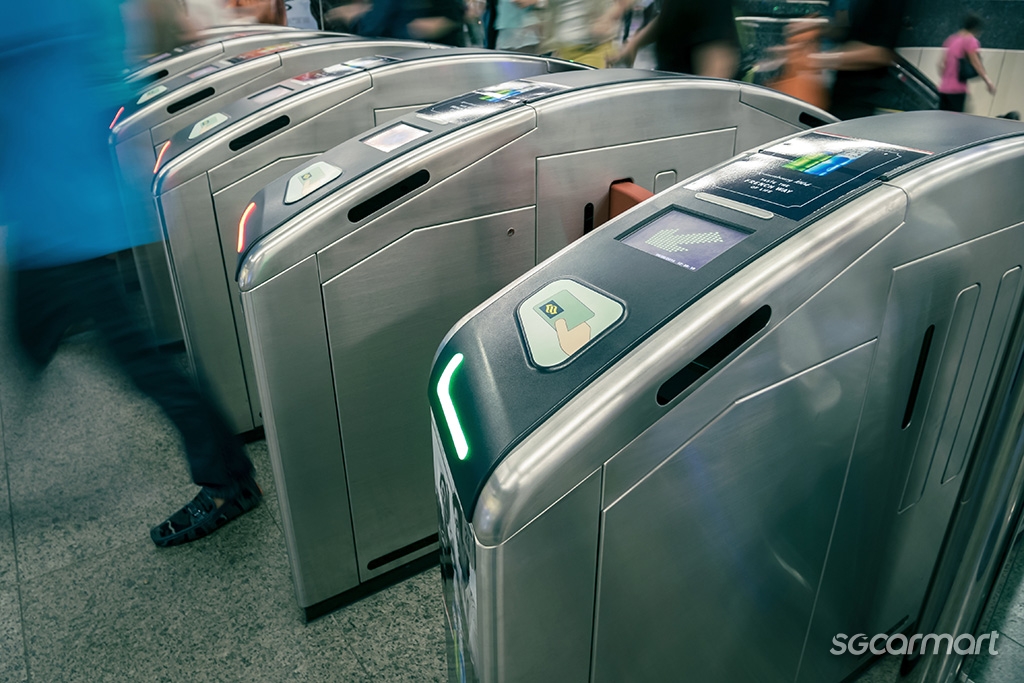
    Historically, our public transport fares have seen increases of 10-cents for adult commuters in some years

    As a working adult today, I'm still a heavy user of our public transport system. And since the upcoming changes mean my pockets are going to take a hit, I got curious and did some digging into the fare adjustment history. Two things that stood out to me: Barring the rates charged on payment by cash or concession stamps and tickets, increases in our public transport fares were capped at 10 cents through 1990 to 2022; in 2016, a solely distance-based fares approach was implemented for both buses and rails. 

    Just as all things in life are relative, so are the prices of our train and bus rides. 11 cents may seem like a lot, but it will probably feel more manageable when we realise that we have lived through 10-cent hikes. It is also worth remembering how far we have come with public transportation. Once upon a time, our buses had no air-conditioning and were installed with windows that had to be manually slid open to let in breezes of air. The rail network was much less extensive back then, when only the East-West Line and North-South Line, and Bukit Panjang LRT existed. 

    Admittedly, there will be people who argue that the improvements in service don't justify the fare hike. No one enjoys bleeding financially. But cost increases will always remain a point of frustration and contention for us, and if unavoidable, perhaps what we should do is to consider how we could make the higher fares a less sizeable monster for us to deal with. One way to start is by framing it in the context of our relationship with public transit. 

    To commute or not

    The pertinent question today is whether to commute and not to where to travel. 

    Once a rare practice in Singapore, flexible work arrangements have pretty much normalised post COVID-19 with most companies offering it as an option to employees. Accordingly, our travel patterns have shifted. If we work from home, our commutes, if any at all, tend to be shorter and lower in frequency than they used to pre-pandemic. These are the supermarket runs, meal trips, or gym workouts that are typically within proximity of our homes. Trips to the office are ridden with the need to accomplish very specific missions such as attending meetings, picking up work-related materials, or mingling with others and then we leave after. 
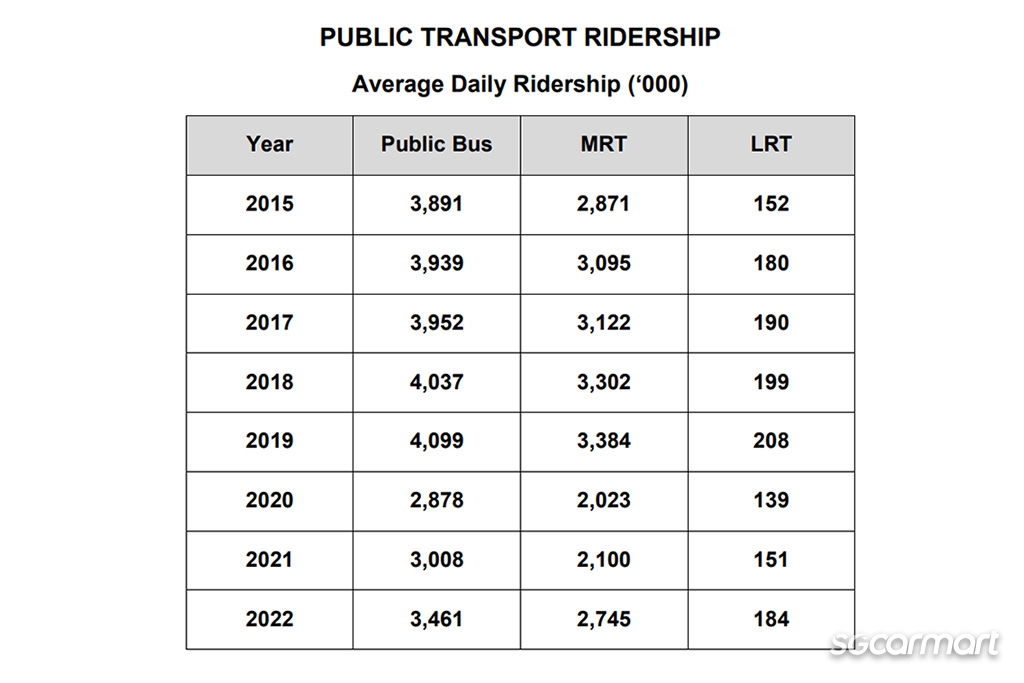
    According to LTA data, daily LRT ridership remained relatively steady through COVID-19, with a stronger recovery rate compared to MRT and buses 

    Interestingly, figures collected by LTA tell the same tale. Overall average daily ridership of public buses and MRT fell between 2015 and 2022, but that for the LRT bucked the trend. For those who aren't familiar with the LRT, it is a feeder service that bridges short-distance travels from MRT stations and bus interchanges to surrounding housing estates and areas. Compared to 2019 when the rates of our daily commutes peaked, public bus and MRT rides in 2022 are still at 90% of pre-COVID-19 levels. The LRT, though, has seen a healthy stream of riders that are almost on par with the numbers in 2017. 

    Analysts have no way of extrapolating whether our use of public transportation will stabilise for good at a new lower level. But if existing arrangements were to sustain, the possibility of us asking if there's a need for us to commute at all will likely continue until the next wave of disruption shakes up our lives again. 

    The science of Singapore's public transport fare adjustments

    Commuting less doesn't necessarily mean the fare hike has no impact on us. Though, it does reduce the incidences of us having to bear the brunt of the higher costs. 

    Before we delve into the woes of more expensive public transit rides, it will do us good to understand how the 7% fare hike came to be. Like they say, better the devil you know than the devil you don't. 
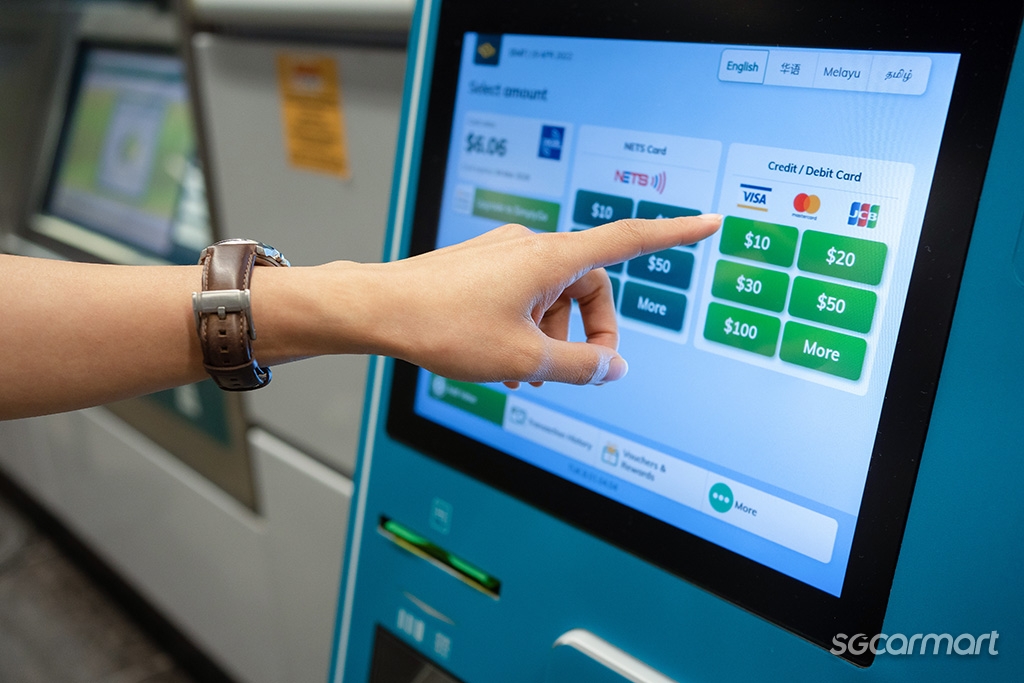
    Any revisions to our public transport fares are adjusted for inflation, wage growth and energy costs alongside components for productivity and capacity via a fare adjustment formula

    All public transport fare revisions are derived from a fare adjustment formula. The magic number that's generated accounts for inflation, wage growth and energy costs. There are two more components, which the PTC updated in April this year to capture the productivity contributions of public transport operators and adjustments to capacity. The objective here, is to make fare changes less volatile. This means that if the PTC had worked out the latest fare adjustment based on the old formula, we may have seen an astronomical percentage hike because passenger load suffered a huge blow during COVID-19. And as we have discussed, ridership has yet to recover to pre-pandemic levels. 

    A fare hike will remain a fare hike. But is it as bad as we think?

    In the recent revision to public transport fares, higher costs will kick in across all passenger profiles for the first 4.2km and increase by another 1 cent for distances longer than that. 

    Even as adult and concession card fares rise, there is a silver lining especially for commuter groups with lower purchasing power. A monthly hybrid concession pass that can be used for unlimited rides on trains and buses (except express bus services), and which will be cheaper than a monthly travel pass, will be rolled out in December 2023. There will also be public transport vouchers given out to help lower-income households cope with the fare increases.

    In the 2022 Public Transport Customer Satisfaction Survey, reliability and travel time scored highly as important service attributes across our MRT and bus services

    But a context that focuses only on the dollar cost of fares will not paint us an accurate picture of the affordability of our public transit. Perhaps we should also give credit to the safety, reliability and efficiency of our public buses and trains that we so often take for granted. If we look around us, we can't deny that our public transport system ranks highly in Asia and on the world map. And when we re-consider affordability in relation to these factors, the 7% fare hike may not seem as punitive as we imagine it to be.


    Denise Phua
    Story by Denise Phua
    Denise pictures herself living in a tiny house parked on the green fields of New Zealand, complete with a huge hammock and a little vegetable garden.
    Photos by LTA, Adobe Stock
    24.4k

    Tags

    commentary public transport public transit commutes commuters trains buses mrt lrt fare hike transport network

    AllReviewsNewsAdviceFeaturesVideos
    • Home
    • Car Articles
    • features
    • features Listings
    • Features

    Right-sizing our 7% public transport fare hike

    13 Oct 2023

    |

    2,807 views

    Beyond just dollar costs, it's only fair to involve commuting pattern shifts, and the safety and efficiency of our public transportation in conversations.

    We may not realise it, but public transportation is integral to our lives. It takes us to places, accompanies us from the first up to the last mile of our journeys, and sometimes functions as moving meeting points for our appointments. Many of us in Singapore grow up travelling via public transport every day and continue to do so well into adulthood. It's little wonder how and why issues relating to our MRT and public buses make their way into our meal discussions most if not all the time. 

    Recently, the spotlight is on the public transport fare hike due to take effect from 23 December 2023. The trigger for alarm is its overall increase by 7% - the steepest since 2019 when fares rose by the same percentage point. It really does not help that the fare hike comes amidst climbing inflation and skyrocketing COE prices. Naturally, we get stuck in a rut thinking that everything is costly these days. And we are not wrong to think so given the almost yearly fare revisions that more often than not lean towards an upward trend. 

    Historically, our public transport fares have seen increases of 10-cents for adult commuters in some years

    As a working adult today, I'm still a heavy user of our public transport system. And since the upcoming changes mean my pockets are going to take a hit, I got curious and did some digging into the fare adjustment history. Two things that stood out to me: Barring the rates charged on payment by cash or concession stamps and tickets, increases in our public transport fares were capped at 10 cents through 1990 to 2022; in 2016, a solely distance-based fares approach was implemented for both buses and rails. 

    Just as all things in life are relative, so are the prices of our train and bus rides. 11 cents may seem like a lot, but it will probably feel more manageable when we realise that we have lived through 10-cent hikes. It is also worth remembering how far we have come with public transportation. Once upon a time, our buses had no air-conditioning and were installed with windows that had to be manually slid open to let in breezes of air. The rail network was much less extensive back then, when only the East-West Line and North-South Line, and Bukit Panjang LRT existed. 

    Admittedly, there will be people who argue that the improvements in service don't justify the fare hike. No one enjoys bleeding financially. But cost increases will always remain a point of frustration and contention for us, and if unavoidable, perhaps what we should do is to consider how we could make the higher fares a less sizeable monster for us to deal with. One way to start is by framing it in the context of our relationship with public transit. 

    To commute or not

    The pertinent question today is whether to commute and not to where to travel. 

    Once a rare practice in Singapore, flexible work arrangements have pretty much normalised post COVID-19 with most companies offering it as an option to employees. Accordingly, our travel patterns have shifted. If we work from home, our commutes, if any at all, tend to be shorter and lower in frequency than they used to pre-pandemic. These are the supermarket runs, meal trips, or gym workouts that are typically within proximity of our homes. Trips to the office are ridden with the need to accomplish very specific missions such as attending meetings, picking up work-related materials, or mingling with others and then we leave after. 

    According to LTA data, daily LRT ridership remained relatively steady through COVID-19, with a stronger recovery rate compared to MRT and buses 

    Interestingly, figures collected by LTA tell the same tale. Overall average daily ridership of public buses and MRT fell between 2015 and 2022, but that for the LRT bucked the trend. For those who aren't familiar with the LRT, it is a feeder service that bridges short-distance travels from MRT stations and bus interchanges to surrounding housing estates and areas. Compared to 2019 when the rates of our daily commutes peaked, public bus and MRT rides in 2022 are still at 90% of pre-COVID-19 levels. The LRT, though, has seen a healthy stream of riders that are almost on par with the numbers in 2017. 

    Analysts have no way of extrapolating whether our use of public transportation will stabilise for good at a new lower level. But if existing arrangements were to sustain, the possibility of us asking if there's a need for us to commute at all will likely continue until the next wave of disruption shakes up our lives again. 

    The science of Singapore's public transport fare adjustments

    Commuting less doesn't necessarily mean the fare hike has no impact on us. Though, it does reduce the incidences of us having to bear the brunt of the higher costs. 

    Before we delve into the woes of more expensive public transit rides, it will do us good to understand how the 7% fare hike came to be. Like they say, better the devil you know than the devil you don't. 

    Any revisions to our public transport fares are adjusted for inflation, wage growth and energy costs alongside components for productivity and capacity via a fare adjustment formula

    All public transport fare revisions are derived from a fare adjustment formula. The magic number that's generated accounts for inflation, wage growth and energy costs. There are two more components, which the PTC updated in April this year to capture the productivity contributions of public transport operators and adjustments to capacity. The objective here, is to make fare changes less volatile. This means that if the PTC had worked out the latest fare adjustment based on the old formula, we may have seen an astronomical percentage hike because passenger load suffered a huge blow during COVID-19. And as we have discussed, ridership has yet to recover to pre-pandemic levels. 

    A fare hike will remain a fare hike. But is it as bad as we think?

    In the recent revision to public transport fares, higher costs will kick in across all passenger profiles for the first 4.2km and increase by another 1 cent for distances longer than that. 

    Even as adult and concession card fares rise, there is a silver lining especially for commuter groups with lower purchasing power. A monthly hybrid concession pass that can be used for unlimited rides on trains and buses (except express bus services), and which will be cheaper than a monthly travel pass, will be rolled out in December 2023. There will also be public transport vouchers given out to help lower-income households cope with the fare increases.

    In the 2022 Public Transport Customer Satisfaction Survey, reliability and travel time scored highly as important service attributes across our MRT and bus services

    But a context that focuses only on the dollar cost of fares will not paint us an accurate picture of the affordability of our public transit. Perhaps we should also give credit to the safety, reliability and efficiency of our public buses and trains that we so often take for granted. If we look around us, we can't deny that our public transport system ranks highly in Asia and on the world map. And when we re-consider affordability in relation to these factors, the 7% fare hike may not seem as punitive as we imagine it to be.
    Denise Phua
    Story by Denise Phua
    Denise pictures herself living in a tiny house parked on the green fields of New Zealand, complete with a huge hammock and a little vegetable garden.
    Photos by LTA, Adobe Stock
    24.4k

    Tags

    commentary public transport public transit commutes commuters trains buses mrt lrt fare hike transport network

    Newsletter

    Be Notified On The Latest News

    Newsletter

    Be Notified On The Latest News

    You May Also Like

    The BYD Sealion 8 seven-seater SUV arrives in Singapore

    The BYD Sealion 8 seven-seater SUV arrives in Singapore

    New cars are safer: Opt for one when you can

    New cars are safer: Opt for one when you can

    Maxus MIFA 7 Elite: Going big for the little moments

    Maxus MIFA 7 Elite: Going big for the little moments

    Sgcarmart Explores: Bras Basah!

    Sgcarmart Explores: Bras Basah!

    The all new XPENG Mona L03 is one smart coupe SUV

    The all new XPENG Mona L03 is one smart coupe SUV

    Is parallel import hesitancy growing among car buyers?

    Is parallel import hesitancy growing among car buyers?

    Don't get yourself trapped in your high-tech EV

    Don't get yourself trapped in your high-tech EV

    Opinion: Why do we even need green number plates?

    Opinion: Why do we even need green number plates?

    Sgcarmart Explores: East Coast Park!

    Sgcarmart Explores: East Coast Park!

    Hongqi Singapore opens its showroom doors

    Hongqi Singapore opens its showroom doors

    Must-Have Car Accessories Every EV Driver Should Own

    Must-Have Car Accessories Every EV Driver Should Own

    The rise of PHEVs: A closer look at the numbers

    The rise of PHEVs: A closer look at the numbers

    Ferrari 849 Testarossa Spider - with the sky included

    Ferrari 849 Testarossa Spider - with the sky included

    Tesla launches Model Y L in Singapore, first six-seater here

    Tesla launches Model Y L in Singapore, first six-seater here

    Mercedes-Benz GLB250+ Review

    Mercedes-Benz GLB250+ Review

    5 trends to look out for in 2026

    5 trends to look out for in 2026

    You May Also Like

    The BYD Sealion 8 seven-seater SUV arrives in Singapore

    The BYD Sealion 8 seven-seater SUV arrives in Singapore

    New cars are safer: Opt for one when you can

    New cars are safer: Opt for one when you can

    Maxus MIFA 7 Elite: Going big for the little moments

    Maxus MIFA 7 Elite: Going big for the little moments

    Sgcarmart Explores: Bras Basah!

    Sgcarmart Explores: Bras Basah!

    The all new XPENG Mona L03 is one smart coupe SUV

    The all new XPENG Mona L03 is one smart coupe SUV

    Is parallel import hesitancy growing among car buyers?

    Is parallel import hesitancy growing among car buyers?

    Don't get yourself trapped in your high-tech EV

    Don't get yourself trapped in your high-tech EV

    Opinion: Why do we even need green number plates?

    Opinion: Why do we even need green number plates?

    Sgcarmart Explores: East Coast Park!

    Sgcarmart Explores: East Coast Park!

    Hongqi Singapore opens its showroom doors

    Hongqi Singapore opens its showroom doors

    Must-Have Car Accessories Every EV Driver Should Own

    Must-Have Car Accessories Every EV Driver Should Own

    The rise of PHEVs: A closer look at the numbers

    The rise of PHEVs: A closer look at the numbers

    Ferrari 849 Testarossa Spider - with the sky included

    Ferrari 849 Testarossa Spider - with the sky included

    Tesla launches Model Y L in Singapore, first six-seater here

    Tesla launches Model Y L in Singapore, first six-seater here

    Mercedes-Benz GLB250+ Review

    Mercedes-Benz GLB250+ Review

    5 trends to look out for in 2026

    5 trends to look out for in 2026

    Related Articles

    Sgcarmart Explores: Bras Basah!

    Sgcarmart Explores: Bras Basah!

    New cars are safer: Opt for one when you can

    New cars are safer: Opt for one when you can

    ERP 2.0: 5 things we know, 2 things we don't

    ERP 2.0: 5 things we know, 2 things we don't

    IM6 Electric Performance Review

    IM6 Electric Performance Review

    The BYD Sealion 8 seven-seater SUV arrives in Singapore

    The BYD Sealion 8 seven-seater SUV arrives in Singapore

    Mercedes-Benz GLB250+ Review

    Mercedes-Benz GLB250+ Review

    Deepal S05 Electric Review

    Deepal S05 Electric Review

    Is parallel import hesitancy growing among car buyers?

    Is parallel import hesitancy growing among car buyers?

    Related Articles

    Sgcarmart Explores: Bras Basah!

    Sgcarmart Explores: Bras Basah!

    New cars are safer: Opt for one when you can

    New cars are safer: Opt for one when you can

    ERP 2.0: 5 things we know, 2 things we don't

    ERP 2.0: 5 things we know, 2 things we don't

    IM6 Electric Performance Review

    IM6 Electric Performance Review

    The BYD Sealion 8 seven-seater SUV arrives in Singapore

    The BYD Sealion 8 seven-seater SUV arrives in Singapore

    Mercedes-Benz GLB250+ Review

    Mercedes-Benz GLB250+ Review

    Deepal S05 Electric Review

    Deepal S05 Electric Review

    Is parallel import hesitancy growing among car buyers?

    Is parallel import hesitancy growing among car buyers?