View page in desktop
|
Report error
  •   Apple app store icon
  • Google play store icon
Terms of Service
|
Privacy Policy
|
PDPA
|
Site Map
©2004-2026 Sgcarmart, Singapore. All rights reserved.
  • Home
  • Car Articles
  • features
  • features Listings
  • Features
  • Road tax should be made more transparent and simpler

    21 Jul 2021

    |

    24,849 views

    The road tax formula in Singapore should be made more transparent and simpler to make sense to car owners and drivers alike.


    I just renewed my road tax, and since it's a COE car (which means its COE has been renewed before), I realised how ridiculous our system can actually be.

    For one, since it's zero growth, renewing your current car is the right thing to do. So why am I penalised for it? Secondly, if the road tax for a 1.0-litre petrol-powered car is $390 per annum, why do owners of a 2.0-litre petrol-powered car have to pay $1,194 a year? Mathematically, shouldn't an owner of a 2.0-litre petrol-powered car pay $780 a year?

    This got me thinking - how does our road tax system even work? 

    Road tax formula in Singapore

    Engine Capacity (EC)Road Tax Formula (per annum)
    EC<=600 ccS$400 x 0.782
    600 cc < EC <= 1000 cc[S$400 + 0.25 x (EC - 600)] x 0.782
    1000 cc < EC <= 1600 cc[S$500 + 0.75 x (EC - 1000)] x 0.782
    1600 cc < EC <= 3000 cc[S$950 + 1.5 x (EC - 1600)] x 0.782
    EC > 3000 cc[S$3050 + 2.0 x (EC - 3000)] x 0.782
    This is the current road tax formula in Singapore, of which a lot of people do not know how the formula came about

    Wait, what are you complaining about?

    The current road tax formula is a complicated structure based around engine capacity
    There are several things to complain about our system here. For starters, the road tax formula isn't a one-formula-use-all, which means based on the table shown above, the Engine Capacity (EC) is a variable that no busy Singaporean like you and me knows how it came about.

    And, what exactly is the mathematical rationale of the current road tax structure?

    Back in 2009, our then Finance Minister Tharman Shanmugaratnam said that the basic objective of our road and vehicle taxes is to control congestion on our roads. Through upfront ownership taxes, road tax and fuel tax, the Government seeks to manage road use.
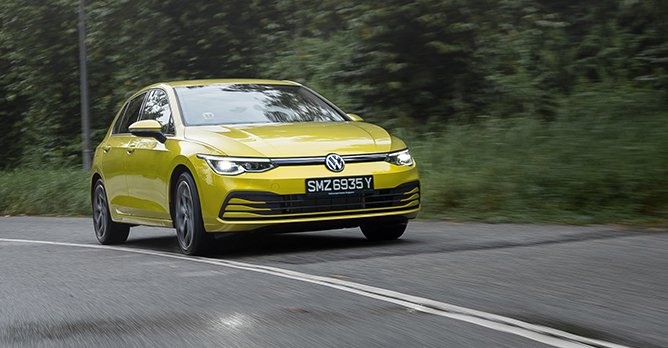
    Road tax serves a purpose of emissions control, as well as an ownership tax for people who want to drive
    Today, I reckon road tax has a different objective. Our road tax is a progressive system that serves its purpose of emission control, whereby bigger displacement capacity cars are taxed more due to a higher level of pollution. Plus, road tax in Singapore is the tax you pay to the country's government for owning and driving a vehicle on Singapore’s roads. 

    I do understand and agree that a road tax needs to be in place. After all, nothing can be said to be certain, except death and taxes. However, while the road tax structure is currently designed to solely take into account engine displacement, it does not take into account the differences in engine performance and emissions, which is a crucial factor if the Government wants to encourage electrified vehicles.
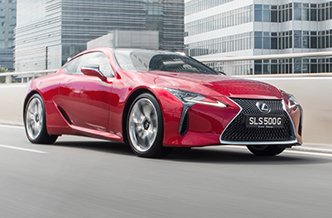
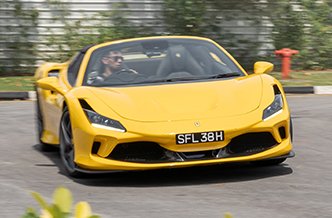
    A Lexus LC (left) pays more road tax than a more expensive, more powerful and more pollutive Ferrari F8 (right)
    Hence, a car with a higher displacement capacity would warrant a higher road tax charge even if it has lower CO2 emissions, costs cheaper and has lesser power output as compared to another car that has a lower engine capacity.

    For instance, the Lexus LC 500 5.0 V8 Coupe has a chargeable road tax of $5,464 a year, while a juicier and more desirable 3.9-litre V8-powered Ferrari F8 Spider, which is almost twice as expensive, has over 240bhp more and has higher CO2 emissions, pays a lesser $3,796 a year. 

    There's more...
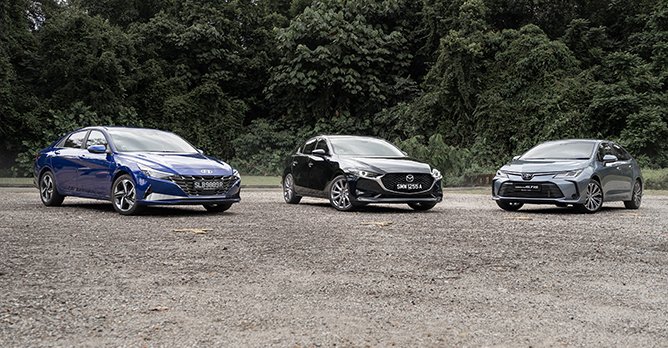
    More than just an ownership tax, road tax is also a wealth tax - the more expensive the car, the higher the tax
    Then, there's the formula. A 600cc car pays a base of $400, while each increasing tier pays both a higher base value, as well as a larger multiplier. This means that a 1.0-litre car pays $392, a 2.0-litre car pays $1,214, while a 3.0-litre car pays $2,386. This does not scale proportionally.

    The road tax on a 2.0-litre car is three times that of a 1.0-litre car, but is it three times as pollutive? Does it take up three times as much space on the road?

    This exponentially increasing tax structure indicates one thing. More than just an ownership tax, road tax is also a wealth tax. Traditionally, the higher cc, the more expensive the car. The thinking here would be that the more expensive the car, the higher tax can be wrought.
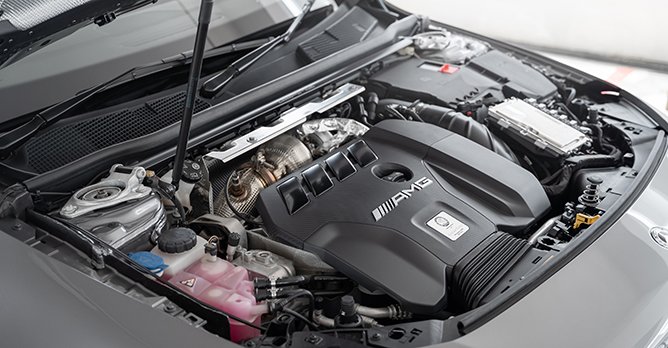
    Modern cars use downsized engines to reduce emissions, and the tax structure should account for that
    It has a starting price of $400 for cars with less than 600cc and it doesn't increase systematically as you would on an additional mathematics test paper. In many countries, road tax is either a fixed value, calculated based on emissions, or against the price/value of the vehicle and in comparison, the objective of our road tax and the formula behind lacks clarity.

    If it's a wealth tax, be upfront about it. If it's in place for the purpose of emissions control, then the formula needs to be tweaked. After all, road tax in Singapore was implemented a long time ago. As time passes and trends change, the need to tweak the road tax system in order for it to be relevant is inevitable.
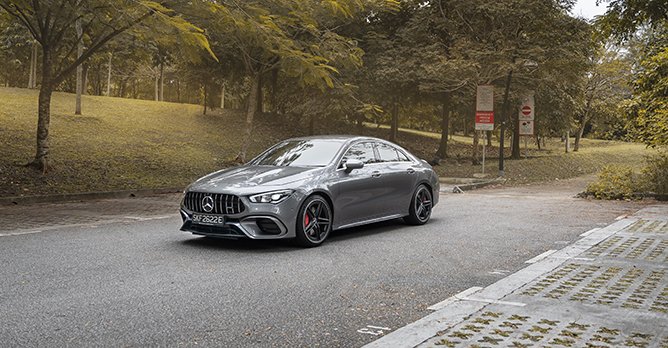
    With more brands downsizing, engine capacity is no longer directly correlated with a car's 'value'
    Singapore should adapt the road tax structure to the changing automotive landscape. If the purpose of road tax is to limit dirty, high emissions vehicles, then the tax should be pegged against emissions figures.

    If it is a wealth tax, peg it against the car's value. And if it strictly an ownership tax, then it should either be fixed, or proportionally tiered.

    A clearer and a more transparent explanation is needed

    Thus, to make things a tad clearer, the Government should make things more transparent. Beyond just being confusing, the current road tax structure also appears to be outdated. The problem with the current system is that while we know exactly how much we are required to pay, we don't exactly know what we are paying for.
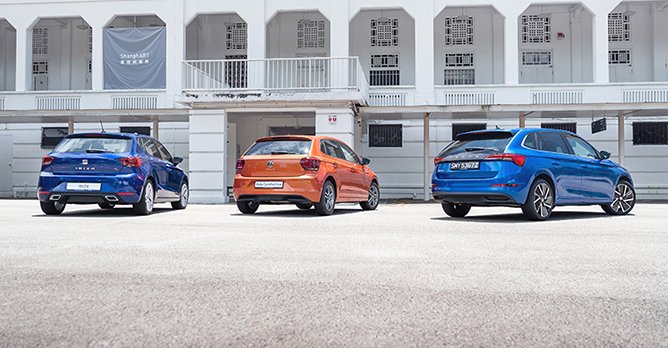
    Greater transparency and clarity is needed to the road tax system so that we can understand what we are paying for
    Explain where the figures come from instead of having a scholar we don't know about, or a 'Mayor' who earns $800,000 a year explain to the everyday you and me about how they came up with the numbers when it's more confusing than convincing.

    Don't get me wrong. We are willing to pay, although we do complain from time to time at the coffeeshop, but let's not forget that we are obedient citizens. And as a true blue Singaporean, I would really hate to be taken for granted.

    Wouldn't you?

    ctaimage

    Sgcarmart

    Get up to 20% off and $300 cashback when you renew with select car insurance!

    Compare car insurance effortlessly with Sgcarmart. Get exclusive offers, discounts and cashback when renewing car insurance with our partner.

    • Auto comparison for your future renewal quotes
    • We provide claims support for your accident claims

    Get a Quote now link red arrow
    Julian Kho
    Julian Kho
    Julian is a lot shorter than you think, but he has a big heart for cars. That sort of makes up for what he lacks.
    Photos by Low Fai Ming
    24.4k

    Tags

    road tax road tax in singapore singapore road tax road taxation road tax chargeable commentary

    AllReviewsNewsAdviceFeaturesVideos
    • Home
    • Car Articles
    • features
    • features Listings
    • Features

    Road tax should be made more transparent and simpler

    21 Jul 2021

    |

    24,849 views

    The road tax formula in Singapore should be made more transparent and simpler to make sense to car owners and drivers alike.


    I just renewed my road tax, and since it's a COE car (which means its COE has been renewed before), I realised how ridiculous our system can actually be.

    For one, since it's zero growth, renewing your current car is the right thing to do. So why am I penalised for it? Secondly, if the road tax for a 1.0-litre petrol-powered car is $390 per annum, why do owners of a 2.0-litre petrol-powered car have to pay $1,194 a year? Mathematically, shouldn't an owner of a 2.0-litre petrol-powered car pay $780 a year?

    This got me thinking - how does our road tax system even work? 

    Road tax formula in Singapore

    Engine Capacity (EC)Road Tax Formula (per annum)
    EC<=600 ccS$400 x 0.782
    600 cc < EC <= 1000 cc[S$400 + 0.25 x (EC - 600)] x 0.782
    1000 cc < EC <= 1600 cc[S$500 + 0.75 x (EC - 1000)] x 0.782
    1600 cc < EC <= 3000 cc[S$950 + 1.5 x (EC - 1600)] x 0.782
    EC > 3000 cc[S$3050 + 2.0 x (EC - 3000)] x 0.782
    This is the current road tax formula in Singapore, of which a lot of people do not know how the formula came about

    Wait, what are you complaining about?

    The current road tax formula is a complicated structure based around engine capacity
    There are several things to complain about our system here. For starters, the road tax formula isn't a one-formula-use-all, which means based on the table shown above, the Engine Capacity (EC) is a variable that no busy Singaporean like you and me knows how it came about.

    And, what exactly is the mathematical rationale of the current road tax structure?

    Back in 2009, our then Finance Minister Tharman Shanmugaratnam said that the basic objective of our road and vehicle taxes is to control congestion on our roads. Through upfront ownership taxes, road tax and fuel tax, the Government seeks to manage road use.

    Road tax serves a purpose of emissions control, as well as an ownership tax for people who want to drive
    Today, I reckon road tax has a different objective. Our road tax is a progressive system that serves its purpose of emission control, whereby bigger displacement capacity cars are taxed more due to a higher level of pollution. Plus, road tax in Singapore is the tax you pay to the country's government for owning and driving a vehicle on Singapore’s roads. 

    I do understand and agree that a road tax needs to be in place. After all, nothing can be said to be certain, except death and taxes. However, while the road tax structure is currently designed to solely take into account engine displacement, it does not take into account the differences in engine performance and emissions, which is a crucial factor if the Government wants to encourage electrified vehicles.


    A Lexus LC (left) pays more road tax than a more expensive, more powerful and more pollutive Ferrari F8 (right)
    Hence, a car with a higher displacement capacity would warrant a higher road tax charge even if it has lower CO2 emissions, costs cheaper and has lesser power output as compared to another car that has a lower engine capacity.

    For instance, the Lexus LC 500 5.0 V8 Coupe has a chargeable road tax of $5,464 a year, while a juicier and more desirable 3.9-litre V8-powered Ferrari F8 Spider, which is almost twice as expensive, has over 240bhp more and has higher CO2 emissions, pays a lesser $3,796 a year. 

    There's more...

    More than just an ownership tax, road tax is also a wealth tax - the more expensive the car, the higher the tax
    Then, there's the formula. A 600cc car pays a base of $400, while each increasing tier pays both a higher base value, as well as a larger multiplier. This means that a 1.0-litre car pays $392, a 2.0-litre car pays $1,214, while a 3.0-litre car pays $2,386. This does not scale proportionally.

    The road tax on a 2.0-litre car is three times that of a 1.0-litre car, but is it three times as pollutive? Does it take up three times as much space on the road?

    This exponentially increasing tax structure indicates one thing. More than just an ownership tax, road tax is also a wealth tax. Traditionally, the higher cc, the more expensive the car. The thinking here would be that the more expensive the car, the higher tax can be wrought.

    Modern cars use downsized engines to reduce emissions, and the tax structure should account for that
    It has a starting price of $400 for cars with less than 600cc and it doesn't increase systematically as you would on an additional mathematics test paper. In many countries, road tax is either a fixed value, calculated based on emissions, or against the price/value of the vehicle and in comparison, the objective of our road tax and the formula behind lacks clarity.

    If it's a wealth tax, be upfront about it. If it's in place for the purpose of emissions control, then the formula needs to be tweaked. After all, road tax in Singapore was implemented a long time ago. As time passes and trends change, the need to tweak the road tax system in order for it to be relevant is inevitable.

    With more brands downsizing, engine capacity is no longer directly correlated with a car's 'value'
    Singapore should adapt the road tax structure to the changing automotive landscape. If the purpose of road tax is to limit dirty, high emissions vehicles, then the tax should be pegged against emissions figures.

    If it is a wealth tax, peg it against the car's value. And if it strictly an ownership tax, then it should either be fixed, or proportionally tiered.

    A clearer and a more transparent explanation is needed

    Thus, to make things a tad clearer, the Government should make things more transparent. Beyond just being confusing, the current road tax structure also appears to be outdated. The problem with the current system is that while we know exactly how much we are required to pay, we don't exactly know what we are paying for.

    Greater transparency and clarity is needed to the road tax system so that we can understand what we are paying for
    Explain where the figures come from instead of having a scholar we don't know about, or a 'Mayor' who earns $800,000 a year explain to the everyday you and me about how they came up with the numbers when it's more confusing than convincing.

    Don't get me wrong. We are willing to pay, although we do complain from time to time at the coffeeshop, but let's not forget that we are obedient citizens. And as a true blue Singaporean, I would really hate to be taken for granted.

    Wouldn't you?

    ctaimage

    Sgcarmart

    Get up to 20% off and $300 cashback when you renew with select car insurance!

    Compare car insurance effortlessly with Sgcarmart. Get exclusive offers, discounts and cashback when renewing car insurance with our partner.

    • Auto comparison for your future renewal quotes
    • We provide claims support for your accident claims

    Get a Quote now link red arrow
    Julian Kho
    Julian Kho
    Julian is a lot shorter than you think, but he has a big heart for cars. That sort of makes up for what he lacks.
    Photos by Low Fai Ming
    24.4k

    Tags

    road tax road tax in singapore singapore road tax road taxation road tax chargeable commentary

    Newsletter

    Be Notified On The Latest News

    Newsletter

    Be Notified On The Latest News

    Related Articles

    The rise of PHEVs: A closer look at the numbers

    The rise of PHEVs: A closer look at the numbers

    Ferrari 849 Testarossa Spider First Drive Review

    Ferrari 849 Testarossa Spider First Drive Review

    Us against the world: Which is the best off-roader?

    Us against the world: Which is the best off-roader?

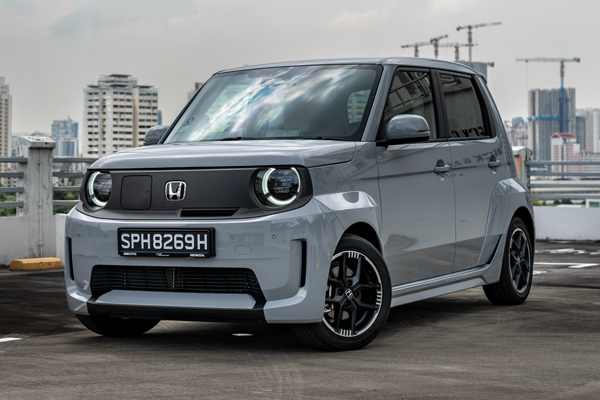
    Honda Super-ONE Review

    Honda Super-ONE Review

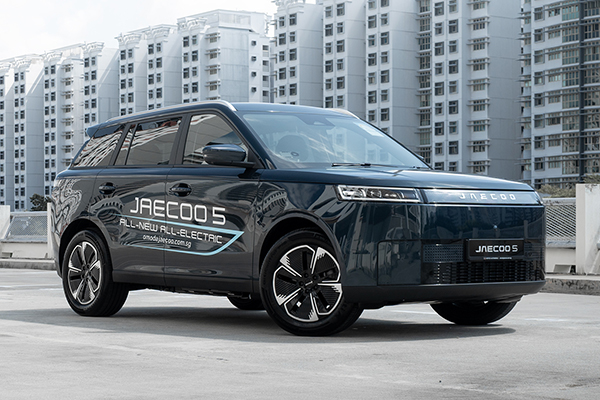
    Jaecoo 5 Review

    Jaecoo 5 Review

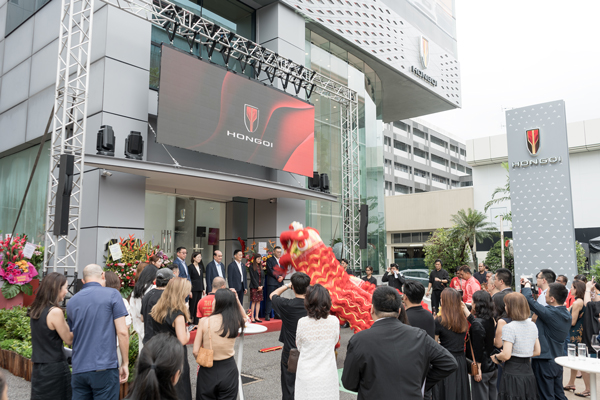
    Hongqi Singapore opens its showroom doors

    Hongqi Singapore opens its showroom doors

    Don't get yourself trapped in your high-tech EV

    Don't get yourself trapped in your high-tech EV

    Budget 2026: PARF rebate to be slashed by 45%

    Budget 2026: PARF rebate to be slashed by 45%

    Related Articles

    The rise of PHEVs: A closer look at the numbers

    The rise of PHEVs: A closer look at the numbers

    Ferrari 849 Testarossa Spider First Drive Review

    Ferrari 849 Testarossa Spider First Drive Review

    Us against the world: Which is the best off-roader?

    Us against the world: Which is the best off-roader?

    Honda Super-ONE Review

    Honda Super-ONE Review

    Jaecoo 5 Review

    Jaecoo 5 Review

    Hongqi Singapore opens its showroom doors

    Hongqi Singapore opens its showroom doors

    Don't get yourself trapped in your high-tech EV

    Don't get yourself trapped in your high-tech EV

    Budget 2026: PARF rebate to be slashed by 45%

    Budget 2026: PARF rebate to be slashed by 45%

    You May Also Like

    The BYD Sealion 8 seven-seater SUV arrives in Singapore

    The BYD Sealion 8 seven-seater SUV arrives in Singapore

    New cars are safer: Opt for one when you can

    New cars are safer: Opt for one when you can

    Maxus MIFA 7 Elite: Going big for the little moments

    Maxus MIFA 7 Elite: Going big for the little moments

    Is parallel import hesitancy growing among car buyers?

    Is parallel import hesitancy growing among car buyers?

    The all new XPENG Mona L03 is one smart coupe SUV

    The all new XPENG Mona L03 is one smart coupe SUV

    Don't get yourself trapped in your high-tech EV

    Don't get yourself trapped in your high-tech EV

    Sgcarmart Explores: Bras Basah!

    Sgcarmart Explores: Bras Basah!

    The rise of PHEVs: A closer look at the numbers

    The rise of PHEVs: A closer look at the numbers

    Honda Super-ONE Review

    Honda Super-ONE Review

    Hongqi Singapore opens its showroom doors

    Hongqi Singapore opens its showroom doors

    Must-Have Car Accessories Every EV Driver Should Own

    Must-Have Car Accessories Every EV Driver Should Own

    Toyota RAV4 Hybrid Review

    Toyota RAV4 Hybrid Review

    Ferrari 849 Testarossa Spider - with the sky included

    Ferrari 849 Testarossa Spider - with the sky included

    Tesla launches Model Y L in Singapore, first six-seater here

    Tesla launches Model Y L in Singapore, first six-seater here

    BYD unveils the Seal 08 and Sealion 08 at Auto China 2026

    BYD unveils the Seal 08 and Sealion 08 at Auto China 2026

    Sgcarmart Explores: Holland Village!

    Sgcarmart Explores: Holland Village!

    You May Also Like

    The BYD Sealion 8 seven-seater SUV arrives in Singapore

    The BYD Sealion 8 seven-seater SUV arrives in Singapore

    New cars are safer: Opt for one when you can

    New cars are safer: Opt for one when you can

    Maxus MIFA 7 Elite: Going big for the little moments

    Maxus MIFA 7 Elite: Going big for the little moments

    Is parallel import hesitancy growing among car buyers?

    Is parallel import hesitancy growing among car buyers?

    The all new XPENG Mona L03 is one smart coupe SUV

    The all new XPENG Mona L03 is one smart coupe SUV

    Don't get yourself trapped in your high-tech EV

    Don't get yourself trapped in your high-tech EV

    Sgcarmart Explores: Bras Basah!

    Sgcarmart Explores: Bras Basah!

    The rise of PHEVs: A closer look at the numbers

    The rise of PHEVs: A closer look at the numbers

    Honda Super-ONE Review

    Honda Super-ONE Review

    Hongqi Singapore opens its showroom doors

    Hongqi Singapore opens its showroom doors

    Must-Have Car Accessories Every EV Driver Should Own

    Must-Have Car Accessories Every EV Driver Should Own

    Toyota RAV4 Hybrid Review

    Toyota RAV4 Hybrid Review

    Ferrari 849 Testarossa Spider - with the sky included

    Ferrari 849 Testarossa Spider - with the sky included

    Tesla launches Model Y L in Singapore, first six-seater here

    Tesla launches Model Y L in Singapore, first six-seater here

    BYD unveils the Seal 08 and Sealion 08 at Auto China 2026

    BYD unveils the Seal 08 and Sealion 08 at Auto China 2026

    Sgcarmart Explores: Holland Village!

    Sgcarmart Explores: Holland Village!