View page in desktop
|
Report error
  •   Apple app store icon
  • Google play store icon
Terms of Service
|
Privacy Policy
|
PDPA
|
Site Map
©2004-2026 Sgcarmart, Singapore. All rights reserved.
  • Home
  • Car Articles
  • features
  • features Listings
  • Features
  • Skoda's long road to success

    14 Jun 2018

    |

    8,929 views

    Driving two half-century old Skoda cars presented the perfect opportunity to chart the brand's complicated history and burgeoning success.


    If there's one thing I'm thankful for about modern cars, it is good brakes. This is one of two thoughts passing through my head as I stomp down hard on the brake pedal (nope, nothing there), and then frantically try to downshift to get some engine braking. The other thought? "Please don't crash…"
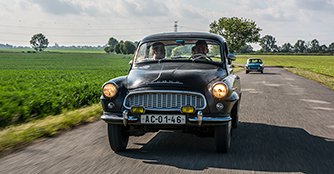
    The Skoda Octavia may be 59 years old, but it still manages to put a cheery smile on your face
    You see, I'm driving the Skoda Octavia, but it isn't the Octavia you're probably thinking of. No, this Octavia is the model produced in 1959, a car that, at 59 years old, is more than twice my age. And there's no denying that I'm nervous.

    This is an old car, so of course driving it is difficult, what with the lack of power steering and any kind of significant stopping power. But more importantly, the car doesn't belong to Skoda.

    This isn't some well-kept museum piece that gets the occasional runabout. This car belongs to, well, just some dude. Not a Skoda staffer or anything, he's just a dude who likes old cars. And this isn't like some fleeting flight of fancy for him, either. This car gets used on a daily basis, almost. I really better not crash it - this guy still needs to get to work tomorrow. 
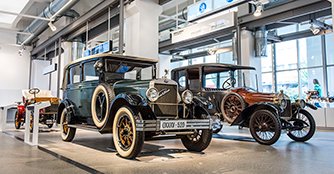
    Early on, the company actually produced highly luxurious (and rather expensive) cars

    Complicated beginnings

    The history of Skoda Auto is a fascinating yet complicated one, interspersed by two world wars and many, many changes. Initially, the company produced bicycles and motorbikes, before eventually transitioning into producing cars. In fact, the company that we now know as Skoda was founded in 1895 as Laurin & Klement, by Vaclav Laurin and Vaclav Klement. This makes Skoda one of the oldest car manufacturers in the world.

    If you take a walk through the Skoda museum in Mlada Boleslav, you'll be struck by the somewhat ostentatious nature of some of the early Skoda models, such as the Superb, the 650 or the 860. These were, by all accounts, coach-built limousines, with extreme luxury as well as the extreme price tag to match. The Superb 4000, for example, cost 72 times the average worker's monthly wage back when it was launched, and about the same as a grand country house. Not exactly affordable, then. 

    But of course, it's hard to make a living by only building expensive, luxury cars, so Skoda also introduced a car appropriately named the Popular - the brand's most affordable car at that time, and a model that met with great success. It is here that we see the first indications of the brand's reputation for affordable family cars.
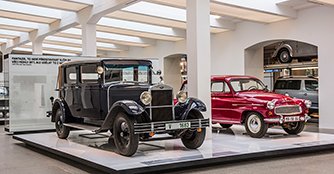
    The Skoda Museum offers a look at the electic range of cars from the brand's 123 year history

    Disruptions of war

    During the Second World War, Czechoslovakia was occupied by the Germans, and the Skoda factory was repurposed to produce components for military vehicles, planes and weapons.

    Thus, the factory was regularly bombed during the war, resulting in the almost complete destruction of the factory in 1945.

    After the factory was rebuilt, Skoda became a national enterprise as part of the large-scale nationalisation of the country, taking over all passenger car production. This obviously necessitated them mass-producing affordable and practical cars, resulting in cars like the two that I'm driving - the Octavia and the 1000 MB.
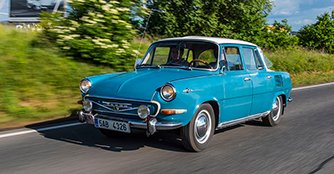
    The 1000 MB may be small, but it features innovative storage solutions all around

    Chugging along

    Compared to modern cars, old cars are definitely harder to drive. There's barely any power (around 44bhp to 50bhp when brand new, and who knows how many horses have disappeared over 50 plus years), the steering is heavy and absolutely vague, the brakes have zero bite, and the overall lack of mechanical sophistication is stark.

    But this doesn't mean these cars don't work. If anything, the opposite is true. These cars work, and they still do so every day. And there are some creative innovations from back then that deliver surprising utility even today. For example, in the 1000 MB, the spare wheel is niftily hidden away under the front bonnet, accessed via an almost James Bond like sliding panel above the front bumper. And even with its rear-engine, rear-wheel drive layout, there's still boot space at the rear, carved out in a space behind the rear seats.

    Both cars also have a humble charm about them - they aren't flashy, they don't go very fast, but they get the job done. They move people, and I must admit that I found myself smiling at the sheer audacity of these cars still functioning perfectly after 50 years. 
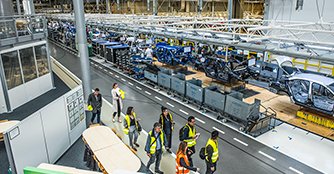
    The Mlada Boleslav factory is where the Fabia, the Rapid, the Octavia and the new Karoq are produced

    The tides of modernity

    Of course, Skoda cars have come a long way since the brand's genesis more than a century ago. After the fall of communism and the privatisation of industries, the brand became a Volkswagen Group subsidiary in 1991. This helped to significantly improve and update the brand's lineup, allowing the brand to develop cars based on shared platforms. The styling and engineering of Skoda cars thus improved greatly.

    This also helped to transform the perception of the brand - emerging from behind the Iron Curtain, Skoda now has factories in five countries, and its cars are now sold in more than 100 countries worldwide. 

    It's not that easy to draw a direct line of lineage between the old Skodas and the modern ones I drove, beyond just the nameplate. The cars, much like the company, have undergone so much change. But, some tenets of the brand's identity still carry through to this day. Skoda cars are still practical and affordable, and that directly contributes to its popularity. In 2017, the brand secured a 19% market share in Central Europe.

    The Czech brand has come a long way since it was founded by Laurin and Klement, and Skoda looks set to continue its growth
    By focusing on making cars that deliver high amounts of practicality, affordability and value to its customers, Skoda continues to build on its continued success. In fact, last year, the brand posted the second highest profit margin of the eight passenger car marques under the VW Group (second to Porsche). Skoda delivered more than 1.2 million cars in 2017, and that number is only expected to grow.

    The Mlada Boleslav factory that I visited is also slated to begin producing full-electric models in the future, as well as electrical components for plug-in hybrids models for several VW Group brands.

    So, what have I learnt? Well, that throughout its interesting but undoubtedly complicated 123-year history, Skoda has continually evolved, finding a way to succed with cars that are affordable, practical and humble. And no matter in cars old or new, innovation and development chugs on, as it always has, and as it always will.

    Desmond Chan
    Desmond Chan in Mlada Boleslav, Czech Republic
    Desmond thinks the world would be better if cars were smaller and less powerful. He wants to live in the 70s.
    24.4k

    Tags

    skoda skoda octavia skoda 1000 mb 1000 mb octavia skoda mlada bloleslav skoda factory skoda history vw group

    AllReviewsNewsAdviceFeaturesVideos
    • Home
    • Car Articles
    • features
    • features Listings
    • Features

    Skoda's long road to success

    14 Jun 2018

    |

    8,929 views

    Driving two half-century old Skoda cars presented the perfect opportunity to chart the brand's complicated history and burgeoning success.


    If there's one thing I'm thankful for about modern cars, it is good brakes. This is one of two thoughts passing through my head as I stomp down hard on the brake pedal (nope, nothing there), and then frantically try to downshift to get some engine braking. The other thought? "Please don't crash…"

    The Skoda Octavia may be 59 years old, but it still manages to put a cheery smile on your face
    You see, I'm driving the Skoda Octavia, but it isn't the Octavia you're probably thinking of. No, this Octavia is the model produced in 1959, a car that, at 59 years old, is more than twice my age. And there's no denying that I'm nervous.

    This is an old car, so of course driving it is difficult, what with the lack of power steering and any kind of significant stopping power. But more importantly, the car doesn't belong to Skoda.

    This isn't some well-kept museum piece that gets the occasional runabout. This car belongs to, well, just some dude. Not a Skoda staffer or anything, he's just a dude who likes old cars. And this isn't like some fleeting flight of fancy for him, either. This car gets used on a daily basis, almost. I really better not crash it - this guy still needs to get to work tomorrow. 

    Early on, the company actually produced highly luxurious (and rather expensive) cars

    Complicated beginnings

    The history of Skoda Auto is a fascinating yet complicated one, interspersed by two world wars and many, many changes. Initially, the company produced bicycles and motorbikes, before eventually transitioning into producing cars. In fact, the company that we now know as Skoda was founded in 1895 as Laurin & Klement, by Vaclav Laurin and Vaclav Klement. This makes Skoda one of the oldest car manufacturers in the world.

    If you take a walk through the Skoda museum in Mlada Boleslav, you'll be struck by the somewhat ostentatious nature of some of the early Skoda models, such as the Superb, the 650 or the 860. These were, by all accounts, coach-built limousines, with extreme luxury as well as the extreme price tag to match. The Superb 4000, for example, cost 72 times the average worker's monthly wage back when it was launched, and about the same as a grand country house. Not exactly affordable, then. 

    But of course, it's hard to make a living by only building expensive, luxury cars, so Skoda also introduced a car appropriately named the Popular - the brand's most affordable car at that time, and a model that met with great success. It is here that we see the first indications of the brand's reputation for affordable family cars.

    The Skoda Museum offers a look at the electic range of cars from the brand's 123 year history

    Disruptions of war

    During the Second World War, Czechoslovakia was occupied by the Germans, and the Skoda factory was repurposed to produce components for military vehicles, planes and weapons.

    Thus, the factory was regularly bombed during the war, resulting in the almost complete destruction of the factory in 1945.

    After the factory was rebuilt, Skoda became a national enterprise as part of the large-scale nationalisation of the country, taking over all passenger car production. This obviously necessitated them mass-producing affordable and practical cars, resulting in cars like the two that I'm driving - the Octavia and the 1000 MB.

    The 1000 MB may be small, but it features innovative storage solutions all around

    Chugging along

    Compared to modern cars, old cars are definitely harder to drive. There's barely any power (around 44bhp to 50bhp when brand new, and who knows how many horses have disappeared over 50 plus years), the steering is heavy and absolutely vague, the brakes have zero bite, and the overall lack of mechanical sophistication is stark.

    But this doesn't mean these cars don't work. If anything, the opposite is true. These cars work, and they still do so every day. And there are some creative innovations from back then that deliver surprising utility even today. For example, in the 1000 MB, the spare wheel is niftily hidden away under the front bonnet, accessed via an almost James Bond like sliding panel above the front bumper. And even with its rear-engine, rear-wheel drive layout, there's still boot space at the rear, carved out in a space behind the rear seats.

    Both cars also have a humble charm about them - they aren't flashy, they don't go very fast, but they get the job done. They move people, and I must admit that I found myself smiling at the sheer audacity of these cars still functioning perfectly after 50 years. 

    The Mlada Boleslav factory is where the Fabia, the Rapid, the Octavia and the new Karoq are produced

    The tides of modernity

    Of course, Skoda cars have come a long way since the brand's genesis more than a century ago. After the fall of communism and the privatisation of industries, the brand became a Volkswagen Group subsidiary in 1991. This helped to significantly improve and update the brand's lineup, allowing the brand to develop cars based on shared platforms. The styling and engineering of Skoda cars thus improved greatly.

    This also helped to transform the perception of the brand - emerging from behind the Iron Curtain, Skoda now has factories in five countries, and its cars are now sold in more than 100 countries worldwide. 

    It's not that easy to draw a direct line of lineage between the old Skodas and the modern ones I drove, beyond just the nameplate. The cars, much like the company, have undergone so much change. But, some tenets of the brand's identity still carry through to this day. Skoda cars are still practical and affordable, and that directly contributes to its popularity. In 2017, the brand secured a 19% market share in Central Europe.

    The Czech brand has come a long way since it was founded by Laurin and Klement, and Skoda looks set to continue its growth
    By focusing on making cars that deliver high amounts of practicality, affordability and value to its customers, Skoda continues to build on its continued success. In fact, last year, the brand posted the second highest profit margin of the eight passenger car marques under the VW Group (second to Porsche). Skoda delivered more than 1.2 million cars in 2017, and that number is only expected to grow.

    The Mlada Boleslav factory that I visited is also slated to begin producing full-electric models in the future, as well as electrical components for plug-in hybrids models for several VW Group brands.

    So, what have I learnt? Well, that throughout its interesting but undoubtedly complicated 123-year history, Skoda has continually evolved, finding a way to succed with cars that are affordable, practical and humble. And no matter in cars old or new, innovation and development chugs on, as it always has, and as it always will.

    Desmond Chan
    Desmond Chan in Mlada Boleslav, Czech Republic
    Desmond thinks the world would be better if cars were smaller and less powerful. He wants to live in the 70s.
    24.4k

    Tags

    skoda skoda octavia skoda 1000 mb 1000 mb octavia skoda mlada bloleslav skoda factory skoda history vw group

    Newsletter

    Be Notified On The Latest News

    Newsletter

    Be Notified On The Latest News

    Related Articles

    Honda ZR-V Hybrid Review

    Honda ZR-V Hybrid Review

    The all new XPENG Mona L03 is one smart coupe SUV

    The all new XPENG Mona L03 is one smart coupe SUV

    All-electric Mazda6e fastback unveiled at SG Motor Show 2026

    All-electric Mazda6e fastback unveiled at SG Motor Show 2026

    The BYD Sealion 8 seven-seater SUV arrives in Singapore

    The BYD Sealion 8 seven-seater SUV arrives in Singapore

    The all-new Toyota RAV4 Hybrid is finally here in Singapore

    The all-new Toyota RAV4 Hybrid is finally here in Singapore

    Should I buy a car in July / August / September 2026?

    Should I buy a car in July / August / September 2026?

    New cars are safer: Opt for one when you can

    New cars are safer: Opt for one when you can

    Opinion: Why do we even need green number plates?

    Opinion: Why do we even need green number plates?

    Related Articles

    Honda ZR-V Hybrid Review

    Honda ZR-V Hybrid Review

    The all new XPENG Mona L03 is one smart coupe SUV

    The all new XPENG Mona L03 is one smart coupe SUV

    All-electric Mazda6e fastback unveiled at SG Motor Show 2026

    All-electric Mazda6e fastback unveiled at SG Motor Show 2026

    The BYD Sealion 8 seven-seater SUV arrives in Singapore

    The BYD Sealion 8 seven-seater SUV arrives in Singapore

    The all-new Toyota RAV4 Hybrid is finally here in Singapore

    The all-new Toyota RAV4 Hybrid is finally here in Singapore

    Should I buy a car in July / August / September 2026?

    Should I buy a car in July / August / September 2026?

    New cars are safer: Opt for one when you can

    New cars are safer: Opt for one when you can

    Opinion: Why do we even need green number plates?

    Opinion: Why do we even need green number plates?

    You May Also Like

    The BYD Sealion 8 seven-seater SUV arrives in Singapore

    The BYD Sealion 8 seven-seater SUV arrives in Singapore

    New cars are safer: Opt for one when you can

    New cars are safer: Opt for one when you can

    Maxus MIFA 7 Elite: Going big for the little moments

    Maxus MIFA 7 Elite: Going big for the little moments

    Sgcarmart Explores: Bras Basah!

    Sgcarmart Explores: Bras Basah!

    Is parallel import hesitancy growing among car buyers?

    Is parallel import hesitancy growing among car buyers?

    The all new XPENG Mona L03 is one smart coupe SUV

    The all new XPENG Mona L03 is one smart coupe SUV

    Don't get yourself trapped in your high-tech EV

    Don't get yourself trapped in your high-tech EV

    Opinion: Why do we even need green number plates?

    Opinion: Why do we even need green number plates?

    The rise of PHEVs: A closer look at the numbers

    The rise of PHEVs: A closer look at the numbers

    Hongqi Singapore opens its showroom doors

    Hongqi Singapore opens its showroom doors

    Must-Have Car Accessories Every EV Driver Should Own

    Must-Have Car Accessories Every EV Driver Should Own

    Ferrari 849 Testarossa Spider - with the sky included

    Ferrari 849 Testarossa Spider - with the sky included

    Sgcarmart Explores: East Coast Park!

    Sgcarmart Explores: East Coast Park!

    Sgcarmart Explores: Holland Village!

    Sgcarmart Explores: Holland Village!

    Tesla launches Model Y L in Singapore, first six-seater here

    Tesla launches Model Y L in Singapore, first six-seater here

    Mercedes-Benz GLB250+ Review

    Mercedes-Benz GLB250+ Review

    You May Also Like

    The BYD Sealion 8 seven-seater SUV arrives in Singapore

    The BYD Sealion 8 seven-seater SUV arrives in Singapore

    New cars are safer: Opt for one when you can

    New cars are safer: Opt for one when you can

    Maxus MIFA 7 Elite: Going big for the little moments

    Maxus MIFA 7 Elite: Going big for the little moments

    Sgcarmart Explores: Bras Basah!

    Sgcarmart Explores: Bras Basah!

    Is parallel import hesitancy growing among car buyers?

    Is parallel import hesitancy growing among car buyers?

    The all new XPENG Mona L03 is one smart coupe SUV

    The all new XPENG Mona L03 is one smart coupe SUV

    Don't get yourself trapped in your high-tech EV

    Don't get yourself trapped in your high-tech EV

    Opinion: Why do we even need green number plates?

    Opinion: Why do we even need green number plates?

    The rise of PHEVs: A closer look at the numbers

    The rise of PHEVs: A closer look at the numbers

    Hongqi Singapore opens its showroom doors

    Hongqi Singapore opens its showroom doors

    Must-Have Car Accessories Every EV Driver Should Own

    Must-Have Car Accessories Every EV Driver Should Own

    Ferrari 849 Testarossa Spider - with the sky included

    Ferrari 849 Testarossa Spider - with the sky included

    Sgcarmart Explores: East Coast Park!

    Sgcarmart Explores: East Coast Park!

    Sgcarmart Explores: Holland Village!

    Sgcarmart Explores: Holland Village!

    Tesla launches Model Y L in Singapore, first six-seater here

    Tesla launches Model Y L in Singapore, first six-seater here

    Mercedes-Benz GLB250+ Review

    Mercedes-Benz GLB250+ Review