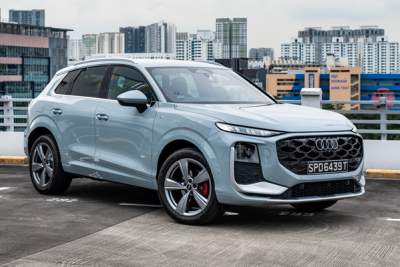
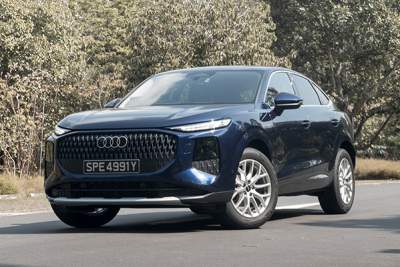
Audi has extensively developed its all-electrically powered high-performance R8 e-tron sports car further to have a driving range of 450km.
A rear car body module made of Carbon Fibre Reinforced Polymer (CFRP) integrates the luggage compartment, which extends the frame structure. The walls of the luggage compartment shell are corrugated, so that they can absorb extreme amounts of energy with little material weight in case of a rear-end collision.
The R8 e-tron piloted driving achieves an electric range of 450km. The high-performance sports car has the Combined Charging System (CCS) on board, which allows charging with direct and alternating current. With this system, the customer can charge the large battery in significantly less than two hours.
The two electric motors each output 228bhp of power and 460Nm of torque to the rear axle. The R8 e-tron piloted driving rockets from 0 to 100km/h in 3.9 seconds on its way to an electronically-governed top speed of 210km/h or 250km/h, depending on the car's tyres.
The R8 e-tron piloted driving technical study is equipped with all of the functions of piloted driving. Data is acquired from the interplay of an array of sensors: a new type of laser scanner, several video cameras, ultrasonic sensors and radar sensors at the front and rear. Based on signals from these sources, the central driver assistance control unit (zFAS), a compact central computer, computes a comprehensive picture of the vehicle's environment.