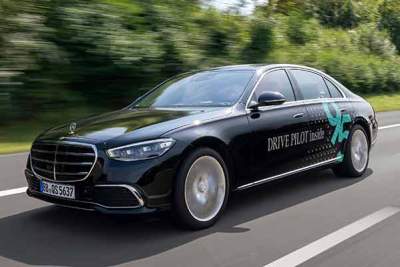
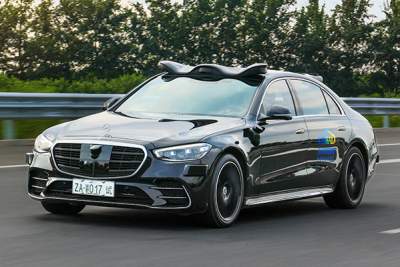
As one of the world's largest providers of mobility solutions, Bosch has beenworking on automated driving since 2011 at two locations Palo Alto, California, and Abstatt, Germany. The teams at the two locations can draw on a worldwide network of more than 5,000 Bosch engineers in the field of driver assistance systems. The motivation behind the development at Bosch is safety. Worldwide, an estimated 1.3 million traffic fatalities occur each year, and the numbers are rising. In 90 percent of cases, human error is the cause.
Relieving drivers of driving tasks in critical traffic situations can save lives. Studies suggest that, in Germany alone, up to 72 percent of all rear-end collisions resulting in casualties could be avoided if all cars were fitted with the Bosch predictive emergency braking system. Drivers can also reach their destinations safely and with minimum stress using the Bosch traffic jam assistant. At speeds of up to 60km/h, the assistant brakes automatically in heavy traffic, accelerates, and keeps the car in its lane.
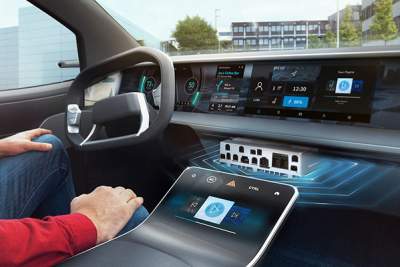
Automated driving affects every aspect of the car's powertrain, brakes, steering - and requires comprehensive systems expertise. It is based on sensors featuring radar, video, and ultrasound technology, sensors Bosch has been manufacturing by the millions for many years. "Sensors are the eyes and ears that let vehicles perceive their environment," Hoheisel says. Powerful software and computers process the collected information and ensure that the automated vehicle can move through traffic in a way that is both safe and fuel efficient.
As vehicles gradually take over more and more driving tasks, safety critical systems such as brakes and steering have to satisfy special requirements. Should one of these components fail, a fall-back is needed to ensure maximum availability. Bosch already has such a fall-back for brakes: the iBooster, an electromechanical brake booster. Both iBooster and the ESP braking control system are designed to brake the car - independently of each other - without the driver having to intervene.
In this way, the Bosch iBooster meets an essential requirement for automated driving. The brake booster can build up brake pressure independently, three times faster than an ESP system. If the predictive brake system recognises a dangerous situation, the vehicle stops much faster. At the same time, the iBooster can also provide the gentle braking required by the ACC adaptive cruise control, all the way down to a complete stop. Moreover, it is practically silent.