 |
On the combined cycle, the Elise S shows the greatest improvement in fuel efficiency, advancing figures from 12.04 km/l to 13.16 km/l. These figures are achieved by focusing on light weight technology and small, efficient engines to achieve sensational performance and class leading fuel economy.
Despite the better fuel economy, the Elise S is still capable of getting to a hundred in just 5.7 seconds, while the Elise R takes 5.1 seconds.
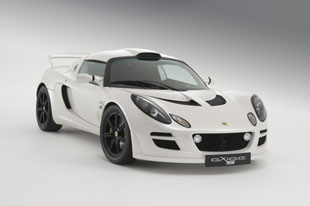
The Exige S, which has a decent fuel economy rating of about 11.7 km/l, will do the 0-100 km/h sprint in 4.5 seconds.
Mike Kimberley, CEO of Group Lotus plc, stated, "The Lotus philosophy of performance through light weight is even more relevant in today's emission focused ecological world. This design philosophy has enabled Lotus to offer fantastic levels of performance, with Lotus cars being some of the greenest performance cars on the market".
He continues, "We are at the cutting edge of green transport technology and we will continue to push the boundaries with our green research and environmental strategy. We are keen to ensure that Lotus as a company and its products offer an ethical, green option that appeals to our customers".
Lotus' cars fair well against other manufacturers of performance cars in terms of CO2 emissions against performance. The table below compares vehicles with similar performance and highlights their emissions of CO2. This table illustrates the efficient performance of the Elise SC -
| Combined (l/100km - mpg) | CO2 g/km | 0-100 km/h | |
| Lotus Elise SC | 8.5 - 33.2 | 199 | 4.6 |
| Porsche Boxster S | 9.5 - 29.7 | 223 | 5.3 |
| Mercedes-Benz SLK 55 AMG | 12.0 - 23.5 | 288 | 4.9 |
| Ferrari F430 Spider | 15.2 - 18.6 | 345 | 4.1 |