A new study to make tropical cities more liveable suggested giving priority to street level crossings, providing protected bike lanes and setting lower speed limits for motorists to encourage walking and cycling here. The study released yesterday by the Centre for Liveable Cities (CLC) here and U.S. based, Urban Land Institute, revealed cities have the lowest obesity rates when its citizens are most mobile.
For instance, the importance given to walking and cycling is essential to the high quality of life experienced by residents in Copenhagen, Denmark, which was named the most liveable city by Monocle magazine last year, reported The Straits Times.
According to CLC Director, Dr. Hee Limin, mobility can only be promoted when pedestrian and cycling networks are convenient and efficient, and are better integrated with public transport.
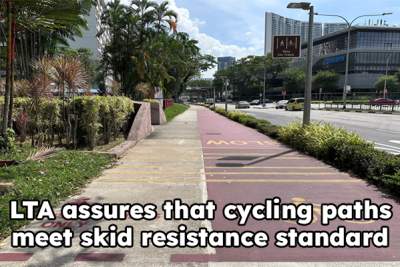
Among 10 recommendations, one was to have dedicated infrastructure to minimise conflict with other users and improve safety.
Given our tropical climate, infrastructure should also be designed to promote continuity of movement for pedestrians and cyclists.
For example, pedestrian pathways should be level with the road instead of being separated by a kerb - to allow cars to stop and look out for pedestrians and cyclists.
Other recommendations include setting low speed limits in areas with high pedestrian traffic and increasing street-level crossings instead of overhead bridges. The study also suggested end of trip amenities like shower facilities and bicycle parking.
Renowned Danish architect, Jan Gehl, one of the participants of the study observed Ang Mo Kio estate as an example of the challenges to walking and cycling. He found cars to travel faster as roads there are generally quite wide. In addition, overhead bridges facilitate these 'mini highways', while junction design and inadequate bicycle parking were flagged as issues that made walking and cycling undesirable.
Former Land Transport Authority Traffic Planner, Gopinath Menon, said planners could have been "more lax" in deciding when to use overhead bridges. He noted the planners were hard on the elderly and disabled, while ramps and lifts take time and money to put in.
Looking ahead, Dr. Hee cited transportation infrastructure has to be reviewed, to determine how to allocate space. "It's not a bad trade to give more space to people, rather than cars," commented Dr. Hee.