Producing 650bhp and 900Nm of torque, the engine for the first customer Bentley Mulliner Bacalar has now completed assembly and production testing at Bentley's centre of excellence for W12 engines.
The Bacalar spearheads a return to coachbuilding by Bentley Mulliner and features an enhanced version of Bentley's 6.0-litre, W12 engine, the most advanced 12-cylinder engine in the world. Since the first introduction of the twin-turbocharged W12 in 2003, the refinement of the engine has seen an increase of up to 27% in power, 38% in torque and a reduction of 38% in emissions.
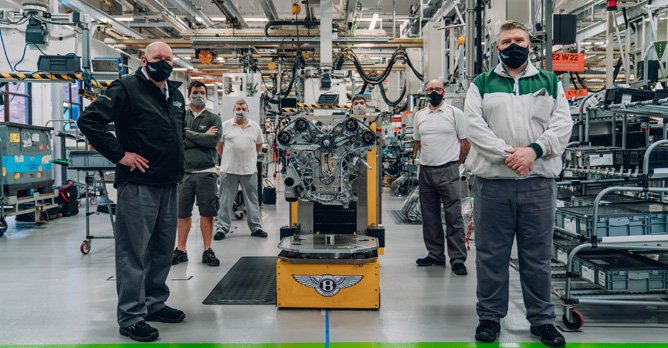

Each W12 engine passes through three specific test regimes before fitting to a vehicle
The testing not only provides feedback on the quality of each engine but also provides multiple checkpoints to catalogue the exact behaviour of each engine from the moment of manufacture. The three tests that the Bacalar engine has already been put through are part of Bentley's exceptional quality control processes.
The first test is for leakage and can be undertaken after the engine has been assembled to the point that fuel, water and oil systems can be closed - a production stage known as a 'short engine'. The leakage test is conducted by pressurising each of the systems, for fuel, oil and water individually.
The different cavities are pressurised to values between 0.2 - 5.0 bar respectively and then measured whilst the pressure decays over time. The reduction in pressure versus time represents the quality of the sealing of the engine assembly. If the pressure drops faster than expected, a leak is indicated. A fluid is sprayed on to the exterior of the engine to pin-point any leakage paths.
The facility measures 600 individual properties and characteristics of the engine during a 15-minute cycle. Due to the low running speed of 120rpm for the test, finer details and any inconsistencies can be identified thanks to a sample rate that highlights even the briefest of anomalies that would be invisible if the engine was firing or running at speed.
This fine detail analysis is also valuable for confirming the precise timing of the engine. Using positioning information from sensors on the crankshaft, crankcase and camshafts along with cylinder compression values, the Cold Test can confirm the engine timing is accurate and therefore achieving the best possible combustion cycle.
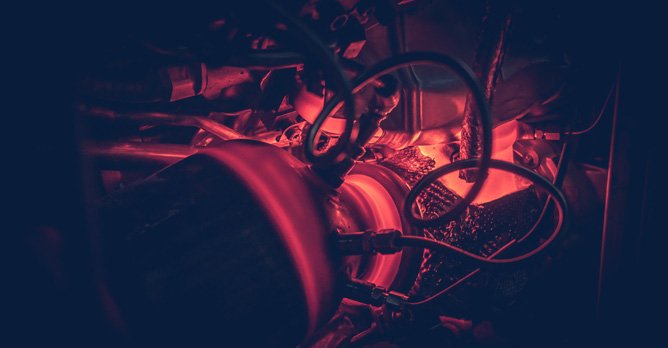
In order to gather cylinder-specific data, the Cold Test is carried out before the exhaust manifolds, turbochargers and other ancillaries are fitted. The third and final test, the 'Hot Test', checks the complete engine assembly once these parts are installed, and simulates real world usage in the vehicle.

Each W12 is then tested for a minimum of 21.5 minutes and runs up to 3,800rpm with a maximum load of 300Nm. One in every 100 engines receives a full eight-hour power test, achieving 6,000rpm, and must achieve 900Nm of torque. Since the installation of the three testbeds in 2002, over 100,000 W12 engines have been handcrafted in Crewe and passed through the test facility.