 |
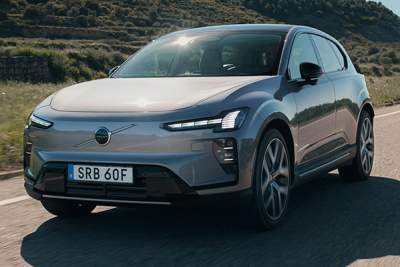
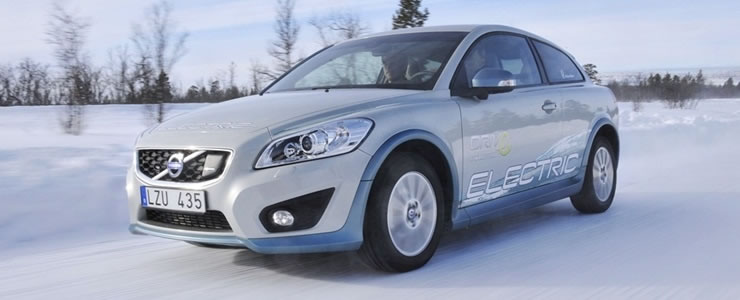
The car is being driven in temperatures as low as minus 20 degrees Celsius, to see how well the batteries maintain their power in the cold while the cabin climate system keeps the passengers comfortably heated during winter driving.
Volvo is putting the C30 Electric through a series of 200 over tests to observe how the car copes with various situations. "We must ensure that the C30 Electric performs as intended when driving, parking and charging in a variety of conditions, from normal to very cold or hot. Northern Sweden is the perfect place to do sub-zero temperature testing," says Lennart Stegland, director of Volvo Cars' Special Vehicles.
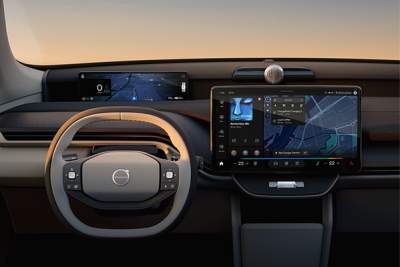
The C30 Electric comes with three different types of climate systems, one for the passenger cabin, one for the battery pack and a water-cooled one for the electric motor and power electronics. As there is no standard internal combustion engine on the C30 Electric, the car is fitted with a bio-ethanol powered heater to warm the passenger cabin, with a tank that holds 14.5 litres of bio-ethanol. This solution allows the batteries to focus on the job of powering the car for driving, although for short distances, the battery pack can also be used to heat or cool the cabin.
The Volvo C30 Electric is able to achieve a range of 150km under normal driving conditions. However, at minus 10 degrees Celsius, the car can travel up to 90km, and the range drops to 80km at minus 33 degrees Celsius. The car is powered by an 110bhp electric motor that takes its charge from a lithium-ion battery, which takes up to eight hours to charge completely. Top speed is 130km/h, while 0-100km/h comes up in 10.3 seconds.
Source: Volvo