View page in desktop
|
Report error
  •   Apple app store icon
  • Google play store icon
Terms of Service
|
Privacy Policy
|
PDPA
|
Site Map
©2004-2026 Sgcarmart, Singapore. All rights reserved.
  • Home
  • Car Articles
  • advice
  • advice Listings
  • Miscellaneous Advice
  • Mythbusted: Does a faster car always consume more fuel?

    29 Dec 2022

    |

    14,466 views

    While power and fuel efficiency tend to be inversely related, is there really no way to go fast without using plenty of fuel?


    Internal combustion engines ignite fuel to produce power, with a larger amount of fuel used, a larger explosion occurs, resulting in even more power produced. That's why engines with a larger capacity tend to make more power, leading to the often coined phrase - "there's no replacement for displacement".

    Hence, in order to attain the additional power required to go fast, you'll naturally end up with an engine that burns more fuel. But is combusting obscene amounts of fuel the only way to go fast? Let's find out.
     
     
    Technology to increase performance often helps with fuel economy as well
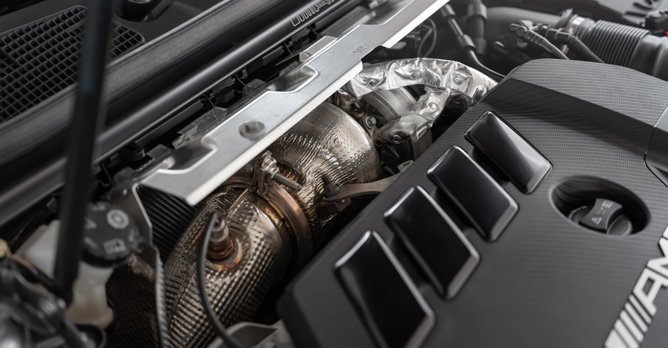
    The use of forced induction allows smaller engines to put out a bunch of power
    The use of modern technology has allowed powerful engines to be created. Just look at the 2.0-litre turbocharged engine that is found in the A45 S and CLA45 S - with just 2.0-litre, it manages more than 400bhp, that's more than what much larger engines were able to push out in the past. And many times, these same technological advancements can be harnessed to result in an improved fuel economy.

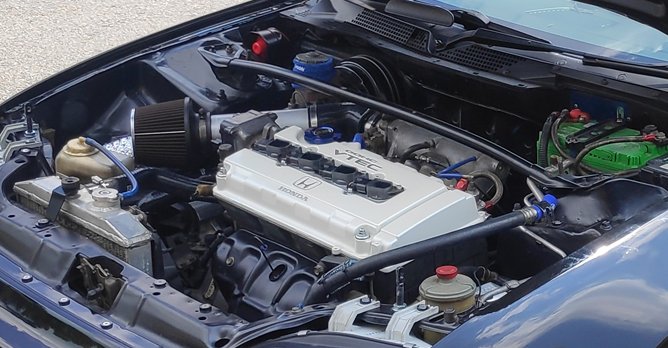
    Technology such as Honda's VTEC that many enthusiasts love does its magic by allowing an engine to switch between a milder and harsher (performance-oriented) set of camshaft profiles as it gets into the higher RPMs.

    Technology such as VTEC allows an engine to enjoy the best of both worlds - fuel economy and performance when you need it
    It allows an engine to enjoy low-RPM stability and improved fuel efficiency, while also allowing it to put out plenty of power at the higher rev-range.

    Forced induction is yet another popular technology to squeeze much more power from an engine. It also results in an engine that is able to operate with a higher level of fuel efficiency when desired (off-boost), and also able to give you all the power when you need it.

    Then there's direct fuel injection, which allows engines to have extremely high compression ratios. A high compression engine squeezes the fuel and air mix within the cylinder to a greater extent.

    Modern engine such as Mazda's Skyactiv-X utilises extremely high compression to achieve power and efficiency
    This results in even more energy to be released from the combustion event and, hence, more power to be produced while using a similar amount of fuel, increasing fuel efficiency and power.

    Hybrid systems that combine an electric motor to aid with the propulsion of the car can also result in increased performance with lesser impact on the car's efficiency as well. Thanks to all these technology, modern engines are able to make much more power, allowing cars to go way faster, all while consuming lesser fuel than cars from ages ago.

    That said, in order to go really fast, you'll have to push hard on the pedal, and any engine will consume more fuel when you do so...
     
     
    Less energy is required to move a lighter object

    Add lightness - that's one way to go faster
    While power is important, it isn't all you need to go fast. Just look towards the direction of race cars and you'll quickly notice how most of them are stripped off of unimportant components for weight saving purposes.

    To go fast, you will want to reduce the baggage that the engine has to shoulder - the car's weight. By making a car lighter, there's lesser inertia, which results in quicker acceleration, shorter stopping distance and it would even make it easier to get the car around turns.

    That's why you'll notice performance car brands such as Lotus, who tries to make its cars as light as possible. With less weight to lug around, fuel economy will improve. This very reason is also why SUVs and other large, heavy cars tend to guzzle more fuel than their lighter counterparts. So, if you want to go faster while saving fuel, just find some way to make your car lighter!
     
     
    Aerodynamics plays a huge part in going fast

    The wedge-shaped design of supercars in the past was an effort to slice through air
    Do you remember the era of wedge-shaped, door-stopper looking supercars like the Ferrari Testarossa, Lamborghini Diablo and others?

    Engineers have long been battling against the air in order to create faster cars.

    In more recent times, with wind-tunnel testing and intrinsic knowledge on the topic of aerodynamics, new cars are able to be designed to cut through air effortlessly.

    Modern cars are designed with aerodynamics in mind
    As a result of cutting-edge aerodynamics, less energy is wasted to overcome air resistance. This allows a car to reach higher speeds with less effort (engine power). And with less effort required, the engine will naturally use less fuel.

    While electric cars do not use petrol, they are fighting the same battle in order to achieve a better range. Hence, electric cars are often designed with low drag coefficient in mind, in order to achieve better range and efficiency.
     
     
    Does this mean that fast cars can be even more fuel efficient than slower ones?

    The Ferrari F355 was a pretty fast car in its time, but it is quite the gas guzzler as well
    Right, engine technology, lightweight materials and slippery aerodynamics benefits both speed and efficiency. A well-designed car and engine can result in some fuel savings. However, at the end of the day, there still has to be a trade-off. And cars that are geared towards performance often forsake some efficiency to get there.

    Fuel economy will to a large extent, depend on how the car is being driven as well. Drive an efficient car at its limits and you'll likely get a poor fuel economy. Likewise, driving a powerful car gently can also result in decent fuel consumption. That said, one thing is for sure, technology has allowed modern engines to be much more efficient and powerful as opposed to the engines of the yesteryears.

    So does a faster car always consume more fuel? Well, a CLA45 S sure is faster than a Ferrari F355, but according to a quick search, the former's fuel economy is almost twice as good as the latter.
     
     
    Here are some other articles that you might be interested in:
     
    Mythbusted: Is high mileage always a con when it comes to buying used cars?

    Mythbusted: Is a smaller engine always more fuel efficient?

    Year of the rabbit (2023) - 10 affordable cars to hop into

    Five sure-fire ways to improve your defensive driving skills

    Never commit these acts of road rage while driving, no matter how angry you are
    ctaimage

    Sgcarmart

    Latest New Car Discounts & Offers

    We bring you the latest new car prices, discounts & offers direct from the car showrooms

    Find a Number Plate link red arrow

    Goh Zhi Xuan
    Goh Zhi Xuan
    Zhi Xuan is still living in the 80s when it comes to cars. The irony - he's born in 95'.
    Photos by Editorial Team
    24.4k

    Tags

    myth mythbusting car myths advice fast car faster car sports car supercar engine performance car high performance engine large engine lightweight carbon fibre

    AllReviewsNewsAdviceFeaturesVideos
    • Home
    • Car Articles
    • advice
    • advice Listings
    • Miscellaneous Advice

    Mythbusted: Does a faster car always consume more fuel?

    29 Dec 2022

    |

    14,466 views

    While power and fuel efficiency tend to be inversely related, is there really no way to go fast without using plenty of fuel?


    Internal combustion engines ignite fuel to produce power, with a larger amount of fuel used, a larger explosion occurs, resulting in even more power produced. That's why engines with a larger capacity tend to make more power, leading to the often coined phrase - "there's no replacement for displacement".

    Hence, in order to attain the additional power required to go fast, you'll naturally end up with an engine that burns more fuel. But is combusting obscene amounts of fuel the only way to go fast? Let's find out.
     
     
    Technology to increase performance often helps with fuel economy as well

    The use of forced induction allows smaller engines to put out a bunch of power
    The use of modern technology has allowed powerful engines to be created. Just look at the 2.0-litre turbocharged engine that is found in the A45 S and CLA45 S - with just 2.0-litre, it manages more than 400bhp, that's more than what much larger engines were able to push out in the past. And many times, these same technological advancements can be harnessed to result in an improved fuel economy.

    Technology such as Honda's VTEC that many enthusiasts love does its magic by allowing an engine to switch between a milder and harsher (performance-oriented) set of camshaft profiles as it gets into the higher RPMs.
    Technology such as VTEC allows an engine to enjoy the best of both worlds - fuel economy and performance when you need it
    It allows an engine to enjoy low-RPM stability and improved fuel efficiency, while also allowing it to put out plenty of power at the higher rev-range.

    Forced induction is yet another popular technology to squeeze much more power from an engine. It also results in an engine that is able to operate with a higher level of fuel efficiency when desired (off-boost), and also able to give you all the power when you need it.

    Then there's direct fuel injection, which allows engines to have extremely high compression ratios. A high compression engine squeezes the fuel and air mix within the cylinder to a greater extent.
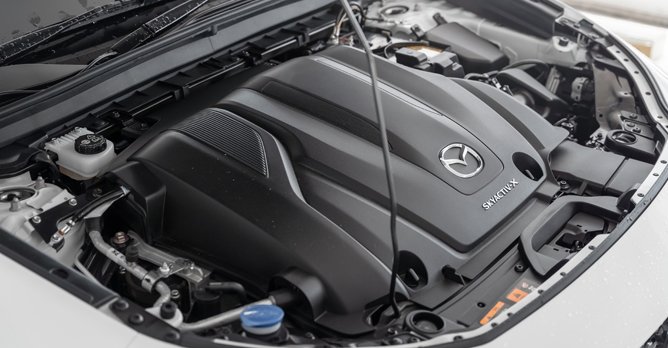
    Modern engine such as Mazda's Skyactiv-X utilises extremely high compression to achieve power and efficiency
    This results in even more energy to be released from the combustion event and, hence, more power to be produced while using a similar amount of fuel, increasing fuel efficiency and power.

    Hybrid systems that combine an electric motor to aid with the propulsion of the car can also result in increased performance with lesser impact on the car's efficiency as well. Thanks to all these technology, modern engines are able to make much more power, allowing cars to go way faster, all while consuming lesser fuel than cars from ages ago.

    That said, in order to go really fast, you'll have to push hard on the pedal, and any engine will consume more fuel when you do so...
     
     
    Less energy is required to move a lighter object
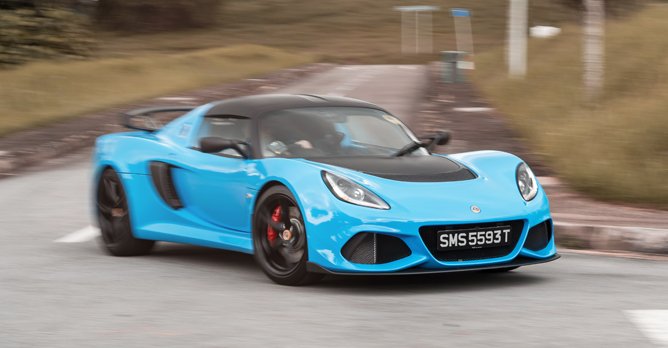
    Add lightness - that's one way to go faster
    While power is important, it isn't all you need to go fast. Just look towards the direction of race cars and you'll quickly notice how most of them are stripped off of unimportant components for weight saving purposes.

    To go fast, you will want to reduce the baggage that the engine has to shoulder - the car's weight. By making a car lighter, there's lesser inertia, which results in quicker acceleration, shorter stopping distance and it would even make it easier to get the car around turns.

    That's why you'll notice performance car brands such as Lotus, who tries to make its cars as light as possible. With less weight to lug around, fuel economy will improve. This very reason is also why SUVs and other large, heavy cars tend to guzzle more fuel than their lighter counterparts. So, if you want to go faster while saving fuel, just find some way to make your car lighter!
     
     
    Aerodynamics plays a huge part in going fast
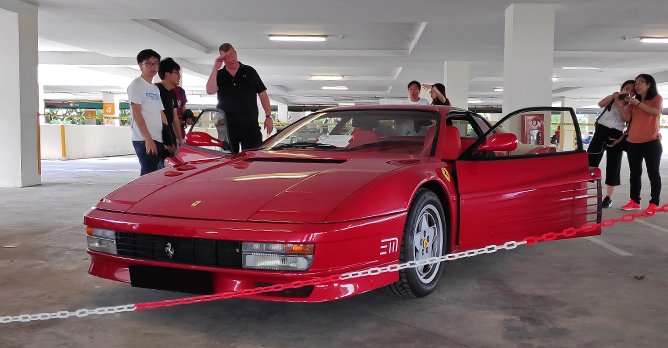
    The wedge-shaped design of supercars in the past was an effort to slice through air
    Do you remember the era of wedge-shaped, door-stopper looking supercars like the Ferrari Testarossa, Lamborghini Diablo and others?

    Engineers have long been battling against the air in order to create faster cars.

    In more recent times, with wind-tunnel testing and intrinsic knowledge on the topic of aerodynamics, new cars are able to be designed to cut through air effortlessly.
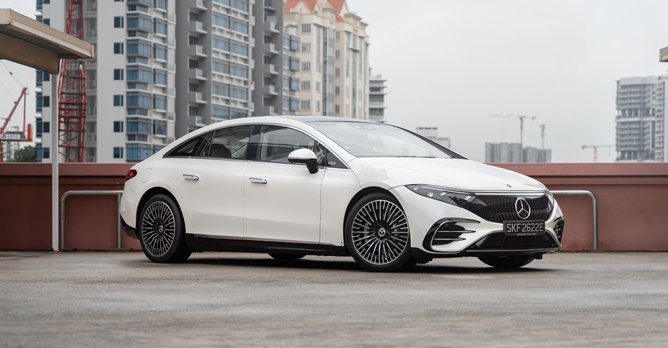
    Modern cars are designed with aerodynamics in mind
    As a result of cutting-edge aerodynamics, less energy is wasted to overcome air resistance. This allows a car to reach higher speeds with less effort (engine power). And with less effort required, the engine will naturally use less fuel.

    While electric cars do not use petrol, they are fighting the same battle in order to achieve a better range. Hence, electric cars are often designed with low drag coefficient in mind, in order to achieve better range and efficiency.
     
     
    Does this mean that fast cars can be even more fuel efficient than slower ones?
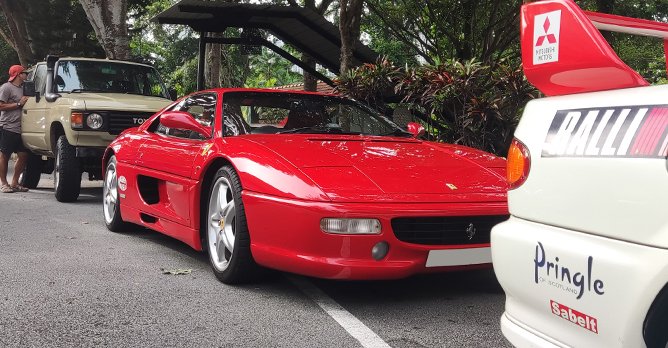
    The Ferrari F355 was a pretty fast car in its time, but it is quite the gas guzzler as well
    Right, engine technology, lightweight materials and slippery aerodynamics benefits both speed and efficiency. A well-designed car and engine can result in some fuel savings. However, at the end of the day, there still has to be a trade-off. And cars that are geared towards performance often forsake some efficiency to get there.

    Fuel economy will to a large extent, depend on how the car is being driven as well. Drive an efficient car at its limits and you'll likely get a poor fuel economy. Likewise, driving a powerful car gently can also result in decent fuel consumption. That said, one thing is for sure, technology has allowed modern engines to be much more efficient and powerful as opposed to the engines of the yesteryears.

    So does a faster car always consume more fuel? Well, a CLA45 S sure is faster than a Ferrari F355, but according to a quick search, the former's fuel economy is almost twice as good as the latter.
     
     
    Here are some other articles that you might be interested in:
     
    Mythbusted: Is high mileage always a con when it comes to buying used cars?

    Mythbusted: Is a smaller engine always more fuel efficient?

    Year of the rabbit (2023) - 10 affordable cars to hop into

    Five sure-fire ways to improve your defensive driving skills

    Never commit these acts of road rage while driving, no matter how angry you are

    ctaimage

    Sgcarmart

    Latest New Car Discounts & Offers

    We bring you the latest new car prices, discounts & offers direct from the car showrooms

    Find a Number Plate link red arrow

    Goh Zhi Xuan
    Goh Zhi Xuan
    Zhi Xuan is still living in the 80s when it comes to cars. The irony - he's born in 95'.
    Photos by Editorial Team
    24.4k

    Tags

    myth mythbusting car myths advice fast car faster car sports car supercar engine performance car high performance engine large engine lightweight carbon fibre

    aerodynamics
    low drag
    direct fuel injection
    variable technology
    hybrid systems
    electric motor
    fuel consumption
    fuel economy
    fuel efficiency
    fuel guzzler
    save fuel
    petrol
    diesel
    electric car
    electric motor
    ev
    aerodynamics
    low drag
    direct fuel injection
    variable technology
    hybrid systems
    electric motor
    fuel consumption
    fuel economy
    fuel efficiency
    fuel guzzler
    save fuel
    petrol
    diesel
    electric car
    electric motor
    ev

    All Advice Categories

    Car BuyingCar SellingCar OwnershipCar TechnicalCar MaintenanceMiscellaneous

    All Advice Categories

    Car BuyingCar SellingCar OwnershipCar TechnicalCar MaintenanceMiscellaneous

    Related Motor Directory Categories

      Audio System - In Car EntertainmentKeys & RemoteCar Towing & Roadside AssistanceDecals, Stickers & Number PlatesCar MatsMobile Battery & Tyre Replacement

    Related Motor Directory Categories

      Audio System - In Car EntertainmentKeys & RemoteCar Towing & Roadside AssistanceDecals, Stickers & Number PlatesCar MatsMobile Battery & Tyre Replacement

    You May Also Like

    Get your next rental from AKA Car Rental

    Get your next rental from AKA Car Rental

    New to driving? Here's how to become a better driver

    New to driving? Here's how to become a better driver

    Sgcarmart Explores: 2026 National Day Edition!

    Sgcarmart Explores: 2026 National Day Edition!

    Dunlop's new tyres for an electrified world

    Dunlop's new tyres for an electrified world

    Corvette Stingray Review

    Corvette Stingray Review

    Omoda & Jaecoo is forging ahead with its Super AI cockpit

    Omoda & Jaecoo is forging ahead with its Super AI cockpit

    A first look at the Sitrak Light eTruck!

    A first look at the Sitrak Light eTruck!

    The new Pirelli Cinturato Rosso with Seal Inside Tech!

    The new Pirelli Cinturato Rosso with Seal Inside Tech!

    You May Also Like

    Get your next rental from AKA Car Rental

    Get your next rental from AKA Car Rental

    New to driving? Here's how to become a better driver

    New to driving? Here's how to become a better driver

    Sgcarmart Explores: 2026 National Day Edition!

    Sgcarmart Explores: 2026 National Day Edition!

    Dunlop's new tyres for an electrified world

    Dunlop's new tyres for an electrified world

    Corvette Stingray Review

    Corvette Stingray Review

    Omoda & Jaecoo is forging ahead with its Super AI cockpit

    Omoda & Jaecoo is forging ahead with its Super AI cockpit

    A first look at the Sitrak Light eTruck!

    A first look at the Sitrak Light eTruck!

    The new Pirelli Cinturato Rosso with Seal Inside Tech!

    The new Pirelli Cinturato Rosso with Seal Inside Tech!

    Related Articles

    BYD M6 Review

    BYD M6 Review

    Maxus MIFA 7 108kW Luxury Review

    Maxus MIFA 7 108kW Luxury Review

    DENZA Z9 GT First Drive Review

    DENZA Z9 GT First Drive Review

    Zeekr 7X Standard Review

    Zeekr 7X Standard Review

    Honda Super-ONE Review

    Honda Super-ONE Review

    BMW iX3 Review

    BMW iX3 Review

    MGS6 EV Luxury 77kWh Review

    MGS6 EV Luxury 77kWh Review

    Lamborghini Temerario Review

    Lamborghini Temerario Review

    Related Articles

    BYD M6 Review

    BYD M6 Review

    Maxus MIFA 7 108kW Luxury Review

    Maxus MIFA 7 108kW Luxury Review

    DENZA Z9 GT First Drive Review

    DENZA Z9 GT First Drive Review

    Zeekr 7X Standard Review

    Zeekr 7X Standard Review

    Honda Super-ONE Review

    Honda Super-ONE Review

    BMW iX3 Review

    BMW iX3 Review

    MGS6 EV Luxury 77kWh Review

    MGS6 EV Luxury 77kWh Review

    Lamborghini Temerario Review

    Lamborghini Temerario Review