View page in desktop
|
Report error
  •   Apple app store icon
  • Google play store icon
Terms of Service
|
Privacy Policy
|
PDPA
|
Site Map
©2004-2026 Sgcarmart, Singapore. All rights reserved.
  • Home
  • Car Articles
  • advice
  • advice Listings
  • Car Maintenance Advice
  • Should you pump higher RON petrol for better performance? Not so fast...

    21 Apr 2023

    |

    27,592 views

    Will a higher RON or fuel octane give your car better performance? Here's why you should check first before spending more on premium petrol.


    When it comes to petrol, does a higher RON (research octane number) or octane rating mean the fuel is better? It's easy to assume this is true, as subconsciously, we tend to think that higher numbers reflect a product's superiority, especially if it costs more per litre compared to the lower RON fuels.

    However, the truth is that the type of fuel that every car needs is subjective - it just depends on what the manufacturer recommends for a particular model. Here's why.

    Octane defined
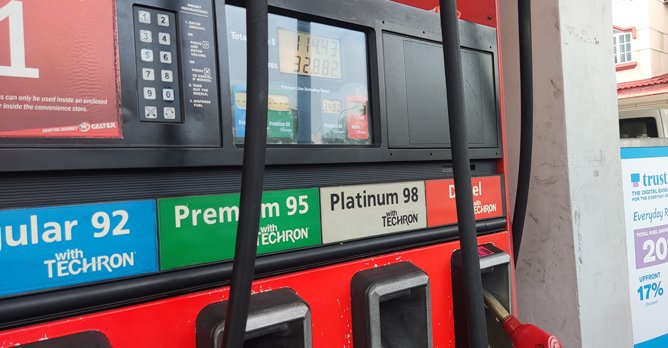
    The octane numbers are what matter, so pay less attention to words like 'Regular' and 'Premium' 
    A fuel's octane rating or RON is a measure of how combustible it is. A fuel with a lower octane number such as 92 or 95 is more combustible than RON 98 or 98 octane petrol.

    Oil companies manufacture different grades of fuel to suit different types of cars. Before we continue, let's recall the four stages of the combustion cycle.

    1. Intake: Outside air is drawn into the cylinders as the pistons move downwards.
    2. Compression: The piston moves up to compress the air.
    3. Combustion: As the piston almost reaches the top of the cylinder, fuel is injected, and the spark plug ignites the fuel-air mixture. The 'explosion' then drives the piston back down.
    4. Exhaust: The spent gases leave the cylinders via the exhaust valves.

    Higher compression engines need less combustible fuel so that knock is avoided and peak power can be produced
    Now this begs the question: If all fuel is meant to be burned, why do oil companies even make higher octane fuels?

    The answer is with stages #2 and #3 of the combustion cycle. High-performance engines that are tuned to produce lots of power typically have high compression ratios, which sees the fuel-air mixture subject to higher pressures before it is ignited.

    However, when fuel is 'squeezed' or put under a lot of pressure, the temperature in the cylinder, which is already hot to begin with, rises further and this could result in it combusting before the spark plug creates a spark to ignite the mixture.

    Premature combustion is called 'knocking' and it is bad because ignition is not in sync with the combustion cycle, and over time, this will damage the engine.

    Can powerful cars use lower octane fuels?

    Technically, this Lamborghini Huracan STO could run on 95 RON petrol, but its performance would of course be compromised
    Owners won't like hearing this, but technically, modern high-performance cars can use lower octane fuel. To prevent premature combustion, knock sensors will detect the lower octane petrol and tell the engine to produce less power.

    On the other hand, what happens if you fill a regular runabout with high-octane fuel? Will it result in the engine making more power?

    No. Contrary to what ads might imply or make you think, filling a normal car with the 'good stuff' won't make it produce more power or accelerate faster. Unless of course, the owner's manual recommends 98 RON in the first place.

    The 5.2-litre V10 in the Audi R8, with its 8,000rpm redline and 12.7:1 compression ratio, would definitely benefit from 98 octane fuel
    Now, perhaps you have friends telling you that higher octane is better or claiming that they have experienced performance gains or improved fuel economy with higher octane fuel.

    Again, such results depend on whether the car's engine is tuned to use high octane petrol in the first place. Also, fuel economy figures are highly dependent on several factors, chief among them being driving style, traffic conditions, and whether the engine is properly maintained.

    A poorly maintained engine with plenty of carbon build-up will have an inconsistent fuel-air ratio and poor fuel economy. In worse cases, the build-up will artificially increase the compression ratio, leading to knocking even when using recommended 92 RON or 95 RON fuel.

    In such cases, this is likely to be the reason why 98 RON works better than lower octane petrol.

    What's the optimal fuel grade then?

    This car would benefit from 98 octane, but the label also clearly states a 95 octane minimum, so the driver can choose when to spend or save
    The right fuel grade for your car is the one stated in your owner's manual. Depending on the make and model, the recommended RON or octane may also be stated on the inside of the fuel lid.

    Most cars today will run fine on 95 octane fuel. If your manual recommends 92 octane petrol, you can safely fill up with that.

    Filling your car with 98 RON won't harm it either, even if it's not the recommended grade. But it won't deliver any benefits either. You'll only spend more than necessary and put even more money into the coffers of the oil giants, which are already making record profits.

    Think about that before your next fill-up.

    These related stories may interest you

    Mythbusted: Is a quality tank of fuel all you need to get rid of carbon build-up?

    Many drivers have heard of these fuel-saving tips. But do they really work?

    Mythbusted: Does a faster car always consume more fuel?
    Jeremy Chua
    Jeremy Chua
    Jeremy loves fast cars, the sweet smell of petrol and the burbling, erotic noises from a V8.
    Photos by Editorial Team
    Newspress U.K.
    24.4k

    Tags

    advice car advice car ownership advice ownership advice fuel petrol ron 98 ron 98 octane octane 92 ron 95 ron 92 octane 95 octane combustibility

    AllReviewsNewsAdviceFeaturesVideos
    • Home
    • Car Articles
    • advice
    • advice Listings
    • Car Maintenance Advice

    Should you pump higher RON petrol for better performance? Not so fast...

    21 Apr 2023

    |

    27,592 views

    Will a higher RON or fuel octane give your car better performance? Here's why you should check first before spending more on premium petrol.


    When it comes to petrol, does a higher RON (research octane number) or octane rating mean the fuel is better? It's easy to assume this is true, as subconsciously, we tend to think that higher numbers reflect a product's superiority, especially if it costs more per litre compared to the lower RON fuels.

    However, the truth is that the type of fuel that every car needs is subjective - it just depends on what the manufacturer recommends for a particular model. Here's why.

    Octane defined

    The octane numbers are what matter, so pay less attention to words like 'Regular' and 'Premium' 
    A fuel's octane rating or RON is a measure of how combustible it is. A fuel with a lower octane number such as 92 or 95 is more combustible than RON 98 or 98 octane petrol.

    Oil companies manufacture different grades of fuel to suit different types of cars. Before we continue, let's recall the four stages of the combustion cycle.

    1. Intake: Outside air is drawn into the cylinders as the pistons move downwards.
    2. Compression: The piston moves up to compress the air.
    3. Combustion: As the piston almost reaches the top of the cylinder, fuel is injected, and the spark plug ignites the fuel-air mixture. The 'explosion' then drives the piston back down.
    4. Exhaust: The spent gases leave the cylinders via the exhaust valves.
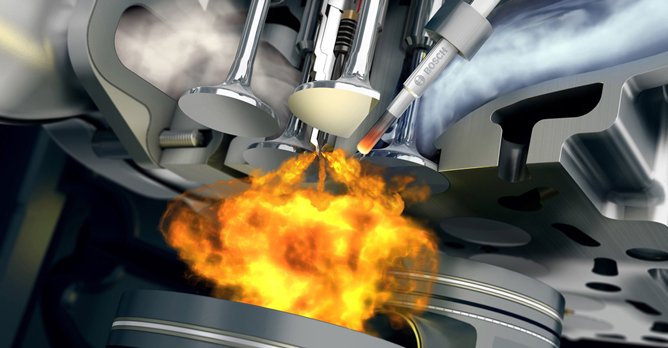
    Higher compression engines need less combustible fuel so that knock is avoided and peak power can be produced
    Now this begs the question: If all fuel is meant to be burned, why do oil companies even make higher octane fuels?

    The answer is with stages #2 and #3 of the combustion cycle. High-performance engines that are tuned to produce lots of power typically have high compression ratios, which sees the fuel-air mixture subject to higher pressures before it is ignited.

    However, when fuel is 'squeezed' or put under a lot of pressure, the temperature in the cylinder, which is already hot to begin with, rises further and this could result in it combusting before the spark plug creates a spark to ignite the mixture.

    Premature combustion is called 'knocking' and it is bad because ignition is not in sync with the combustion cycle, and over time, this will damage the engine.

    Can powerful cars use lower octane fuels?

    Technically, this Lamborghini Huracan STO could run on 95 RON petrol, but its performance would of course be compromised
    Owners won't like hearing this, but technically, modern high-performance cars can use lower octane fuel. To prevent premature combustion, knock sensors will detect the lower octane petrol and tell the engine to produce less power.

    On the other hand, what happens if you fill a regular runabout with high-octane fuel? Will it result in the engine making more power?

    No. Contrary to what ads might imply or make you think, filling a normal car with the 'good stuff' won't make it produce more power or accelerate faster. Unless of course, the owner's manual recommends 98 RON in the first place.
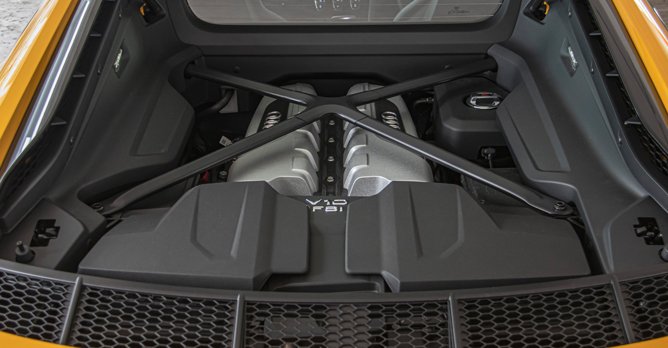
    The 5.2-litre V10 in the Audi R8, with its 8,000rpm redline and 12.7:1 compression ratio, would definitely benefit from 98 octane fuel
    Now, perhaps you have friends telling you that higher octane is better or claiming that they have experienced performance gains or improved fuel economy with higher octane fuel.

    Again, such results depend on whether the car's engine is tuned to use high octane petrol in the first place. Also, fuel economy figures are highly dependent on several factors, chief among them being driving style, traffic conditions, and whether the engine is properly maintained.

    A poorly maintained engine with plenty of carbon build-up will have an inconsistent fuel-air ratio and poor fuel economy. In worse cases, the build-up will artificially increase the compression ratio, leading to knocking even when using recommended 92 RON or 95 RON fuel.

    In such cases, this is likely to be the reason why 98 RON works better than lower octane petrol.

    What's the optimal fuel grade then?
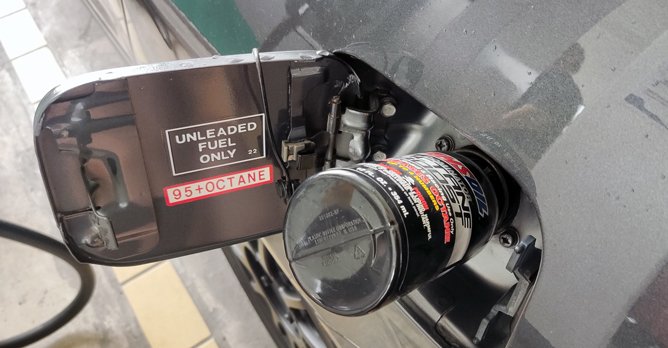
    This car would benefit from 98 octane, but the label also clearly states a 95 octane minimum, so the driver can choose when to spend or save
    The right fuel grade for your car is the one stated in your owner's manual. Depending on the make and model, the recommended RON or octane may also be stated on the inside of the fuel lid.

    Most cars today will run fine on 95 octane fuel. If your manual recommends 92 octane petrol, you can safely fill up with that.

    Filling your car with 98 RON won't harm it either, even if it's not the recommended grade. But it won't deliver any benefits either. You'll only spend more than necessary and put even more money into the coffers of the oil giants, which are already making record profits.

    Think about that before your next fill-up.

    These related stories may interest you

    Mythbusted: Is a quality tank of fuel all you need to get rid of carbon build-up?

    Many drivers have heard of these fuel-saving tips. But do they really work?

    Mythbusted: Does a faster car always consume more fuel?

    Jeremy Chua
    Jeremy Chua
    Jeremy loves fast cars, the sweet smell of petrol and the burbling, erotic noises from a V8.
    Photos by Editorial Team
    Newspress U.K.
    24.4k

    Tags

    advice car advice car ownership advice ownership advice fuel petrol ron 98 ron 98 octane octane 92 ron 95 ron 92 octane 95 octane combustibility

    knock
    knocking
    pinging
    ping
    compression ratio
    pumping petrol
    filling up
    car maintenance
    maintenance
    knock
    knocking
    pinging
    ping
    compression ratio
    pumping petrol
    filling up
    car maintenance
    maintenance

    Related Motor Directory Categories

      Repair & ServicingCar Grooming - Wash & PolishAir ConditioningSpecialty WorkshopsCommercial Vehicle WorkshopsTransmission & Gearbox

    Related Motor Directory Categories

      Repair & ServicingCar Grooming - Wash & PolishAir ConditioningSpecialty WorkshopsCommercial Vehicle WorkshopsTransmission & Gearbox

    All Advice Categories

    Car BuyingCar SellingCar OwnershipCar TechnicalCar MaintenanceMiscellaneous

    All Advice Categories

    Car BuyingCar SellingCar OwnershipCar TechnicalCar MaintenanceMiscellaneous

    You May Also Like

    Get your next rental from AKA Car Rental

    Get your next rental from AKA Car Rental

    New to driving? Here's how to become a better driver

    New to driving? Here's how to become a better driver

    Sgcarmart Explores: 2026 National Day Edition!

    Sgcarmart Explores: 2026 National Day Edition!

    Dunlop's new tyres for an electrified world

    Dunlop's new tyres for an electrified world

    Corvette Stingray Review

    Corvette Stingray Review

    Omoda & Jaecoo is forging ahead with its Super AI cockpit

    Omoda & Jaecoo is forging ahead with its Super AI cockpit

    A first look at the Sitrak Light eTruck!

    A first look at the Sitrak Light eTruck!

    The new Pirelli Cinturato Rosso with Seal Inside Tech!

    The new Pirelli Cinturato Rosso with Seal Inside Tech!

    You May Also Like

    Get your next rental from AKA Car Rental

    Get your next rental from AKA Car Rental

    New to driving? Here's how to become a better driver

    New to driving? Here's how to become a better driver

    Sgcarmart Explores: 2026 National Day Edition!

    Sgcarmart Explores: 2026 National Day Edition!

    Dunlop's new tyres for an electrified world

    Dunlop's new tyres for an electrified world

    Corvette Stingray Review

    Corvette Stingray Review

    Omoda & Jaecoo is forging ahead with its Super AI cockpit

    Omoda & Jaecoo is forging ahead with its Super AI cockpit

    A first look at the Sitrak Light eTruck!

    A first look at the Sitrak Light eTruck!

    The new Pirelli Cinturato Rosso with Seal Inside Tech!

    The new Pirelli Cinturato Rosso with Seal Inside Tech!

    Related Articles

    Don't get yourself trapped in your high-tech EV

    Don't get yourself trapped in your high-tech EV

    Tesla Model Y L Premium AWD 88kWh Review

    Tesla Model Y L Premium AWD 88kWh Review

    The BYD Sealion 8 seven-seater SUV arrives in Singapore

    The BYD Sealion 8 seven-seater SUV arrives in Singapore

    Hongqi Singapore opens its showroom doors

    Hongqi Singapore opens its showroom doors

    Mercedes-Benz GLB250+ Review

    Mercedes-Benz GLB250+ Review

    New cars are safer: Opt for one when you can

    New cars are safer: Opt for one when you can

    Sgcarmart Explores: Bras Basah!

    Sgcarmart Explores: Bras Basah!

    Which electric vehicle charging provider should you use?

    Which electric vehicle charging provider should you use?

    Related Articles

    Don't get yourself trapped in your high-tech EV

    Don't get yourself trapped in your high-tech EV

    Tesla Model Y L Premium AWD 88kWh Review

    Tesla Model Y L Premium AWD 88kWh Review

    The BYD Sealion 8 seven-seater SUV arrives in Singapore

    The BYD Sealion 8 seven-seater SUV arrives in Singapore

    Hongqi Singapore opens its showroom doors

    Hongqi Singapore opens its showroom doors

    Mercedes-Benz GLB250+ Review

    Mercedes-Benz GLB250+ Review

    New cars are safer: Opt for one when you can

    New cars are safer: Opt for one when you can

    Sgcarmart Explores: Bras Basah!

    Sgcarmart Explores: Bras Basah!

    Which electric vehicle charging provider should you use?

    Which electric vehicle charging provider should you use?