When you think about a Lexus, you expect to find a fastidiously built automobile that exudes comfort and elegance from every corner. And that's an apt expectation from a luxury brand. But what you least expect though is to find a well-built automobile that can seamlessly transition from being a regal, quiet sedan to an enthusiastic driving machine at the mashing of the throttle. And that seems to be what Lexus has done with the IS250.
Afterall the IS series from Lexus has always been known for their sporting potential that Lexus builds into the chassis. This understated performance has seen many car enthusiasts around the world tune the first generation IS to stratospheric levels. To further underline the performance potential of the IS chassis, Lexus engaged the services of Rod Millen and Rhys Millen (current D1 competitor) to build a IS430 concept car for the 2003 Specialty Equipment Market Association (SEMA) show in Las Vegas.
The very exciting one off IS430 inherited much of its running gear from its larger GS430 sibling. This included the driveline as well as its rear suspension components. Of course the jewel of that inheritance was the GS430's 4.3-litre V8 powerplant.
Although the IS430 never made it into production, that study formed the basis for the current generation's performance potential.
Afterall the IS series from Lexus has always been known for their sporting potential that Lexus builds into the chassis. This understated performance has seen many car enthusiasts around the world tune the first generation IS to stratospheric levels. To further underline the performance potential of the IS chassis, Lexus engaged the services of Rod Millen and Rhys Millen (current D1 competitor) to build a IS430 concept car for the 2003 Specialty Equipment Market Association (SEMA) show in Las Vegas.
The very exciting one off IS430 inherited much of its running gear from its larger GS430 sibling. This included the driveline as well as its rear suspension components. Of course the jewel of that inheritance was the GS430's 4.3-litre V8 powerplant.
Although the IS430 never made it into production, that study formed the basis for the current generation's performance potential.
 |
With that much credential in its bloodline, the basic IS250 seems to have a lot to live up to. If not in the power department, then at least in its chassis potential.
Exterior
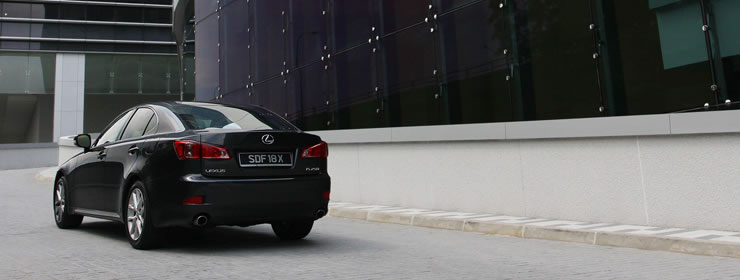
Despite being a relatively young model in the Lexus range, the IS250 has gone through three updates since its launch in 2006. While the facelifts have been numerous, the exterior of the car has only seen minor changes so far. The facial changes in the latest model pictured here is slightly more obvious than in previous updates.
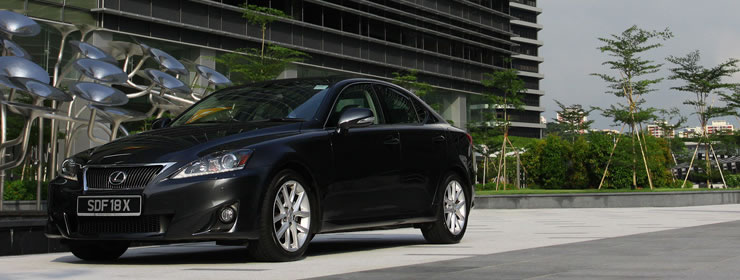 |
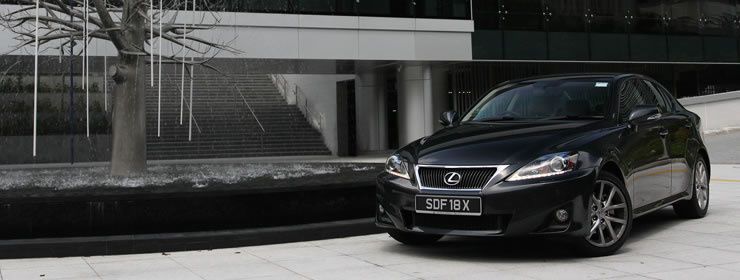
New in this 2010 model are the new headlamps with tinted surrounds and ultra bright LED daytime running lights at the base of the headlamp cluster. The car sports redesigned bumpers front and back with a new design to the foglamps in the front. The rear taillights have also been tweaked slightly to give it a little more definition with slightly less opacity.
On a whole the design of the IS250 has taken a fine teeter totter approach that has landed the car somewhere between an elegant executive sedan and a muscular performance machine. The front of the car is dominated by a sharp impression created by the strong wedge-shaped lines that emanate from the grille and over the hood. The tinted headlamp surrounds also adds to this handsome masculine appearance.
This strong line continues its way along the rest of the car forming a muscular shoulder line that carries all the way to merge seamlessly with the fastback rear. The slightly bulged front wheel arches shares the strong powerful stance found on the flagship IS F.
Underlining this performance oriented design are the new shoes that it wears. The latest IS250 rides on the new double spoke 17 inch alloys fitted to our test car.
Interior
Sitting in the IS250 cabin, one feels comfortably cocooned by the high quality soft-touch plastics that make up the dashboard. Upping the luxury feel are the leather seats finished in creamy white and the soft leather that lines the doors. While the lighter colour gives the interior a comfortable contrast, regular maintenance will be needed to keep the creamy white seats from staining over time.
On a whole the design of the IS250 has taken a fine teeter totter approach that has landed the car somewhere between an elegant executive sedan and a muscular performance machine. The front of the car is dominated by a sharp impression created by the strong wedge-shaped lines that emanate from the grille and over the hood. The tinted headlamp surrounds also adds to this handsome masculine appearance.
This strong line continues its way along the rest of the car forming a muscular shoulder line that carries all the way to merge seamlessly with the fastback rear. The slightly bulged front wheel arches shares the strong powerful stance found on the flagship IS F.
Underlining this performance oriented design are the new shoes that it wears. The latest IS250 rides on the new double spoke 17 inch alloys fitted to our test car.
Interior
Sitting in the IS250 cabin, one feels comfortably cocooned by the high quality soft-touch plastics that make up the dashboard. Upping the luxury feel are the leather seats finished in creamy white and the soft leather that lines the doors. While the lighter colour gives the interior a comfortable contrast, regular maintenance will be needed to keep the creamy white seats from staining over time.
In the driver's seat, one feels snugly enveloped by the control surfaces and the comfortably supportive front seats. The gently flared bolsters keep the driver firmly in the seat when cornering get enthusiastic. As a Lexus should be, the steering and both front seats are all electrically adjustable and your ideal driving position can be easily programmed into the car's memory.
Once settled in your perfect position, you can appreciate the clearly defined chrono-looking instrument cluster. The figures and markings are all backlit in white against a black background. This stark contrast makes the dials easy to read both in the day and night.
The greatest change in the interior comes from the large touch screen that dominates the centre console. This new screen is also replicated in the recently updated RX models as well. The screen takes multiple duties to display anything from the GPS to the climate controls and audio.
In this premium model, the IS250 comes with the 14-speaker 'take me to auditory heaven' Mark Levinson sound system. If you love your jazz and classical tunes, this system will belt it out for you in crystal clarity. While it might lack the low end punch for a fuller sound, it still scores high from an audiophile's perspective.
The system accepts CDs as well as an AUX-in jack for the now indispensible iPod connection to play endless tunes through the sweet system. Audio remote controls are aptly replicated on the steering as well though the mute button is absent.
The rear seats in the IS250 are a little on the cramped side as my 1.78m is barely unfolds comfortably behind an equally tall driver. The boot space is also a little less accommodating when compared to its other rivals.
Once settled in your perfect position, you can appreciate the clearly defined chrono-looking instrument cluster. The figures and markings are all backlit in white against a black background. This stark contrast makes the dials easy to read both in the day and night.
The greatest change in the interior comes from the large touch screen that dominates the centre console. This new screen is also replicated in the recently updated RX models as well. The screen takes multiple duties to display anything from the GPS to the climate controls and audio.
In this premium model, the IS250 comes with the 14-speaker 'take me to auditory heaven' Mark Levinson sound system. If you love your jazz and classical tunes, this system will belt it out for you in crystal clarity. While it might lack the low end punch for a fuller sound, it still scores high from an audiophile's perspective.
The system accepts CDs as well as an AUX-in jack for the now indispensible iPod connection to play endless tunes through the sweet system. Audio remote controls are aptly replicated on the steering as well though the mute button is absent.
The rear seats in the IS250 are a little on the cramped side as my 1.78m is barely unfolds comfortably behind an equally tall driver. The boot space is also a little less accommodating when compared to its other rivals.
 |
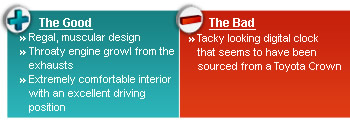
On a whole, the IS250's interior is nearly faultless and does well in creating the luxurious ambience expected of a premium brand. Unfortunately this nearly immaculate interior is marred by the cheap looking digital clock that would find its kindred spirit in a Toyota Crown. This oversight does seem quite silly considering that the rest of the interior closely reflects the company's Pursuit of Perfection.
The Drive
Powered by a 2.5-litre V6, the 205 ponies from the IS250 might seem half a world away from the IS F but thankfully though, the handling isn't.
Tooting along at expressway speeds, inside the cabin all is serene as the impressive build quality of the Lexus neutralises most of the road noise with elegant ease. Letting you enjoy the full symphony of the Mark Levinson system without having to turn the volume up.
At such speeds and with the engine at low revs, you can hardly hear any auditory feedback from the twin exhausts in the rear. That's not to say the Lexus isn't capable of any hooning when you want to.
The Drive
Powered by a 2.5-litre V6, the 205 ponies from the IS250 might seem half a world away from the IS F but thankfully though, the handling isn't.
Tooting along at expressway speeds, inside the cabin all is serene as the impressive build quality of the Lexus neutralises most of the road noise with elegant ease. Letting you enjoy the full symphony of the Mark Levinson system without having to turn the volume up.
At such speeds and with the engine at low revs, you can hardly hear any auditory feedback from the twin exhausts in the rear. That's not to say the Lexus isn't capable of any hooning when you want to.
Hoof it and the exhausts give out a throaty growl as the revs climb towards the redline and the IS250 suddenly takes on a different persona.
Though Lexus claims the century sprint to be at 8.4 seconds, my butt-o-metre seems to feel that the factory has been modest with their figures. Acceleration off the line is determined and deliberate as the V6 rumbles away towards oblivion.
But soon as you back off the throttle, the car reverts itself to a quiet stately sedan that cruises along with the six-speed cog box shifting in silky smooth mode. Steering mounted paddle shifters are available if you decide to do the cog swapping yourself.
The bends seem to be where the IS250 thrives best as the car maintains decent body control through each corner. Steering feel is exquisite as it feels direct and communicative with just the right amount of steering feedback for you to read the tarmac through the wheels. Though the ride can be slightly firm at times, the Lexus is never uncomfortable or at least hardly so.
Though Lexus claims the century sprint to be at 8.4 seconds, my butt-o-metre seems to feel that the factory has been modest with their figures. Acceleration off the line is determined and deliberate as the V6 rumbles away towards oblivion.
But soon as you back off the throttle, the car reverts itself to a quiet stately sedan that cruises along with the six-speed cog box shifting in silky smooth mode. Steering mounted paddle shifters are available if you decide to do the cog swapping yourself.
The bends seem to be where the IS250 thrives best as the car maintains decent body control through each corner. Steering feel is exquisite as it feels direct and communicative with just the right amount of steering feedback for you to read the tarmac through the wheels. Though the ride can be slightly firm at times, the Lexus is never uncomfortable or at least hardly so.
 |
While I wouldn't consider the IS250 to be in the same league as say an Accord Euro R, during the test drive the docile Lexus did unwittingly spank a frisky Euro R driver on the expressway after I hoofed it (just a little™I swear).
Perhaps the Euro R driver wasn't trying or perhaps the IS250 gave the offending driver an insight into the performance potential of this sports luxury sedan. We'll never know™
Conclusion
The most attractive quality about the IS250 is its ability to transition smoothly between a regal luxury sedan and an enthusiastic driving machine.
Perhaps the Euro R driver wasn't trying or perhaps the IS250 gave the offending driver an insight into the performance potential of this sports luxury sedan. We'll never know™
Conclusion
The most attractive quality about the IS250 is its ability to transition smoothly between a regal luxury sedan and an enthusiastic driving machine.
This handling performance of the IS250 is in no doubt attributed to Lexus's decision to base the second generation IS on the GS platform that was in itself designed to handle a V8 powerplant.
Considering the well sorted chassis, it comes as no surprise to me why Lexus chose to base their premier flagship sports sedan on the IS.
You could say that this sports luxury sedan soothes as much as it thrills™
Considering the well sorted chassis, it comes as no surprise to me why Lexus chose to base their premier flagship sports sedan on the IS.
You could say that this sports luxury sedan soothes as much as it thrills™