ow do you define a successful business? Do you rate it in terms of desirability of its products?
Or simply by running through the figures denoting the firm's economical well-being? Each and every organisation aims to acquire proficiency in profit making, so as to bring the best returns to every stakeholder. But today, more companies have recognised the importance of making the business last. Sustainability - it is the key to gain a competitive edge in the current business community.
The automotive industry is no exception.
One company at the top of its game is BMW. The German carmaker has been crowned the most sustainable automotive marque in the world for the eighth consecutive time. This outstanding feat does not come easy. Each year only three automobile enterprises within the industry will be
The automotive industry is no exception.
One company at the top of its game is BMW. The German carmaker has been crowned the most sustainable automotive marque in the world for the eighth consecutive time. This outstanding feat does not come easy. Each year only three automobile enterprises within the industry will be
shortlisted, and the BMW Group has been the only car brand to be featured continuously in the prestigious index for the past 14 years.
At the heart of this is a self-renewing process that embeds the firm's philosophy - know as Efficient Dynamics.
Efficient Dynamics is not just another fanciful way to put a name to technology. BMW has a clear vision to harness and improve on its expertise in car manufacturing. Since embarking on the mission, BMW Group has gone the extra mile to ensure that this vision is rooted in every aspect of the organisation, spanning across its corporate strategies to the culture within the company. In essence, Efficient Dynamics is not just a technology; it is a philosophy that aims to enhance
At the heart of this is a self-renewing process that embeds the firm's philosophy - know as Efficient Dynamics.
Efficient Dynamics is not just another fanciful way to put a name to technology. BMW has a clear vision to harness and improve on its expertise in car manufacturing. Since embarking on the mission, BMW Group has gone the extra mile to ensure that this vision is rooted in every aspect of the organisation, spanning across its corporate strategies to the culture within the company. In essence, Efficient Dynamics is not just a technology; it is a philosophy that aims to enhance
'Efficient Dynamics' is no stranger to us. Ranging from the marques's base BMW 1 Series to the flagship BMW 7 Series limousine, the term not only describes the company's technology; it encompasses the brand's philosophy.
power without compromising on fuel efficiency and CO2 emissions. This philosophy is applied onto the way BMW builds its cars and technological innovations. Some examples include: engine optimisation, lightweight engineering, and intelligent energy management.
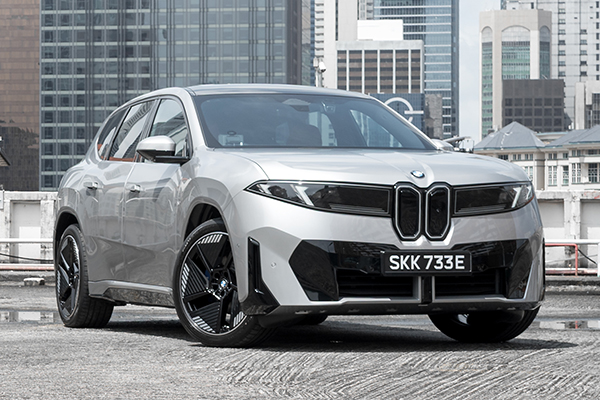
BMW's latest lineup boasts stringent emission standards
The marque's endeavouring efforts are visible from the amount of effort and resources placed in working towards the vision - a 1.2 million Euros funding in Efficient Dynamics. The results are no less substantial - to date, more than 3.5 million of BMW cars equipped with this technology are plying the roads. Since the start of 2012, BMW Group has also managed to boast a lineup including 73 models with C02 emissions of less than 140 g/km, and 30 BMW models emitting greenhouse gases below the 120g/km mark.
Despite the significant achievements, BMW is not resting on its laurels. Its pursuit of greater efficiency has reached another milestone, through development of force-induction technologies, and the electrification of vehicles.
Despite the significant achievements, BMW is not resting on its laurels. Its pursuit of greater efficiency has reached another milestone, through development of force-induction technologies, and the electrification of vehicles.
We have seen technological advancements leading to substantial increment in efficiency. BMW aims to take it further, not only through the betterment of engine efficiency, but also improve on the soft skills of the drivers. In short, a more holistic approach to the subject matter.
The result: BMW ConnectedDrive.
Painstakingly incorporated into its offer-ings, Connected Drive is a system that intertwines the various driver aids, and combines them into an intuitive package which allows better connectivity of the driver, the car, and the environment. Results have shown that Connected Drive has significantly improved the safety, comfort, as well as offering enhanced infotainment to the occupants of the vehicle. True to its eco-biased motive, the system’s sensors and navigation function help to improve fuel efficiency, and hence reduce carbon emissions. To date, Connected Drive has seen the debut of predictive navigation application and active coasting function, with a number of others readying for future cars.
The result: BMW ConnectedDrive.
Painstakingly incorporated into its offer-ings, Connected Drive is a system that intertwines the various driver aids, and combines them into an intuitive package which allows better connectivity of the driver, the car, and the environment. Results have shown that Connected Drive has significantly improved the safety, comfort, as well as offering enhanced infotainment to the occupants of the vehicle. True to its eco-biased motive, the system’s sensors and navigation function help to improve fuel efficiency, and hence reduce carbon emissions. To date, Connected Drive has seen the debut of predictive navigation application and active coasting function, with a number of others readying for future cars.
We have seen the figures on how BMW has managed to make its powerplants churn out more power, yet skimming on the fuel intake. Little do we know that efficiency measures lie beyond the figures.
In its latest generation of petrol and diesel engines, BMW utilises clever engineering, which allows up to 60 per cent of the components to be shared between different variants of the same fuel type. This translates into greater efficiency in the value chain, from development, production to maintenance. For instance, petrol and diesel engines will be produced on the same production line in the near future. This, without doubt, will bring about greater utilisation of each plant's potential, as well as proficiency in resources management.
In its latest generation of petrol and diesel engines, BMW utilises clever engineering, which allows up to 60 per cent of the components to be shared between different variants of the same fuel type. This translates into greater efficiency in the value chain, from development, production to maintenance. For instance, petrol and diesel engines will be produced on the same production line in the near future. This, without doubt, will bring about greater utilisation of each plant's potential, as well as proficiency in resources management.
Not ready to be complacent on its success, BMW continues to search for better ways of mobility and have since paved new ways into the future. Under the umbrella of BMW Group is a new sub-brand known as BMW i, specially created to extend the brand's focus beyond today's cars.
Aspired to be the future of mobility, BMW i is not just about building cars with zero tailpipe emissions. Clearly for the marque, the topic of futuristic vehicles should fully embrace sustainability issues. BMW i adopts an all-rounded approach, carefully defining targets from the earliest strategic and planning stages, and holding them true through out the execution processes, including the entire spectrum of workflow engineering, such as purchasing, production and sales & marketing.
Aspired to be the future of mobility, BMW i is not just about building cars with zero tailpipe emissions. Clearly for the marque, the topic of futuristic vehicles should fully embrace sustainability issues. BMW i adopts an all-rounded approach, carefully defining targets from the earliest strategic and planning stages, and holding them true through out the execution processes, including the entire spectrum of workflow engineering, such as purchasing, production and sales & marketing.
Aimed at reducing the impact towards the environment, eco-friendly practices are clearly reflected in each of the manufacturing processes in the chained workflow. The effectiveness of the program is measured against several criteria, which includes energy and water consumption. Minimisation of waste, too, is another important aspect in pursue of sustainable production. Waste water re-processing, solvent and C02 emissions are closely monitored, so as to facilitate the re-engineering process which is part of the Group's effort to further reduce consumption and emissions by 30 per cent.
To further reduce global warming potential throughout the entirety of a product's lifecycle, BMW Group has carefully utilised a focused purchasing strategy for building materials such as aluminium and Carbon Fibre Reinforced Plastic (CFRP). This plays a crucial role in the firm's eco efforts as these lightweight materials constitutes to a bigger proportion of the materials used in the manufacturing process, as compared to conventional vehicles. New integrations include the use of recycled aluminium, and aluminium production which uses only renewable energy sources are part of the efforts to reduce C02 emissions in the manufacturing segment.
In addition, BMW i also adheres to waste reduction measures through recycling, which is being emphasised as a 'way of life' instead of an execution. The BMW i development team ensures that recycling is embedded in the firm's culture via various methods. One important aspect is to ensure that the recycling process is carefully integrated into the company's structures and processes.
BMW's holistic approach also includes a
To further reduce global warming potential throughout the entirety of a product's lifecycle, BMW Group has carefully utilised a focused purchasing strategy for building materials such as aluminium and Carbon Fibre Reinforced Plastic (CFRP). This plays a crucial role in the firm's eco efforts as these lightweight materials constitutes to a bigger proportion of the materials used in the manufacturing process, as compared to conventional vehicles. New integrations include the use of recycled aluminium, and aluminium production which uses only renewable energy sources are part of the efforts to reduce C02 emissions in the manufacturing segment.
In addition, BMW i also adheres to waste reduction measures through recycling, which is being emphasised as a 'way of life' instead of an execution. The BMW i development team ensures that recycling is embedded in the firm's culture via various methods. One important aspect is to ensure that the recycling process is carefully integrated into the company's structures and processes.
BMW's holistic approach also includes a
social face to sustainability. The Group aims to reinforce its commitment through its stakeholders, such as employees' current and future responsibilities; ethical commitments in the supply chain; and social responsibilities. Not only does the firm cater to its clients with product enhancements; the Group is as committed to provide a better workplace, such as limiting the noise exposure at the plants. BMW Group also has in place a sturdy health management policy to ensure that the employees' well-being is taken care of.
Besides utilising its expertise in efficient car-building, BMW i has demonstrated its sustainability efforts through the piloting of a premium car-sharing program. This creates a greater exposure for the BMW i, offering the public a chance to commute in the state-of-art BMW ActiveE zero emission cars. BMW DriveNow is currently available in four Western cities, namely Munich, Berlin, Dusseldorf and San Francisco.
Besides utilising its expertise in efficient car-building, BMW i has demonstrated its sustainability efforts through the piloting of a premium car-sharing program. This creates a greater exposure for the BMW i, offering the public a chance to commute in the state-of-art BMW ActiveE zero emission cars. BMW DriveNow is currently available in four Western cities, namely Munich, Berlin, Dusseldorf and San Francisco.
CFRP plays a crucial role in manufacturing the cars of tomorrow.
BMW i is also involved in other non- manufacturing aspects of the industry. One such example is BMW Ventures. The subsidiary invests in high potential innovations that can serve as a pronged approached to its main objectives. For instance, the first investment involves MyCityWay - a mobile app which provide users with useful commuting information, such as parking availability, public transport data, and details of local entertainment. This service is available in 50 cities spanning across different continents, from the USA to Europe and Asia.The multitude of areas in which BMW is engaged in serves as proof of the firm's commitment towards its primary objective - sustainability. In combining the various aspects of Efficient Dynamics, BMW has been delicately balancing between its eco-consciousness and providing the driving pleasure synonymous to the brand. There is no doubt that we will see more of such innovations from the reputable German marque, in time to come.