View page in desktop
|
Report error
  •   Apple app store icon
  • Google play store icon
Terms of Service
|
Privacy Policy
|
PDPA
|
Site Map
©2004-2026 Sgcarmart, Singapore. All rights reserved.
  • Home
  • Car Articles
  • features
  • features Listings
  • Features
  • Honda the Dream Meister

    21 Sep 2011

    |

    10,690 views

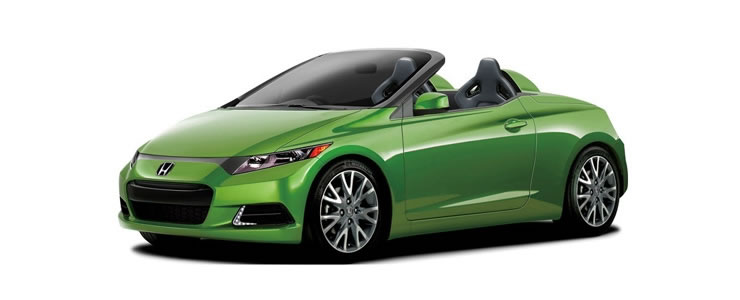
    Honda's President, Takanobu Ito, breaks his silence about the automaker's new Beat!

    Article Courtesy of

    It is rare for an automaker's President to disclose the details of a new model prior to its launch. But recent disclosures suggest the tides are turning: Daihatsu's President, Koichi Ina, revealed the fuel consumption rate of the automaker's newest light vehicle, e:S. Honda's former President, Takeo Fukui, also announced the development of NSX's successor well in advance. Now, Fukui's successor, Takanobu Ito continues the legacy.

    Everything began on 23 June at the Annual General Meeting of Honda's shareholders. Unexpectedly, Ito came forward during the Q and A session and announced that the automaker was in the midst of developing its next lightweight sports car to meet the demands of fans. This immediately caused a stir among the shareholders and the media.

    Speculations about Honda's next sports model have been circulating for some time. Honda's engineers had been pushing for the approval of their sports car plans, but these only received the thumbs-up after the recent Japanese earthquake. While one would expect that the automaker would devote most of its efforts into completely resuming its operations after the disaster, the confirmation of its new sports model, which will reportedly succeed Beat, indicates that the car will play a major role in Honda's revival. Though shareholders may have some concerns, the news was met with shock by Honda's fans.

    At the moment, concrete details about the Beat's successor have yet to be disclosed but Ito's statement

    has spurned some speculations. The first question concerns its size - while Ito announced that it would be a lightweight sports car, other sources suspect that it might be closer to a light vehicle. The second question concerns the layout of its powertrain, with one group anticipating an FF model, and another expecting a new midship car. The final query deals with logistics, such as when the car will be released and how much it will cost.
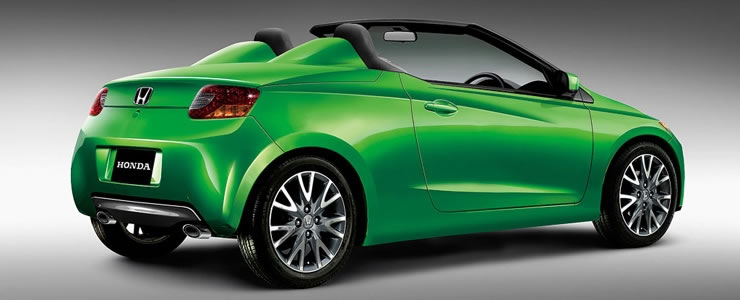

    The case for FF

    When Best Car Japan reported on the Beat's successor in early 2010, the piece relied upon the information available at the time. At the end of 2008, former President Fukui disclosed that Honda was working on a brand new light vehicle platform, which would debut in a sports model similar to Beat. A year later, a Honda insider said that a new light vehicle similar to Daihatsu's Tanto would be launched in 2011 to compete with Suzuki and Daihatsu in the light vehicle arena. While these plans have been slightly delayed because of the earthquake, Honda will supposedly launch several new light vehicles by the end of the year.

    Now let us return to Beat's successor. As early as 2008, President Fukui mentioned that it would be in­cluded in Honda's production schedule, and in 2009, a new platform was designed. Afterwards, the concept was unveiled, and the current President, Takanobu Ito, gave approval to proceed.

    One of the most contentious arguments about the Beat successor concerns its powertrain. Many enthusiasts fully expect it to have the midship layout, like the original Beat. However, it is more likely that it will be an FF car, like most of the models in Honda's upcoming light vehicle line-up.

    The FF layout has several advantages. First, it will allow Honda to completely revamp Beat's current 658cc inline-3 SOHC P07A engine. This, in turn, will enable it to compete with Daihatsu's extremely fuel-efficient e:S. Moreover, if the subcompact body is adequately lightweight and if its mileage is spectacular, its drive layout will likely be inconsequential - we reckon Beat fans will adore it just the same.
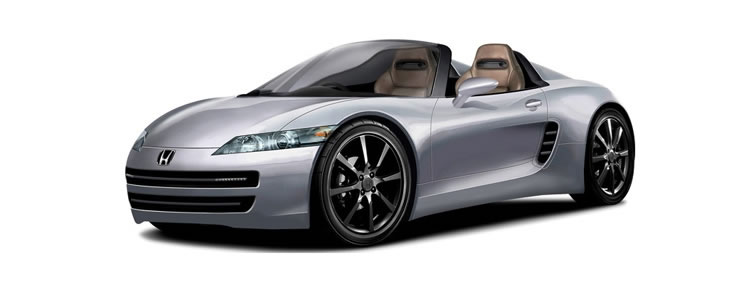

    The case for midship

    Another camp insists that the Beat successor will definitely sport the midship layout. History shows that Honda typically spares no expense in developing lightweight sports models that are enjoyable to drive - NSX and S2000 are prime examples.

    Honda might still build a midship Beat successor, as it did with the revived Z in 1998. Though the car lasted for only a single generation, its meticulously developed new generation midship platform deserved some attention. The complicated system consisted of an engine identical to Acty and Vamos's, which was subsequently mounted longitudinally - this type of midship layout made Z thrilling to drive.

    As attractive as this system is, it may not be sufficiently practical in the case of the Beat successor. Whereas Z had a spacious trunk and rear seats that allowed easy access to the platform during maintenance, the Beat successor's new longitudinal engine might require engineers to use the FF layout instead.

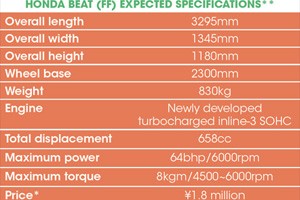
    While the original Beat had a high revolution naturally-aspirated (NA) engine, its successor's newly developed low revolution engine will most likely be turbocharged in pursuit of improved fuel efficiency. For example, the NA variant clocks 22km/l, while the turbocharged option clocks 20km/l. Assuming that Beat's fuel consumption rate is similar to Life's, the original will have clocked 30km/l while the successor will clock 28km/l. Additionally, the turbocharged option will generate 64bhp, while the NA will merely produce 55bhp.
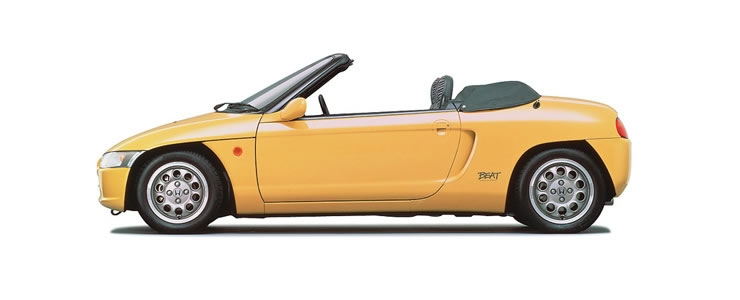

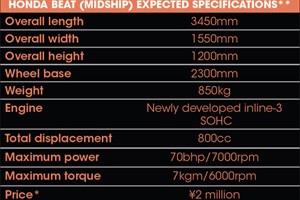
    To achieve this kind of performance, additional factors such as size, transmission and weight will have to be factored in. If the Beat successor weighs less than 850kg, it will undoubtedly achieve both excellent driveability and improved environmental performance. Its lightweight frame will likely be 3295mm long, 1345mm wide and 1180mm tall, which is certainly appealing. That said, many enthusiasts are put off by the fact that it might be slightly larger than a regular light vehicle.

    Perhaps Honda should think twice before embarking upon the light vehicle route. History has shown that being completely dependent such a strategy is futile, as in the case of Suzuki's Beat and Cappuccino. Even Mazda learned a tough lesson with its Eunos Roadster - when the 1.6-litre car was launched, it went like hotcakes as it had no rivals. But when it was enlarged and sold as a regular sports model, not only did it have an abundance of competitors, it also left the compact sports car class empty. Perhaps Honda can penetrate the compact sports car market by reducing the Beat successor's engine capacity to 800cc or 1.0-litre.

    Currently, the Beat successor is more likely to be an FF car than a midship, but Honda may still relent and give fans the car that they have been waiting for. It will probably debut next year at the earliest, and will likely cost less than ¥2 million*.
    24.4k

    Tags

    honda honda beat the dream meister honda dream honda the dream meister all new beat honda new beat new honda beat

    AllReviewsNewsAdviceFeaturesVideos
    • Home
    • Car Articles
    • features
    • features Listings
    • Features

    Honda the Dream Meister

    21 Sep 2011

    |

    10,690 views

    Honda's President, Takanobu Ito, breaks his silence about the automaker's new Beat!

    Article Courtesy of

    It is rare for an automaker's President to disclose the details of a new model prior to its launch. But recent disclosures suggest the tides are turning: Daihatsu's President, Koichi Ina, revealed the fuel consumption rate of the automaker's newest light vehicle, e:S. Honda's former President, Takeo Fukui, also announced the development of NSX's successor well in advance. Now, Fukui's successor, Takanobu Ito continues the legacy.

    Everything began on 23 June at the Annual General Meeting of Honda's shareholders. Unexpectedly, Ito came forward during the Q and A session and announced that the automaker was in the midst of developing its next lightweight sports car to meet the demands of fans. This immediately caused a stir among the shareholders and the media.

    Speculations about Honda's next sports model have been circulating for some time. Honda's engineers had been pushing for the approval of their sports car plans, but these only received the thumbs-up after the recent Japanese earthquake. While one would expect that the automaker would devote most of its efforts into completely resuming its operations after the disaster, the confirmation of its new sports model, which will reportedly succeed Beat, indicates that the car will play a major role in Honda's revival. Though shareholders may have some concerns, the news was met with shock by Honda's fans.

    At the moment, concrete details about the Beat's successor have yet to be disclosed but Ito's statement

    has spurned some speculations. The first question concerns its size - while Ito announced that it would be a lightweight sports car, other sources suspect that it might be closer to a light vehicle. The second question concerns the layout of its powertrain, with one group anticipating an FF model, and another expecting a new midship car. The final query deals with logistics, such as when the car will be released and how much it will cost.


    The case for FF

    When Best Car Japan reported on the Beat's successor in early 2010, the piece relied upon the information available at the time. At the end of 2008, former President Fukui disclosed that Honda was working on a brand new light vehicle platform, which would debut in a sports model similar to Beat. A year later, a Honda insider said that a new light vehicle similar to Daihatsu's Tanto would be launched in 2011 to compete with Suzuki and Daihatsu in the light vehicle arena. While these plans have been slightly delayed because of the earthquake, Honda will supposedly launch several new light vehicles by the end of the year.

    Now let us return to Beat's successor. As early as 2008, President Fukui mentioned that it would be in­cluded in Honda's production schedule, and in 2009, a new platform was designed. Afterwards, the concept was unveiled, and the current President, Takanobu Ito, gave approval to proceed.

    One of the most contentious arguments about the Beat successor concerns its powertrain. Many enthusiasts fully expect it to have the midship layout, like the original Beat. However, it is more likely that it will be an FF car, like most of the models in Honda's upcoming light vehicle line-up.

    The FF layout has several advantages. First, it will allow Honda to completely revamp Beat's current 658cc inline-3 SOHC P07A engine. This, in turn, will enable it to compete with Daihatsu's extremely fuel-efficient e:S. Moreover, if the subcompact body is adequately lightweight and if its mileage is spectacular, its drive layout will likely be inconsequential - we reckon Beat fans will adore it just the same.


    The case for midship

    Another camp insists that the Beat successor will definitely sport the midship layout. History shows that Honda typically spares no expense in developing lightweight sports models that are enjoyable to drive - NSX and S2000 are prime examples.

    Honda might still build a midship Beat successor, as it did with the revived Z in 1998. Though the car lasted for only a single generation, its meticulously developed new generation midship platform deserved some attention. The complicated system consisted of an engine identical to Acty and Vamos's, which was subsequently mounted longitudinally - this type of midship layout made Z thrilling to drive.

    As attractive as this system is, it may not be sufficiently practical in the case of the Beat successor. Whereas Z had a spacious trunk and rear seats that allowed easy access to the platform during maintenance, the Beat successor's new longitudinal engine might require engineers to use the FF layout instead.

    While the original Beat had a high revolution naturally-aspirated (NA) engine, its successor's newly developed low revolution engine will most likely be turbocharged in pursuit of improved fuel efficiency. For example, the NA variant clocks 22km/l, while the turbocharged option clocks 20km/l. Assuming that Beat's fuel consumption rate is similar to Life's, the original will have clocked 30km/l while the successor will clock 28km/l. Additionally, the turbocharged option will generate 64bhp, while the NA will merely produce 55bhp.


    To achieve this kind of performance, additional factors such as size, transmission and weight will have to be factored in. If the Beat successor weighs less than 850kg, it will undoubtedly achieve both excellent driveability and improved environmental performance. Its lightweight frame will likely be 3295mm long, 1345mm wide and 1180mm tall, which is certainly appealing. That said, many enthusiasts are put off by the fact that it might be slightly larger than a regular light vehicle.

    Perhaps Honda should think twice before embarking upon the light vehicle route. History has shown that being completely dependent such a strategy is futile, as in the case of Suzuki's Beat and Cappuccino. Even Mazda learned a tough lesson with its Eunos Roadster - when the 1.6-litre car was launched, it went like hotcakes as it had no rivals. But when it was enlarged and sold as a regular sports model, not only did it have an abundance of competitors, it also left the compact sports car class empty. Perhaps Honda can penetrate the compact sports car market by reducing the Beat successor's engine capacity to 800cc or 1.0-litre.

    Currently, the Beat successor is more likely to be an FF car than a midship, but Honda may still relent and give fans the car that they have been waiting for. It will probably debut next year at the earliest, and will likely cost less than ¥2 million*.

    24.4k

    Tags

    honda honda beat the dream meister honda dream honda the dream meister all new beat honda new beat new honda beat

    Newsletter

    Be Notified On The Latest News

    Newsletter

    Be Notified On The Latest News

    Related Articles

    Should I buy a car in July / August / September 2026?

    Should I buy a car in July / August / September 2026?

    16 noteworthy production models at the 2026 Auto Beijing!

    16 noteworthy production models at the 2026 Auto Beijing!

    Opinion: Why do we even need green number plates?

    Opinion: Why do we even need green number plates?

    Us against the world: Which is the best off-roader?

    Us against the world: Which is the best off-roader?

    The all new XPENG Mona L03 is one smart coupe SUV

    The all new XPENG Mona L03 is one smart coupe SUV

    Sgcarmart Explores: Holland Village!

    Sgcarmart Explores: Holland Village!

    Ferrari 849 Testarossa Spider - with the sky included

    Ferrari 849 Testarossa Spider - with the sky included

    Designing around real life: The BMW iX3 in Bangkok

    Designing around real life: The BMW iX3 in Bangkok

    Related Articles

    Should I buy a car in July / August / September 2026?

    Should I buy a car in July / August / September 2026?

    16 noteworthy production models at the 2026 Auto Beijing!

    16 noteworthy production models at the 2026 Auto Beijing!

    Opinion: Why do we even need green number plates?

    Opinion: Why do we even need green number plates?

    Us against the world: Which is the best off-roader?

    Us against the world: Which is the best off-roader?

    The all new XPENG Mona L03 is one smart coupe SUV

    The all new XPENG Mona L03 is one smart coupe SUV

    Sgcarmart Explores: Holland Village!

    Sgcarmart Explores: Holland Village!

    Ferrari 849 Testarossa Spider - with the sky included

    Ferrari 849 Testarossa Spider - with the sky included

    Designing around real life: The BMW iX3 in Bangkok

    Designing around real life: The BMW iX3 in Bangkok

    You May Also Like

    Get your next rental from AKA Car Rental

    Get your next rental from AKA Car Rental

    Recommended Fuel-Saving & Eco-Friendly Tyres for Daily Drive

    Recommended Fuel-Saving & Eco-Friendly Tyres for Daily Drive

    XPENG's Munich moment: The importance of the Mona L03

    XPENG's Munich moment: The importance of the Mona L03

    Dunlop's new tyres for an electrified world

    Dunlop's new tyres for an electrified world

    BYD Seal 6 Plug-in Hybrid Review

    BYD Seal 6 Plug-in Hybrid Review

    The 5 main things you must know about the XPENG L03

    The 5 main things you must know about the XPENG L03

    A first look at the Sitrak Light eTruck!

    A first look at the Sitrak Light eTruck!

    The new Pirelli Cinturato Rosso with Seal Inside Tech!

    The new Pirelli Cinturato Rosso with Seal Inside Tech!

    You May Also Like

    Get your next rental from AKA Car Rental

    Get your next rental from AKA Car Rental

    Recommended Fuel-Saving & Eco-Friendly Tyres for Daily Drive

    Recommended Fuel-Saving & Eco-Friendly Tyres for Daily Drive

    XPENG's Munich moment: The importance of the Mona L03

    XPENG's Munich moment: The importance of the Mona L03

    Dunlop's new tyres for an electrified world

    Dunlop's new tyres for an electrified world

    BYD Seal 6 Plug-in Hybrid Review

    BYD Seal 6 Plug-in Hybrid Review

    The 5 main things you must know about the XPENG L03

    The 5 main things you must know about the XPENG L03

    A first look at the Sitrak Light eTruck!

    A first look at the Sitrak Light eTruck!

    The new Pirelli Cinturato Rosso with Seal Inside Tech!

    The new Pirelli Cinturato Rosso with Seal Inside Tech!