Buying a new car for many is a big financial burden. With limiting factors like minimum downpayment, COE prices and loan restrictions, the thought of buying a new car can be a turn off.
But it seems buying a new car now may not be as unreachable of a goal as before. If you are toying with the idea of getting a brand new car, now might just be the best time for you. Here's why.
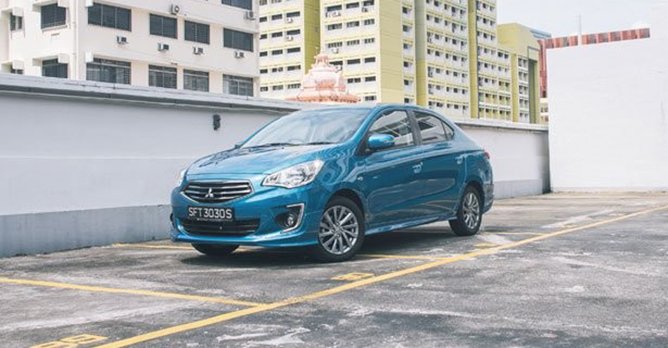

1. COE is still reasonable!
Despite the increase in COE prices, they are currently at a very reasonable level. Cat A prices up till last week's bidding for example, have been hovering between $20,000 to $30,000 in the past year. This has allowed for cars to be more affordable.
An example would be the Mitsubishi Attrage. Now, it is priced at $64,999 (as of 22 April 2019). Compare this to four years ago, a Mitsubishi Attrage would've cost you $105,999 in May 2015.
In fact, at one point, there was no way you could buy a new car without shelling out six-figures for one. While prices are still reasonable now, there is a chance it will not stay that way for long. This brings us to our next point.

2. COE prices are expected to go upwards
Deregistrations have shrunk. There were only 4,690 Cat B cars deregistered between January 2019 to February 2019, compared to 5,480 cars during the same period in 2018.
The fact that there are lesser deregistrations is further compounded by the amount of COE renewals. In January 2018, there were only 247 Cat B cars that renewed COE for 10 years. But in January 2019, this number jumped to 1,836!
In the last of bidding in April, COE for Cat B recorded an 11.36% increase - its biggest increase this year. Cat E has also crossed the $50,000 mark since December 2017. With an expected shrinkage in supply, and more demand for COEs, we may see prices continue on this upward trend.

3. Lowered restrictions on new car loans
In 2013, the Monetary Authority of Singapore (MAS) introduced new loan restrictions for financial institutions on new cars. One of the reasons for its implementation is to moderate the resulting inflationary pressures on COE premiums.
Since 2016, MAS eased car loan restrictions. Now, a maximum loan of 70% is allowed for OMVs less than or equal to $20,000, and 60% for OMVs above $20,000. Thus, the loan tenure is now seven years.
When the loan restrictions were eased, it did increase COE premiums significantly due to demand. But now that the dust has settled, the initial costs for purchasing a new car are reduced significantly.

4. Used cars come with high COE
Going for used cars with PARF value may be an option, but due to the high prices of COE in the previous years, most used cars in the market come with high COEs.
COE prices only started to fall significantly in the second quarter of 2018, leaving only a small portion of used cars with cheaper COEs in the market. The other group of PARF cars with cheap COEs come from a period between 2009 and mid-2010.
While the upfront costs might be cheaper than a new car, these high COE used cars attract high depreciation due to the high COEs, sometimes exceeding that of an equivalent new car model.
Of course, the argument is that the COE rebate of these high-COE cars is higher. While this may be true, you will still have to bear the brunt of the higher depreciation, and receive the COE rebate when you deregister the car in the future.
By then, there could be a chance that COE prices have risen once again, and you might miss this boat of getting a new car.