What We Like
What We Dislike
It's not easy being a car enthusiast these days, with EVs all the rage and sustainability now part of almost every discussion.
Oil is bad. Emissions, be it carbon dioxide, particulates or noise, are equally terrible. Cars must be silent and clean. Every time stricter legislation emerges, it sounds the death knell for supercars.
Is this the end of exotic machines? Hell no. Not if a brand like Lamborghini can help it. It must play ball, of course, and keep with the times. But it wouldn't be Lamborghini if it weren't rebellious or defiant.
All attitude
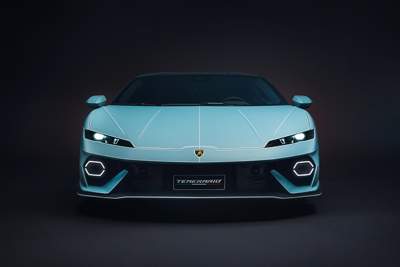
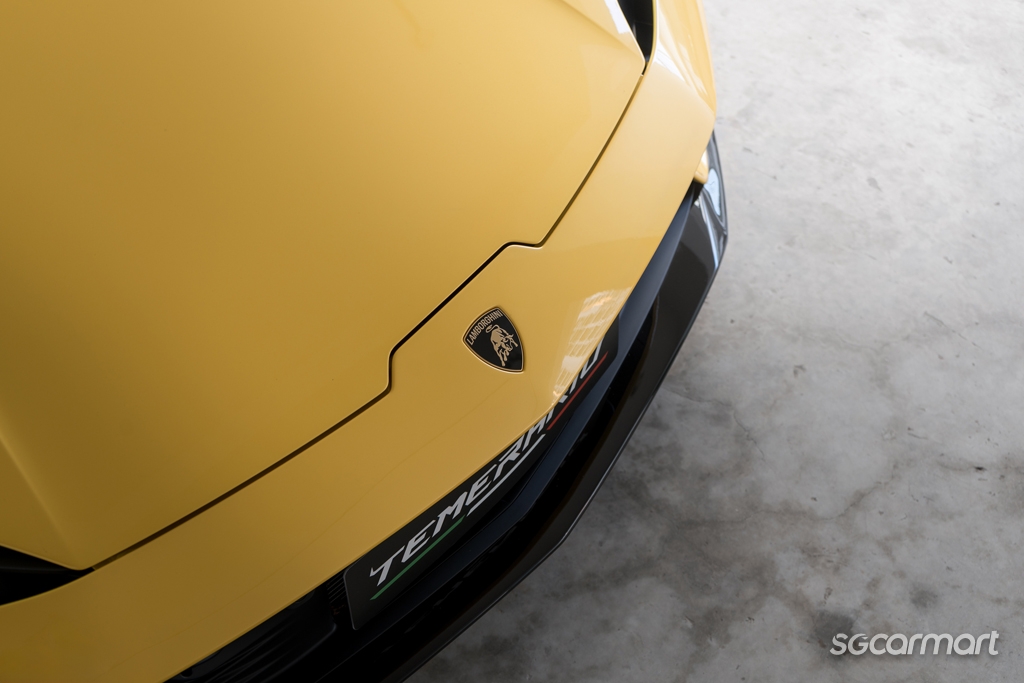
After all, that's why the Revuelto, its newest flagship, exists. It's also why Lamborghini's latest response to today's demands for electrification and sustainability is the Temerario, successor to the Huracan. Prior to its launch, I feared it would be 'nerfed' by environmental regulations. It might be a quicker car, but with less power, noise, and character.
That would have gone against everything that Lamborghini is known for.
Fortunately, the paranoia was for nothing, because the Temerario is everything you'd expect from a modern Lambo - and then some.
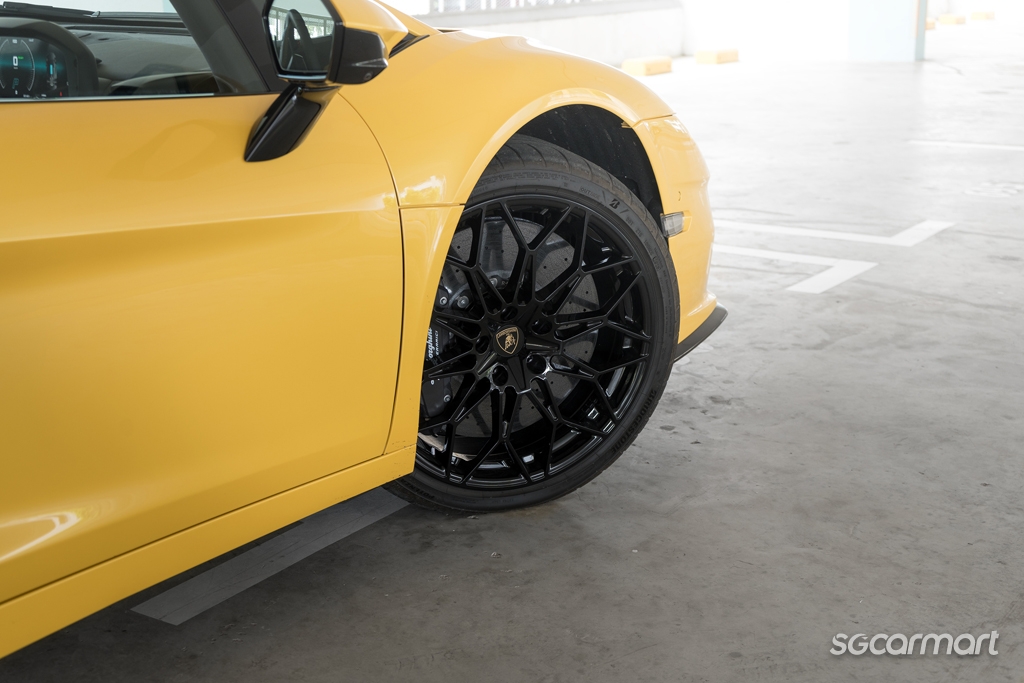
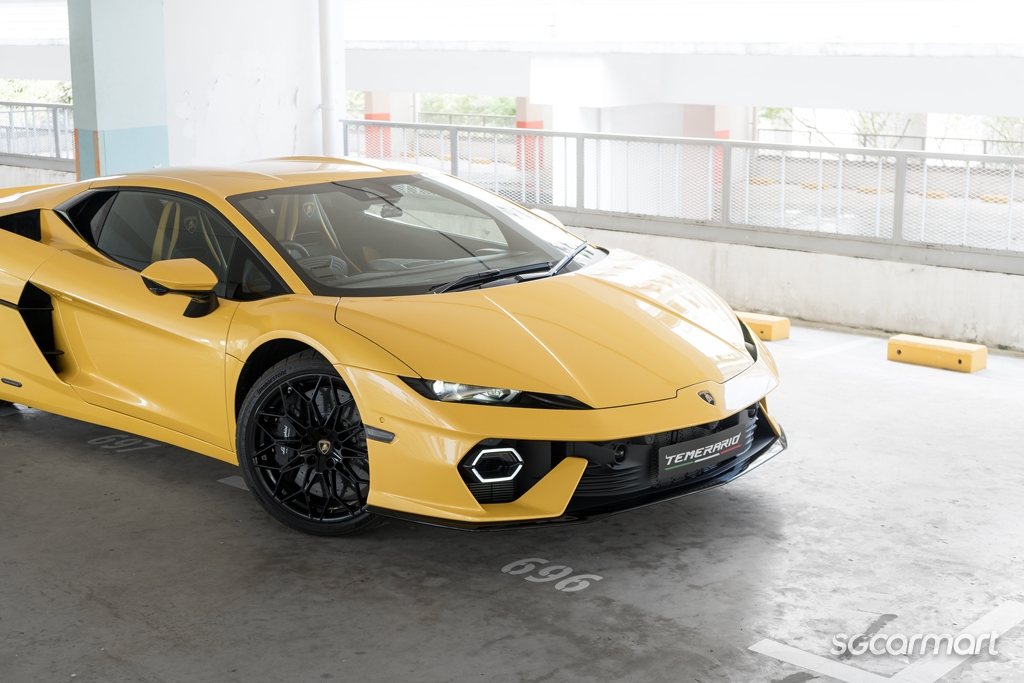
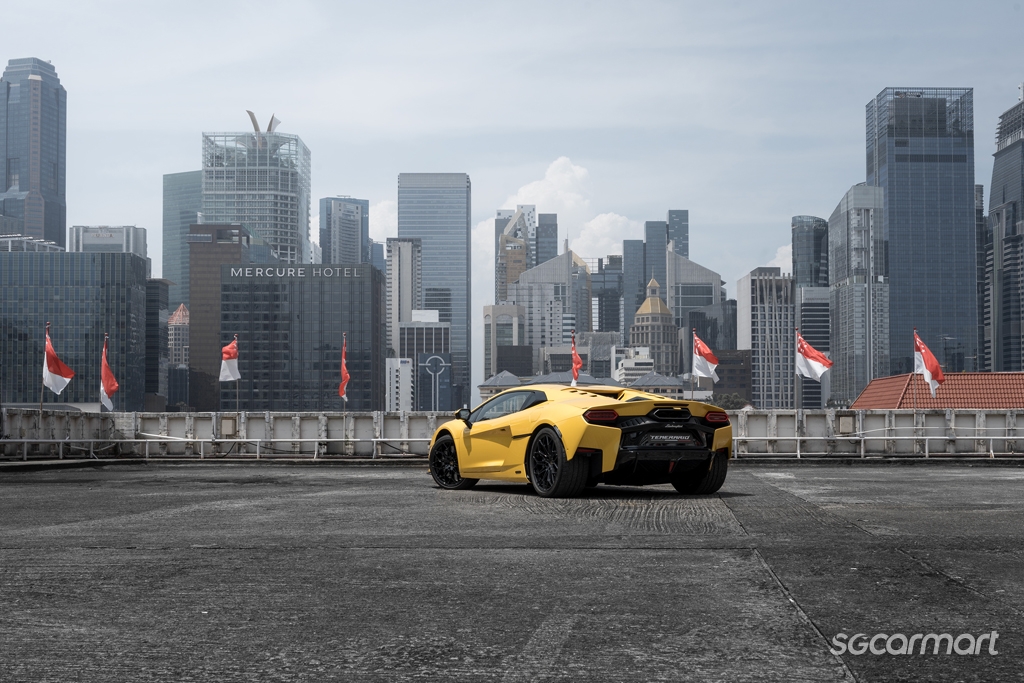
Its wedge-shaped silhouette is immediately familiar. You draw closer and trace its sharp lines, tip-to-tip, from nose to tail. The car is angular, muscular, and with those slit-like head-lights, looks angry, too.
Of course, the Temerario sits low to the ground - it's just 1,201mm tall, or the height of a small child. By now, its mien and stance should have communicated its fiery intentions, which include melting tarmac and singeing eyebrows.
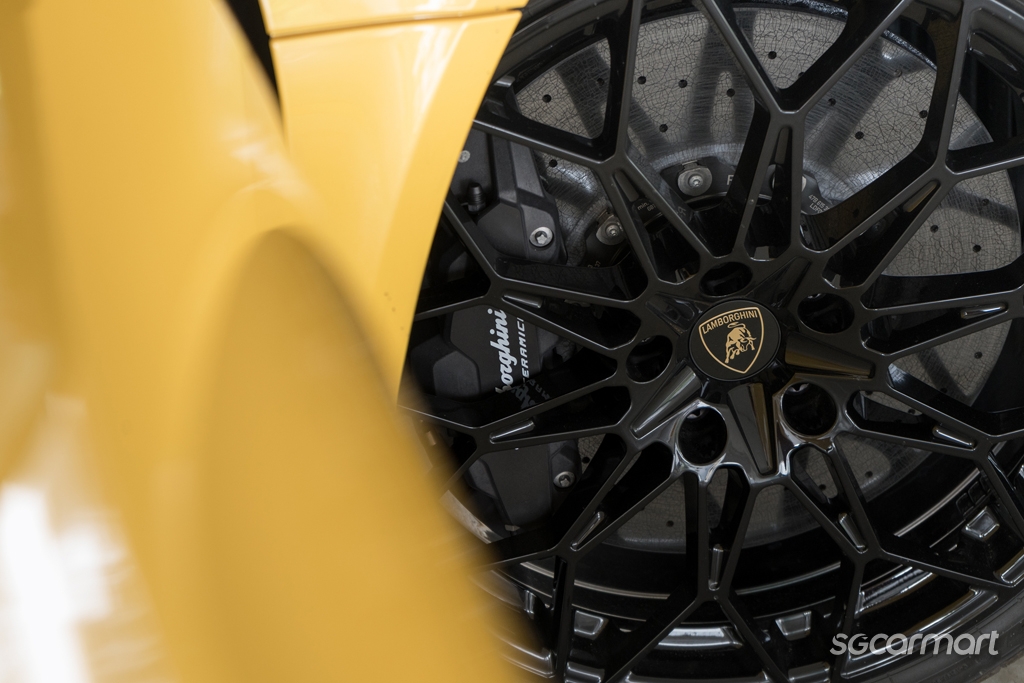
There's more, of course. Staggered wheels (20 inches in front, 21 inches in the rear) showcase the huge carbon ceramic brakes. The front rotors measure 410mm and have 10-piston callipers, while the 390mm rear rotors are clamped by four-piston callipers. There are sizeable air intakes behind the doors, but the real treat is being able to peek at the engine lurking beneath the rear deck lid.
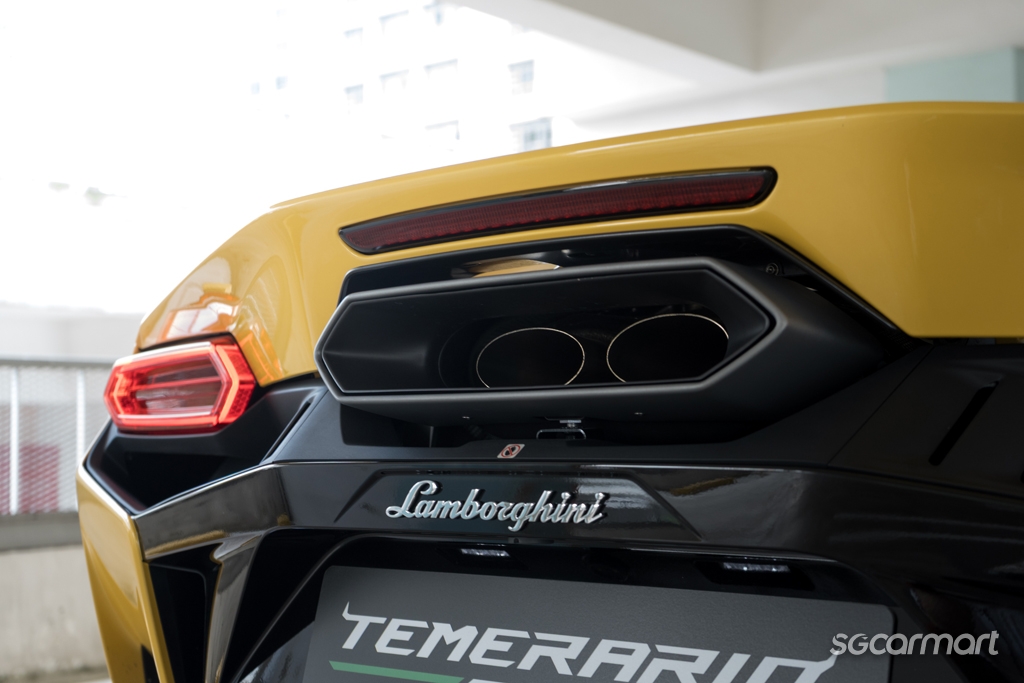
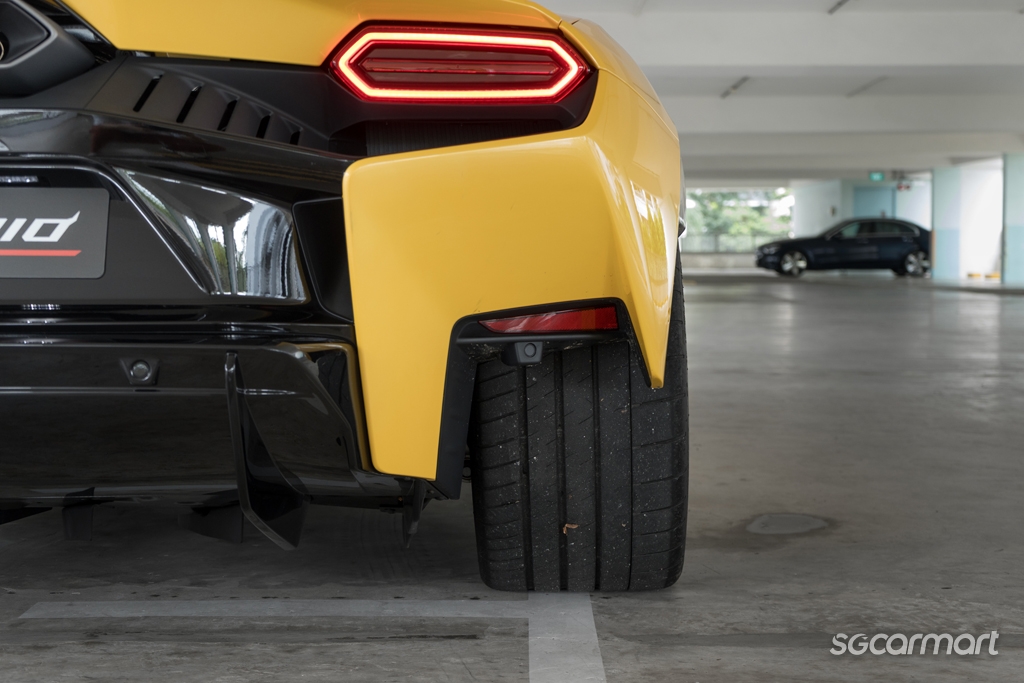
The intimidation factor is nailed by the rear end, which is dominated by a centrally mounted exhaust finisher and 325-series tyres. And as we shall soon see, none of these are for show.
Razzle dazzle
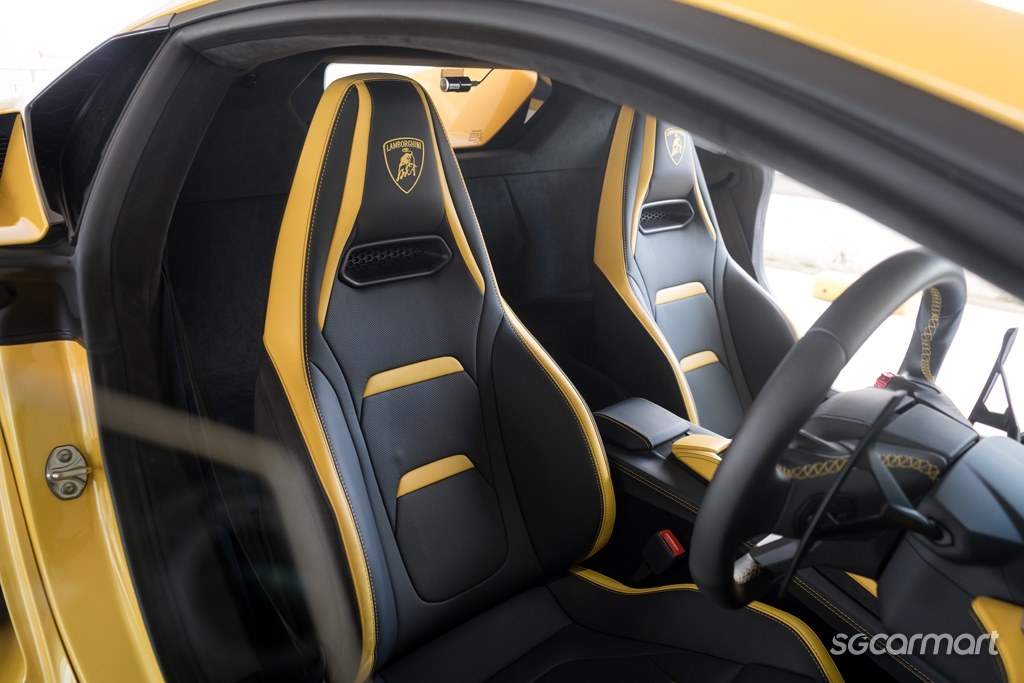
Intimidating, too, is the cockpit. Although getting in and out isn't a big problem because the door sills aren't super-wide, you'll still need a degree of flexibility and core strength to make this look natural and graceful.
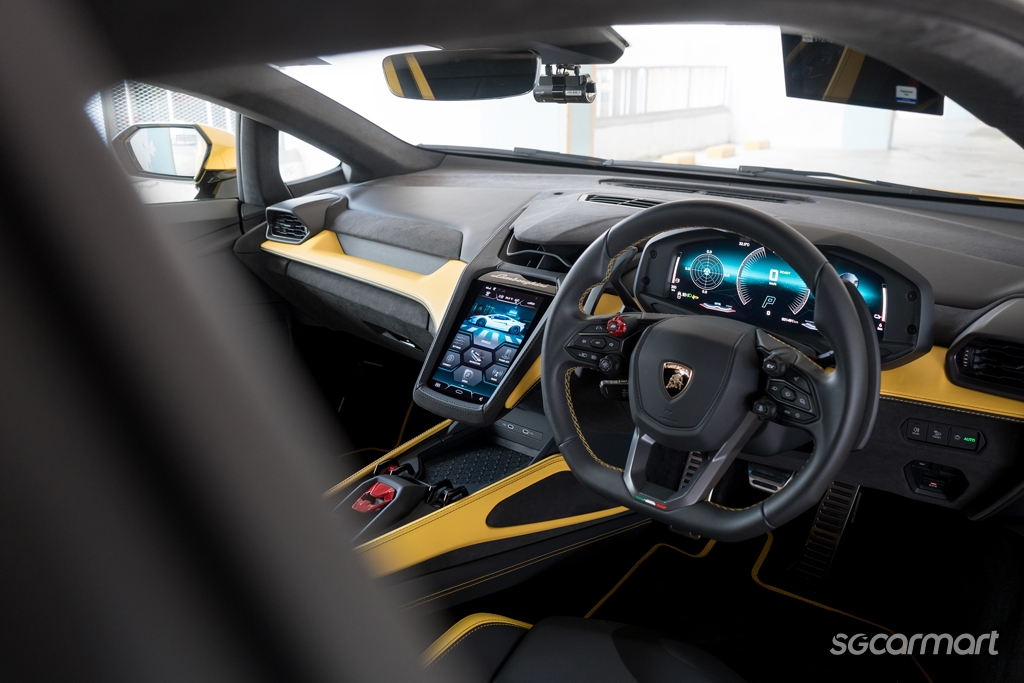
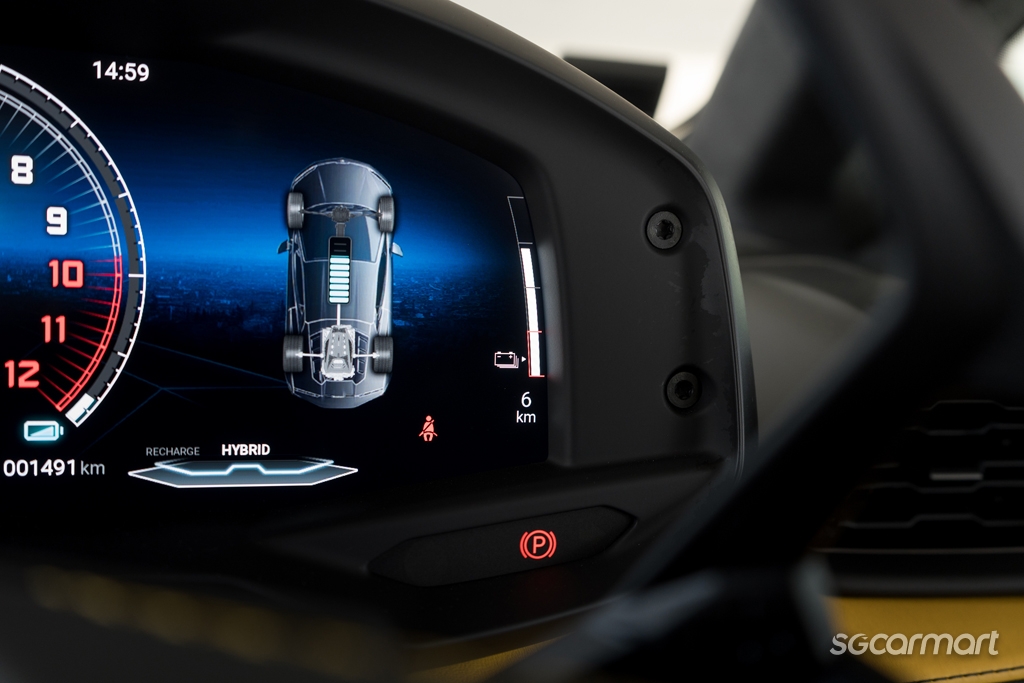
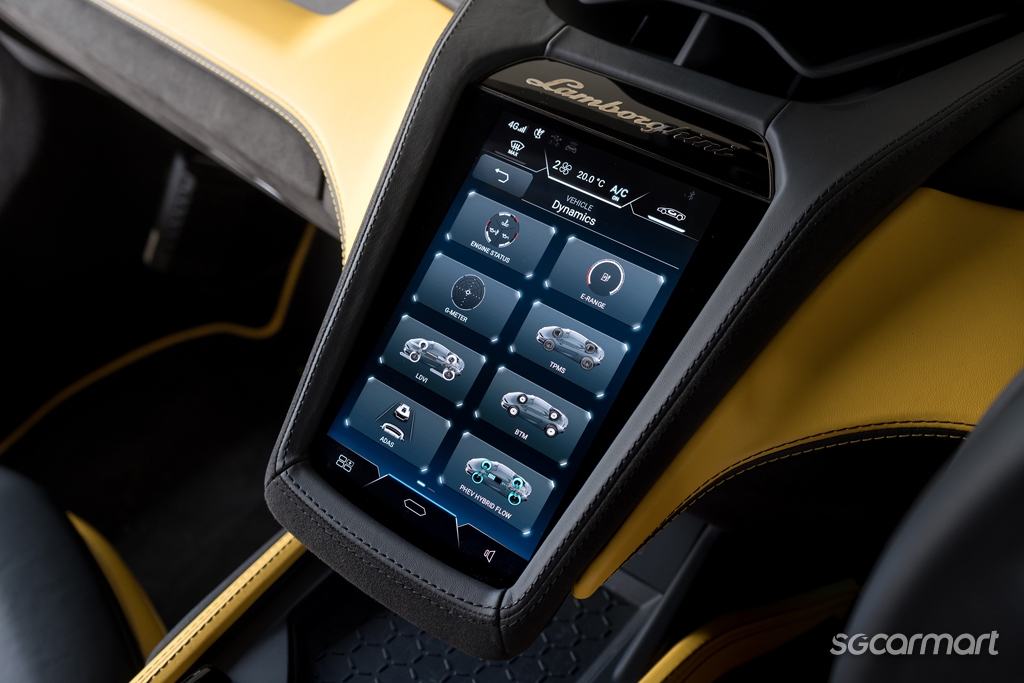
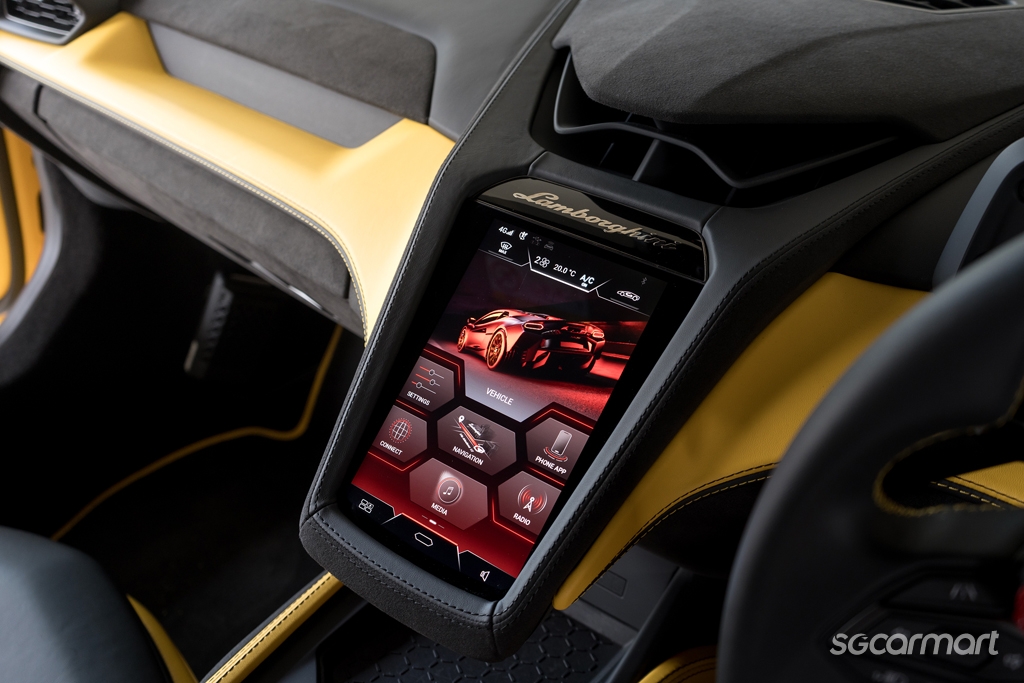
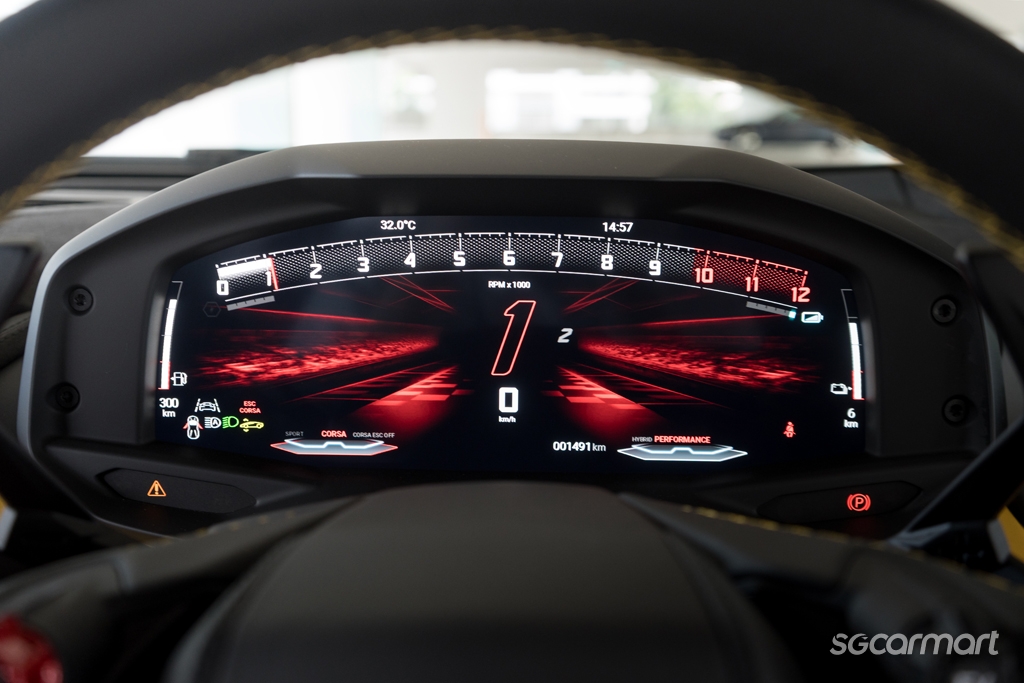
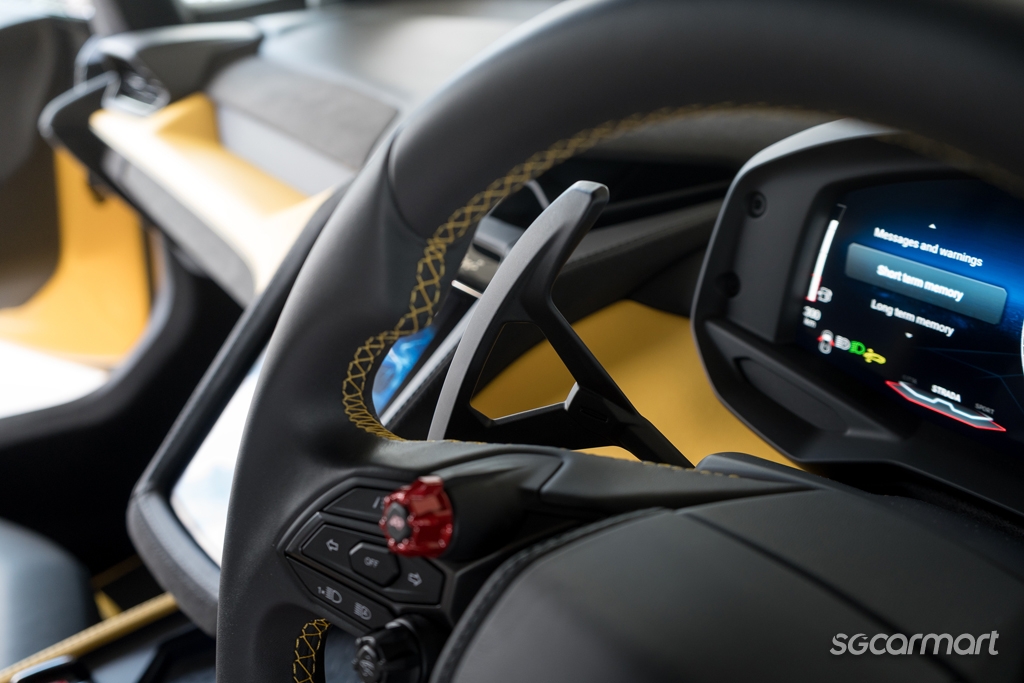
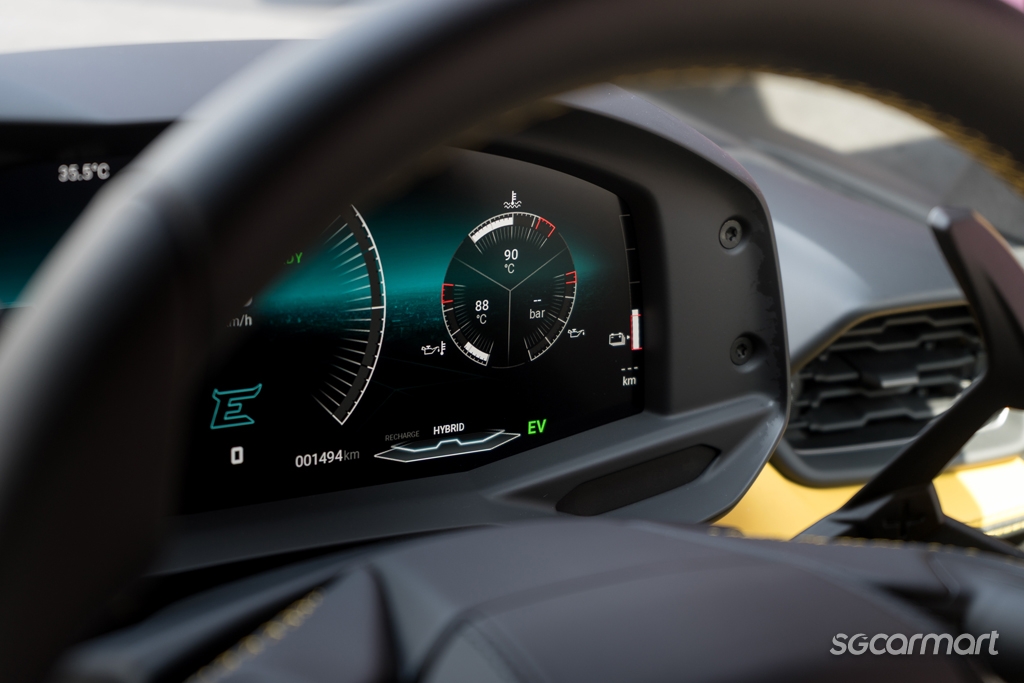
Once ensconced, you face two screens: A 12.3-inch instrument panel and an 8.4-inch infotainment display for tweaking various settings. The component with a learning curve, though, is the steering wheel, whose controls take some getting used to.
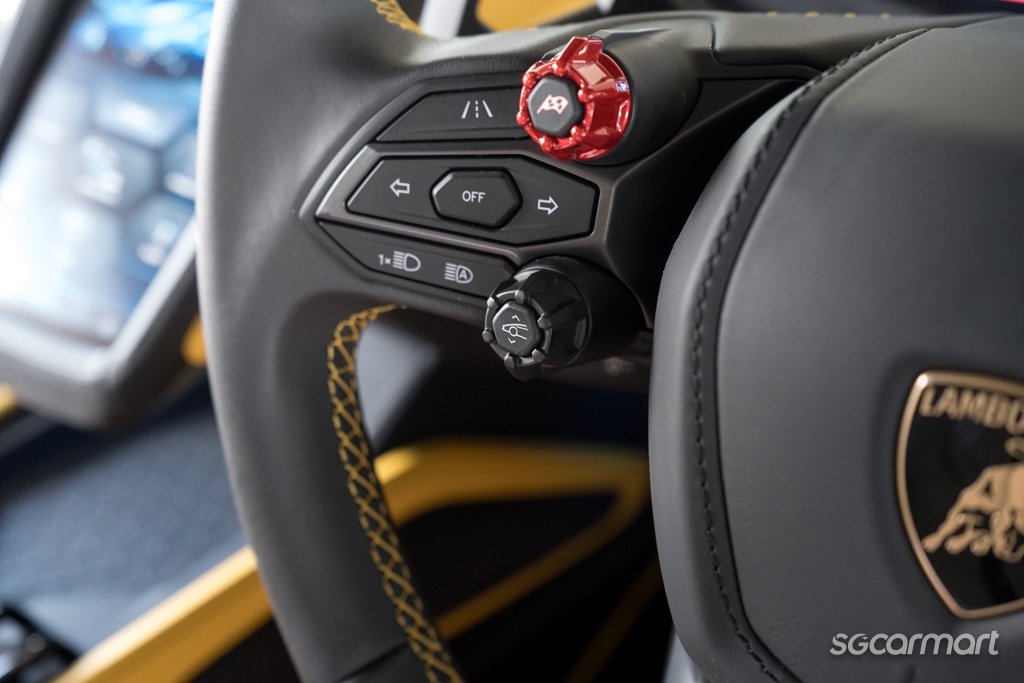
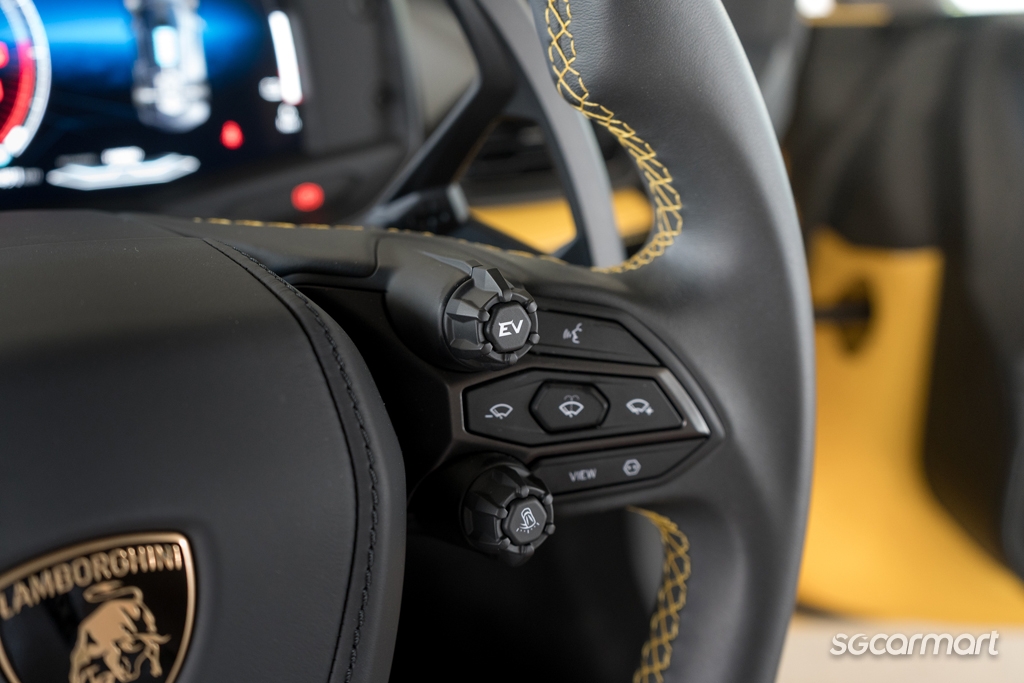
Annoyingly, the designers have decided that the indicators and wiper stalks should now be buttons, but the cruise control is still on a stalk. Well, at least the buttons are not haptic.
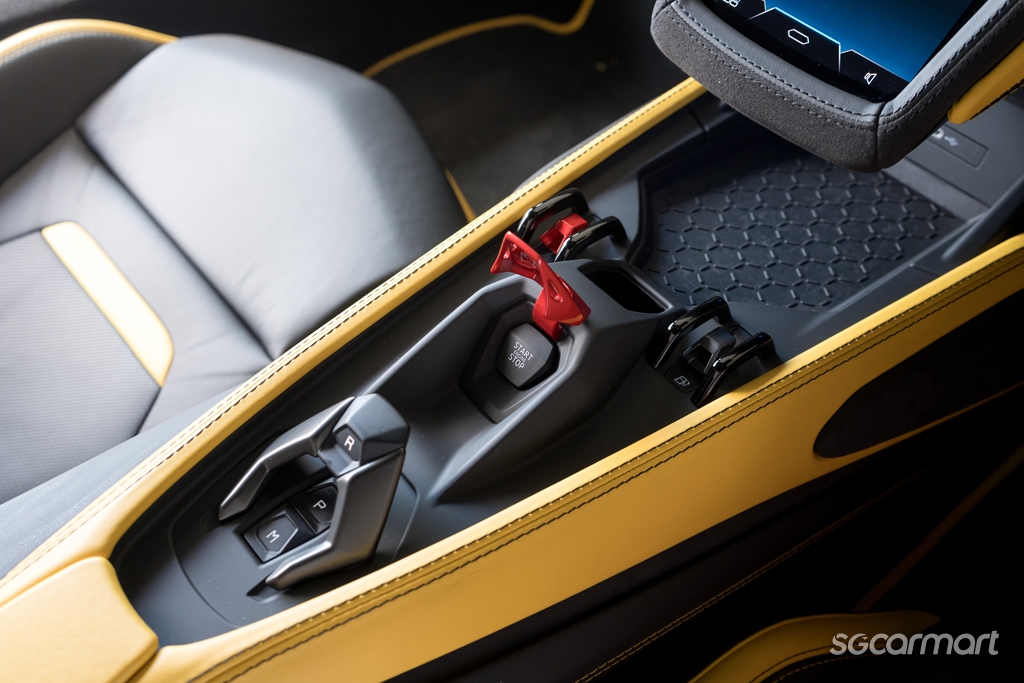
What is convenient, though, are the little knobs that let you select the drive mode, hybrid system, and front lift function that raises the front end by 40mm - arguably the most important feature in a car like this.
But while the dashboard layout, screens, and graphics are unique to Lamborghini, the Temerario can't escape its parent company, Audi. Apart from the undeniable Audi-esque feel to certain switchgear (the key fob is also used by certain Audi models), even the smell of the interior is unmistakably Audi.
Soft whirring, loud explosions
I expected histrionics after flipping the ignition cover and thumbing the start button, but all I heard was electronic whirring as the seat moved into its programmed position. Plus, since the car's default setting is Citta (City), the Temerario starts in electric mode - as long as the 3.8kWh battery has enough juice.
It's surreal. An outrageous-looking supercar should have a raucous soundtrack from the moment you fire it up. Yet there it sat, silent.
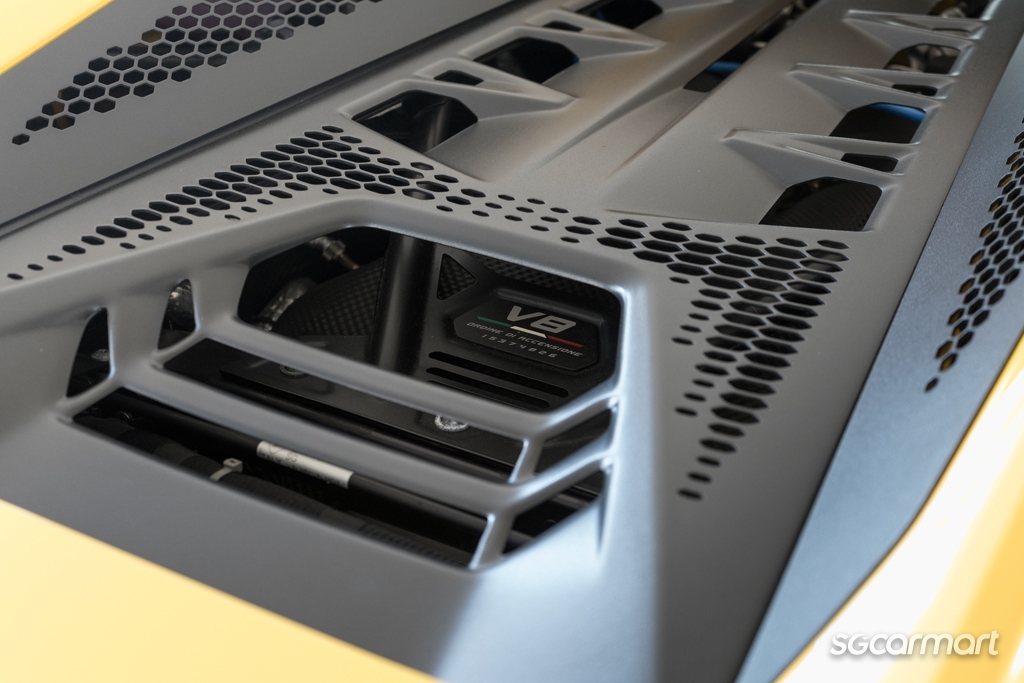
The aural assault wasn't far away, though. My senses were jolted awake as I turned the red dial on the steering wheel and selected Sport. In the blink of an eye, the twin-turbocharged 4.0-litre V8 - an all-new unit unique to Lamborghini - roared to life, snarling and raring to be unleashed. It was thunderous, raw and emotional - no EV can sound or feel as alive as this.
However, to comply with ever-tightening environmental regulations, the Temerario is a plug-in hybrid. Apart from the V8, it has three electric motors: Two are on the front axle (giving the car all-wheel drive), while the third is nestled within the engine housing. The latter's role is to eliminate turbo lag and act as a starter motor and three-phase generator.
The V8 and electric motors produce a combined 907bhp and 730Nm of torque, which are channelled via an eight-speed dual-clutch gearbox. These staggering figures far eclipse the 631bhp 565Nm that the most powerful Huracan versions made.
But even when driven in anger, the Temerario is slower from zero to 100km/h, taking 2.7 seconds instead of 2.5 seconds. However, it makes up for this with a top speed of 343km/h, or about 20km/h quicker than its predecessor.
Reality check
Having more than 900bhp under your right foot feels tremendous. With the car in Sport mode and the EV dial turned to Performance, the engine is kept boiling, its thrum filling your ears and leaving other motorists and bystanders wide-eyed and gobsmacked.
You'd be in awe, too, as the Temerario hurtles forwards not just with ease, but with the uncanny absence of the sensation of speed; keeping a close eye on the speedometer is essential.
Prior to the Temerario, 10,000rpm was something I only did on a motorcycle. Here, when the tachometer needle swings past 6,000rpm in second gear, you'll be doing over 80km/h. The Temerario should either be driven on a racetrack or in Germany, where curvy B-roads are plentiful and unrestricted stretches of autobahn exist.
There, redlining the Temerario is possible (and legal), and it has a chance to stretch its legs. In Singapore, the car is hemmed in; there's no legal way of giving it the workout it deserves. Corners? It slices through and makes whatever we have here disappear - that's what you get from something so low to the ground and shod with grippy 'footwear'. Apart from tight carparks, no road here can challenge this car. How I wish I had 50km of hilly, serpentine roads to put the Temerario through its paces.
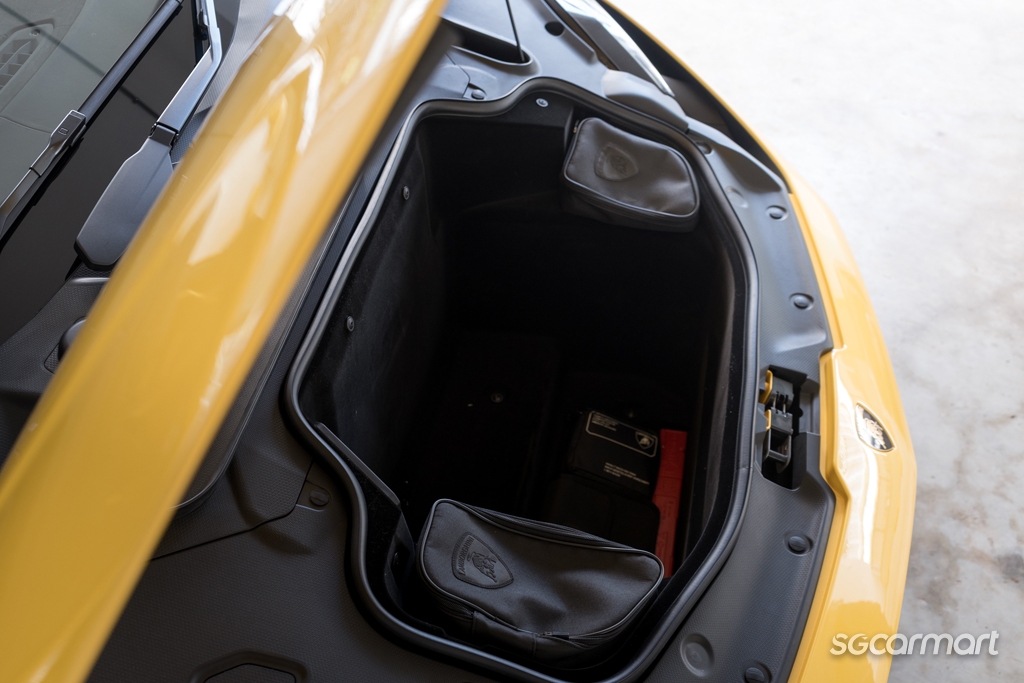
Instead, the Temerario was driven like a city car, which it was surprisingly good at. In the soft suspension setting, the ride remains firm yet compliant enough for daily use. Speaking of which, there's a lift function that raises the front by 40mm to help clear ramps and speed bumps.
And if you must, the Temerario can be solely electrically driven, although given the small battery, you'd be lucky to cover anywhere near 10km.
With clarity
The Temerario is wonderful for it is simultaneously rude and politically correct. Its V8 and dual-clutch transmission are both all-new. Its performance is stupendous, yet it can also - begrudgingly - act meek and harmless.
It is undoubtedly excellent, but in our environment, soon becomes frustrating. A 10k redline is awesome, but not if you can't use it (or you can if you're okay with eventually being imprisoned). Because it slaughters corners so easily, bends here seem pointless. It's easy to drive in traffic, but that's not what it was made for.
Supercars, however, are an emotional acquisition. You buy a Temerario not because of what it can deliver, but because you're tired of being told oil is bad and emissions are filthy. Because you're sick of hearing about EVs. You buy a Temerario because it's a car that lets you meet regulations, yet somehow still defy them.
These stories may interest you, too:
Lamborghini's new high-performance plug-in hybrid drivetrain proves a worthy scion to the firm's long lineage of V12 engines in the Revuelto
Proof that electrification doesn't have to be a eulogy for excitement, the 296 GTB looks confidently to the future without sacrificing drama or passion
The Artura embeds electrification into the supercar formula, bringing added everyday usability without compromising performance the slightest