Subaru is a brand that's synonymous with rallying, all-wheel drive and turbocharged boxer engines. Speed and performance are always the first things that come to mind when the brand is mentioned.
However, like all carmakers, Subaru has also been hard at work improving vehicle safety. Indeed, EyeSight, the brand's suite of safety and driver assistance features, is now in its fourth generation.
In essence, EyeSight works off a pair of forward-facing stereo cameras that are mounted in front of the rearview mirror. EyeSight is equipped with numerous functions that include Dynamic Radar Cruise Control, Lane Tracing Assist, and Pre-Collision System. We put several of these to the test at the brand's event in Changi Exhibition Centre.
EyeSight Testing
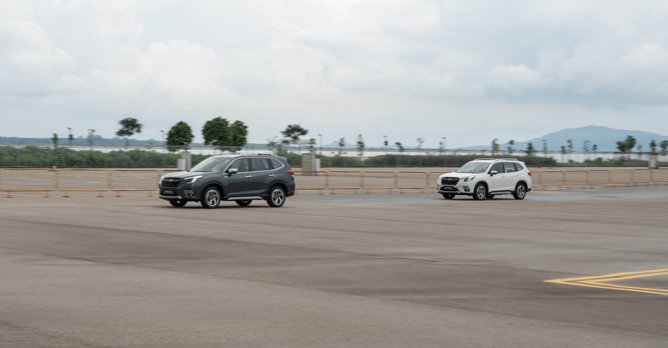
 EyeSight's tracking function worked well and enabled the white Forester to follow the lead one In a Subaru Forester, we put three EyeSight features to the test: Lane Departure Prevention, Lane Centering Function, and Pre-Collision Braking.
To activate the former two features, I accelerated to 60km/h while driving beside a yellow line.
EyeSight immediately detected the line and flashed an indicator on the dashboard to notify me of this. Then, I purposely crossed the line to simulate drifting into an adjacent lane without signalling.
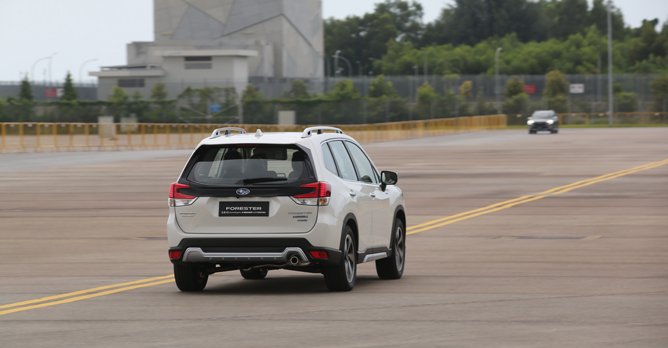 Lane Departure Prevention provided an audio alert, but the supposed nudge from the steering was softer than expected EyeSight immediately sounded an alert, telling me that I was straying from my lane. I was also supposed to feel the steering wheel vibrating to 'nudge' me back into my current lane, but it took two tries and I barely felt it.
Perhaps there was something with the settings, or perhaps the system needed to see lane markings on either side of the car. Either way, in this situation, the audio alert worked, but the nudging did not.
Next up was the Pre-Collision Braking feature. For this exercise, we had to activate Dynamic Radar Cruise Control, and set EyeSight to track the Forester driving in front.
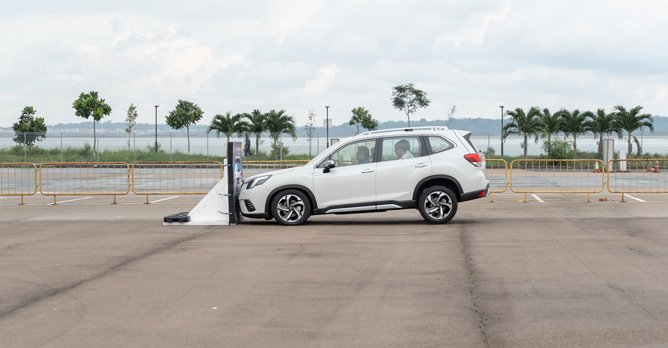 Pre-Collision Braking can halt the car before it hits the board, but drive too fast and it won't prevent an accident As both Foresters moved off, EyeSight duly followed the one ahead of me, even when the driver of that car began to weave. As we neared a board that was set in place to simulate a stopped vehicle, EyeSight detected it and applied full braking force to prevent a collision.
Now, here's the thing about such safety features. They are great to have, but they must always be seen as a secondary layer - the onus remains on the driver to stop the car.
The same exercise performed by my colleagues proved this point, as some of them actually ended up hitting the board before coming to a halt. Fortunately, nobody was hurt and no Foresters were damaged. But it goes to show that even advanced safety systems can't always prevent mishaps.
Easy-peasy parking
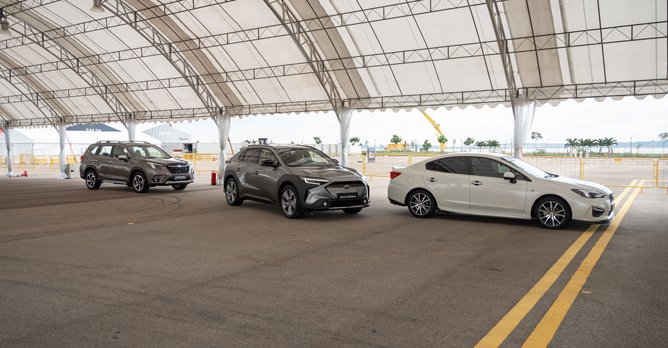 Subaru Solterra's Advance Park function worked flawlessly, but nevertheless, we'd like to see how it fares in the real world Parking, especially parallel parking, can be tricky business for some drivers. This can be an even bigger issue when you're driving a large SUV like the all-electric Solterra.
Subaru's solution to this is Advance Park, a function that can autonomously park the vehicle. And getting it to work couldn't be easier. Once the system is active, all you need to do is select whether you wish to reverse park or parallel park. Then, you confirm the space that the car is to be parked in.
Once done, the Solterra immediately begins parallel parking manoeuvre. It shifts into Reverse, smoothly backs into the space, and shifts into Drive to move the car forward, before putting the gearbox in Park. The driver, in this moment, is merely a passenger.
The system worked faultlessly at the event. Naturally, I would like to try it out in the real world to see how it performs then.
Wrenching the WRX-es
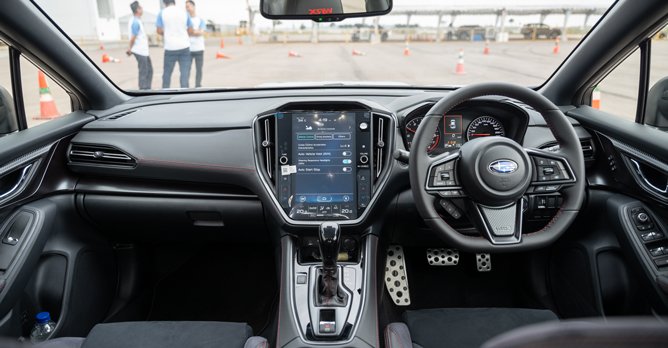 WRX cockpit has a neat layout and comfy seats, but the infotainment system takes getting used to Speaking of speed, I also had a chance to put the all-new WRX Sedan and WRX Wagon through a makeshift circuit.
Two laps per car isn't enough for a review, but the super-short drive did leave me with a few impressions.
First, the new cars look better in real life than they do in photos. The WRX Sedan, looks, shall we say, rather unconventional with the plastic trimmings on its wheel arches. But up close, the car does look handsome.
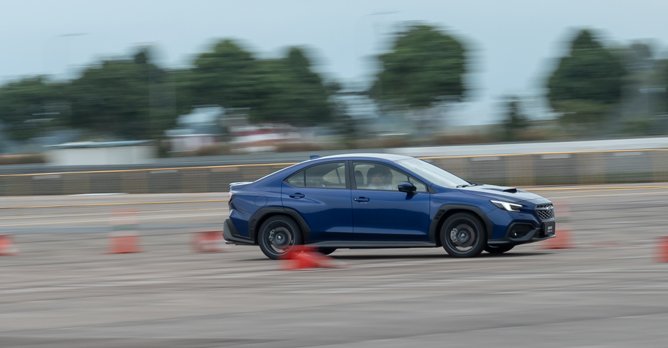 WRX Sedan is more agile than its Wagon sibling and was more fun to hustle around the course Second, the new turbocharged 2.4-litre flat-4 engine is not only smooth, but linear, too. This may sound boring to regular drivers, but once you understand the benefits of this, especially on a racetrack, it's something you'll seek.
The motor, however, is paired to Subaru's Lineartronic CVT, which is unexciting considering the powerplant's potential. Nevertheless, since most drivers prioritise convenience over an engaging drive, they probably won't mind.
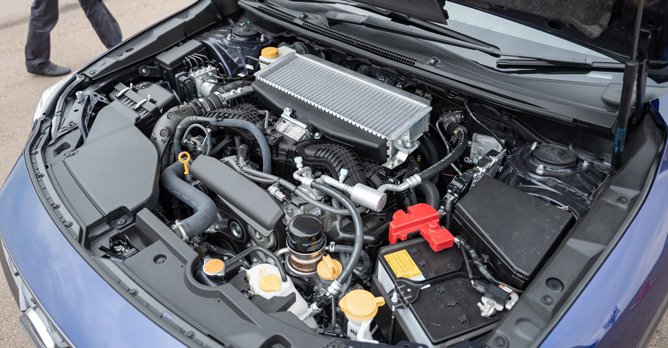 Turbocharged 2.4-litre flat-four has smooth and linear power delivery - it would be great if local buyers could indent the manual variant Both WRXes felt stable and had positive turn in, with the nose feeling like it would 'flatten' to hug the road. Meanwhile, the all-wheel drive system was able to find grip on an otherwise slippery surface, made even less grippy by the worn tyres.
Between the two, the WRX Sedan felt more agile. But the Wagon, with its useful and flexible boot space, would be more attractive to me. The fact that I find it more attractive than the Sedan is a definite bonus.
Interested in Subaru models? These stories will interest you
Subaru launches the WRX and WRX Wagon in Singapore
Subaru Solterra makes global debut
Subaru Forester e-Boxer Mild Hybrid gets an update
However, like all carmakers, Subaru has also been hard at work improving vehicle safety. Indeed, EyeSight, the brand's suite of safety and driver assistance features, is now in its fourth generation.
In essence, EyeSight works off a pair of forward-facing stereo cameras that are mounted in front of the rearview mirror. EyeSight is equipped with numerous functions that include Dynamic Radar Cruise Control, Lane Tracing Assist, and Pre-Collision System. We put several of these to the test at the brand's event in Changi Exhibition Centre.
EyeSight Testing
To activate the former two features, I accelerated to 60km/h while driving beside a yellow line.
EyeSight immediately detected the line and flashed an indicator on the dashboard to notify me of this. Then, I purposely crossed the line to simulate drifting into an adjacent lane without signalling.
Perhaps there was something with the settings, or perhaps the system needed to see lane markings on either side of the car. Either way, in this situation, the audio alert worked, but the nudging did not.
Next up was the Pre-Collision Braking feature. For this exercise, we had to activate Dynamic Radar Cruise Control, and set EyeSight to track the Forester driving in front.
Now, here's the thing about such safety features. They are great to have, but they must always be seen as a secondary layer - the onus remains on the driver to stop the car.
The same exercise performed by my colleagues proved this point, as some of them actually ended up hitting the board before coming to a halt. Fortunately, nobody was hurt and no Foresters were damaged. But it goes to show that even advanced safety systems can't always prevent mishaps.
Easy-peasy parking
Subaru's solution to this is Advance Park, a function that can autonomously park the vehicle. And getting it to work couldn't be easier. Once the system is active, all you need to do is select whether you wish to reverse park or parallel park. Then, you confirm the space that the car is to be parked in.
Once done, the Solterra immediately begins parallel parking manoeuvre. It shifts into Reverse, smoothly backs into the space, and shifts into Drive to move the car forward, before putting the gearbox in Park. The driver, in this moment, is merely a passenger.
The system worked faultlessly at the event. Naturally, I would like to try it out in the real world to see how it performs then.
Wrenching the WRX-es
Two laps per car isn't enough for a review, but the super-short drive did leave me with a few impressions.
First, the new cars look better in real life than they do in photos. The WRX Sedan, looks, shall we say, rather unconventional with the plastic trimmings on its wheel arches. But up close, the car does look handsome.
The motor, however, is paired to Subaru's Lineartronic CVT, which is unexciting considering the powerplant's potential. Nevertheless, since most drivers prioritise convenience over an engaging drive, they probably won't mind.
Between the two, the WRX Sedan felt more agile. But the Wagon, with its useful and flexible boot space, would be more attractive to me. The fact that I find it more attractive than the Sedan is a definite bonus.
Interested in Subaru models? These stories will interest you
Subaru launches the WRX and WRX Wagon in Singapore
Subaru Solterra makes global debut
Subaru Forester e-Boxer Mild Hybrid gets an update