View page in desktop
|
Report error
  •   Apple app store icon
  • Google play store icon
Terms of Service
|
Privacy Policy
|
PDPA
|
Site Map
©2004-2026 Sgcarmart, Singapore. All rights reserved.
  • Home
  • Car Articles
  • features
  • features Listings
  • Features
  • Unravelling the Lexus Driving Signature: What is it really?

    11 Oct 2024

    |

    3,997 views

    We head to Lexus' test facility to decipher what it's been trying to achieve in its cars in recent years - and why it's so bent on making them feel uniform.

    It hasn't felt like it, given the flurry of car-switching and relentless adrenaline - but an hour-and-a-half has already passed, and with a significant number of laps already clocked, we are finally down to our sixth and final car.

    Instead of casual confidence at this point, however, the feeling when perched behind the wheel - atop of a soft and sumptuous leather throne - is one of intrigue, wonder, and a little bit of fear. After all, this is the largest car we've tackled all afternoon, and perhaps the one you'd be most surprised to see in this environment too: The four-seater Lexus LM500h.
    "Nurburgring in one's own backyard", is how the circuit is first presented to us before we actually hit the tarmac.

    Except that this backyard isn't in western Germany. It's not even located anywhere near continental Europe. 

    Strategically built to be just an hour's drive away from Lexus' headquarters in Nagoya, and designed to put the mettle of any car thrown onto it to the limit, we've instead found ourselves whisked furtively away to a highly-secretive, no-mobile-devices-allowed test track in the Shimoyama facility: Lexus' gleaming new home.

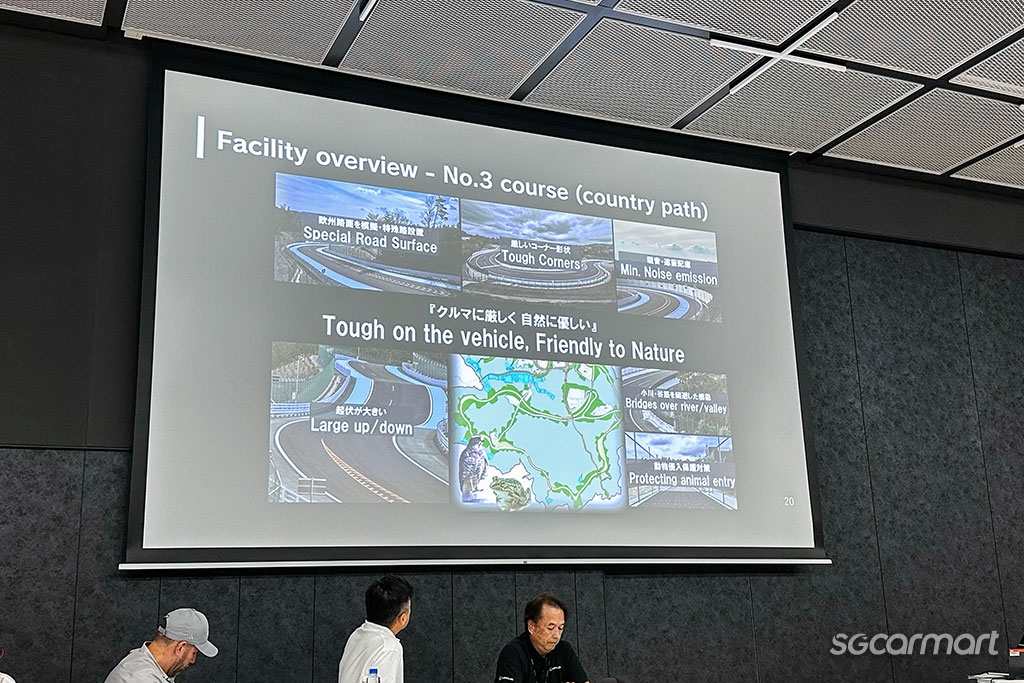
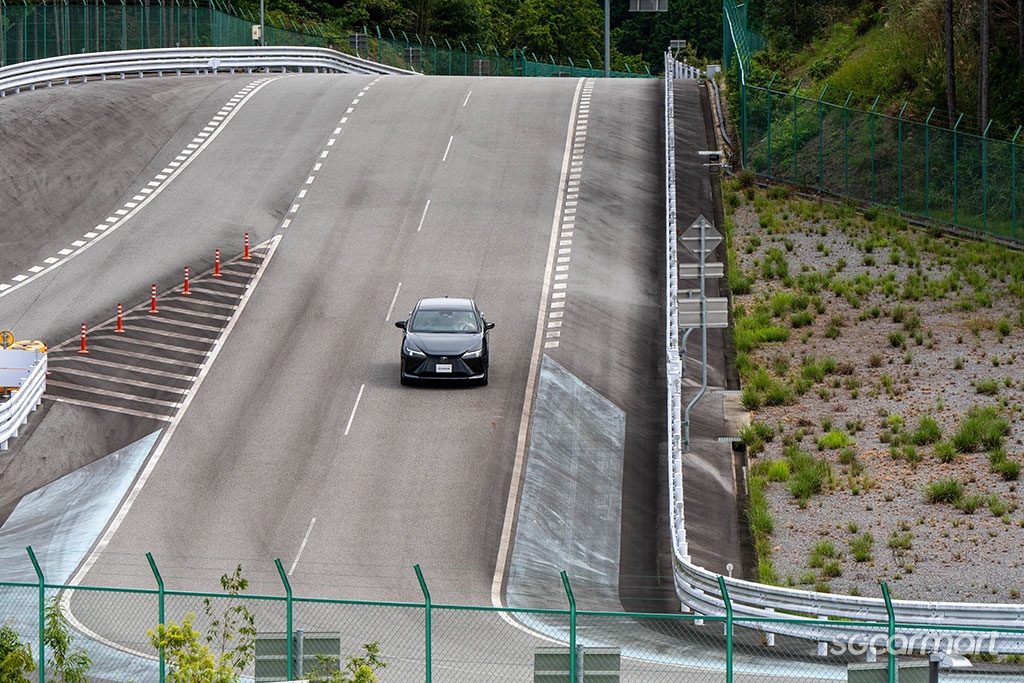
    Every conceivable driving scenario is brought to life on this test track (dubbed the 'No. 3 Course' or 'Country Road') here - all, with fastidious intentionality. 

    One stretch sees a particularly smooth road surface putting a driver at unnatural ease, before leading straight into a particularly undulating one. Another is referred to as a 'jump spot' - essentially a crest that might show a driver some air time if they were to take it with too much gusto. There are also bits lined on purpose with drain gutters. And of course, tough, off-camber corners. 
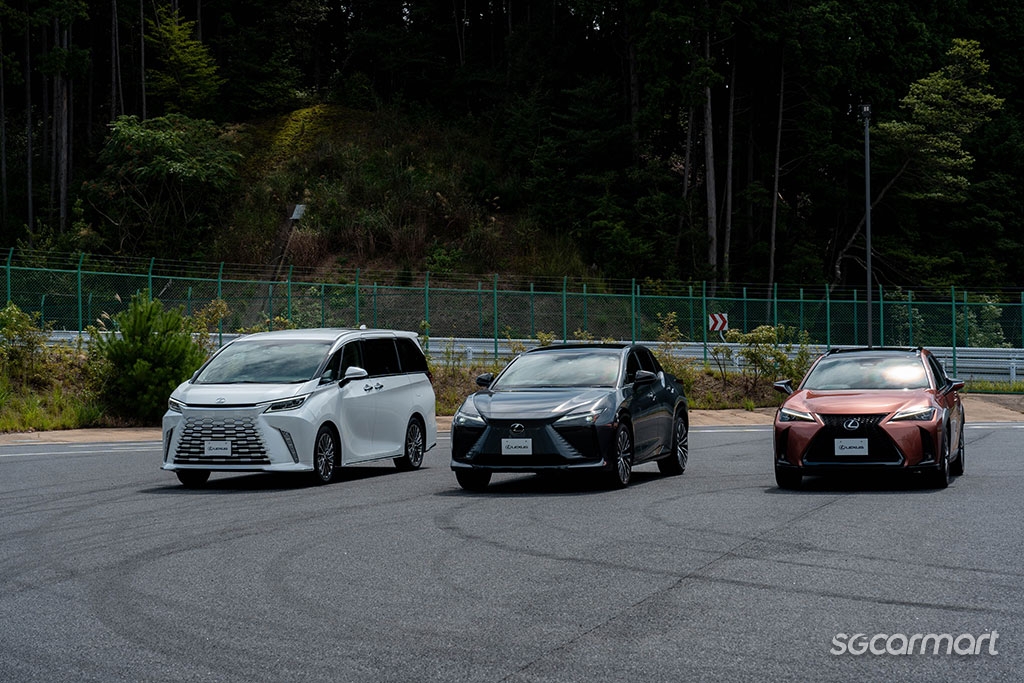
    Introductory notes: What is the Lexus Driving Signature?

    Stuffing all of the above into what is effectively only a 5.3km circuit may sound excessive - but to Lexus, this is likely to register as the bare minimum when taking into consideration what it has been working to establish in recent years. 

    When the heavily facelifted Lexus IS sedan was unveiled to the world in 2020, so too did the brand make sure to slip in the note that it was unlike any other of its cars before: As the first car to bear the Lexus Driving Signature.

    Official notes on the Lexus Driving Signature may seem to vary at first glance, but line them all up together and one should get a rough idea of what Lexus is driving at.

    The facelifted IS Sedan was the first Lexus to officially bear the Lexus Driving Signature

    On the most technical level, it has been dubbed a "new development standard, marked by greater body rigidity and suspension improvements" - "intent on making driving more intuitive". More broadly, Lexus has also referred to it as a "guiding philosophy behind the development of Lexus vehicles", centred on creating a "linear connection" between man and machine.

    But beneath it all, the Lexus Driving Signature (LDS) is interesting for how much it's not supposed to stand out. 

    "The Lexus Driving Signature, in its purest form, is purposefully camouflaged," states the start of a 23-page 'Driving Guide' by Lexus on how a driver would theoretically savour what it has infused into its cars. (It starts even before they climb in.)

    A natural steering feel, and superior ride comfort and handling, are among the key pillars of the Lexus Driving Signature 

    Within it, a six-prong checklist includes "Natural Steering Feel", "Superior Ride Comfort and Handling", "Seamless Continuity of Operations" and "Joy Beyond Driving" as pillars of the Signature.

    A Michelin-star omakase restaurant would have you dig into each dish in meticulously-prepared chronology, in order to derive the most optimum culinary experience. Likewise, Lexus' brand philosophy of anticipating a guest's (or driver's) needs plays out with the Lexus Driving Signature. Here, ease and intuitiveness, already carefully laid out for the driver, are positioned as the focal points - instead of, say, viscerality and drama, as some other carmakers may be wont to do.

    Every single car that Lexus now builds - from compact crossovers, up to the body-on-frame Lexus GX - is now tested rigorously around the No. 3 Course at Shimoyama

    Digging deeper: The importance of human-car dialogue

    Purposely creating something with the intention of it blending so seamlessly into the background - that it might not even be clear to the end-user at first - may sound like a risky decision.

    But as we hear from one of the key figures in vehicle development and testing at Lexus, the Lexus Driving Signature is not about nailing down one specific thing.

    Shuichi Ozaki is a Lexus Takumi (master craftsman) for vehicle driving dynamics. Going into deeper detail about what drives the process of fine-tuning, he explains that it's "more about [constantly] refining the fundamentals - like body rigidity, [fine-tuning the] engine noise, etc".

    Ozaki-san, pictured next to the Lexus GX, is one of the key figures in bringing the Lexus Driving Signature to life in every one of its cars

    In turn, the ultimate goal, sensorily, is for the car to "intuitively interact with the driver in a fluid sense, so there's a perfect dialogue between the two".

    The RZ, as the first bespoke battery-electric vehicle (EV) to be built by Lexus - and also its first BEV to be developed with the LDS in mind - holds up a good example against the rest of its hybrid cars. BEVs are inherently silent, but with sound being a key tool of communication, how does the RZ still achieve the same sort of 'linear connection' as the rest of its partially combustion-powered siblings?

    The remit of a Lexus BEV is still the same as that of its hybrid brethren: It's supposed to be in perfect dialogue with the driver (Pictured: The Lexus RZ out on track)

    Ozaki-san notes, firstly, that the firm's Active Sound Control (ASC) - in essence, a neatly-hidden onboard sound augmenter - allows the firm to "really play with that sound element". But beyond being just a noise generator, the focus comes back again to the notion of human-car dialogue.

    "It's not [just] about how loud the sound is, or how it's coming out. It's meant to be an element that the human driver senses, that then allows them to know what's going on, and then modulate the throttle according to how they feel."

    And above all, perhaps what is most intriguing about the Lexus Driving Signature is the fact that it's not just limited to more driver-oriented machines like the IS; it's supposed to apply to every car in the modern Lexus lineup.

    Back to Shimoyama: Cars shaped by the roads on which they're driven

    Which is why we've just heard some tyre squeal as we tackle our final lap out on the No. 3 Course - again, not in the IS (or ES) sedan, but in the four-seater Lexus LM500h.

    It's one out of a total of seven carefully-selected cars that have been availed to us today. (We get to drive six, leaving the Lexus GX, the firm's flagship body-on-frame SUV - not sold in Singapore - out of the picture.) The goal: To more intimately understand (in as tangible a manner as possible) not just what exactly the LDS entails, but also how this holds across a multitude of cars.

    And on as harsh a proving ground as possible, too. For a brand that prides itself so heavily on the idea of painstaking and artful craftsmanship, it's no surprise that this is the sort of porter's wheel on which every of its cars is moulded into shape. 

    The spread here is notable not just for how it jumps across segments, but also forward and backwards in time.

    With the latter, two pairs of similar-looking cars - a couple of UXes, and a couple of NXes -  have been lined up to illustrate the sorts of improvements enacted when vehicles are upgraded with the Lexus Driving Signature in mind.

    Pictured: The UX ajmigaki. With the Lexus Driving Signature driving development on this upgraded UX, the compact crossover feels both tighter and more refined than its untouched predecessor around the test track

    Ajimigaki, when directly translated into English, compounds the terms 'flavour' and 'polish'. In Lexus-speak, it's used as a figurative suffix both to indicate that a car has been put through a certain degree of enhancement to, well, polish it up, as well as a reference to the larger dynamic and ever-ongoing process of a car's refinement.

    The difference is most pronounced on the first pair we get to try: An older model year iteration of the Lexus UX, and then the one referred to as the UX ajimigaki. (Lexus is quick to note that there are no concrete plans for the ajimigaki cars we drive to hit the market on a fixed timeline; ajimigaki, it notes, is more of a continuous, ongoing process.)

    On the older UX, the ride feels a bit looser - the car exhibiting more lean down twistier sections, and its steering also lacking quite a fair bit in feedback. With our drive of the car coming in earlier on in the test drive section, too, the material result is that of diminished confidence in pushing the car harder.

    Post-ajimigaki, however, the car's transformation is astounding: Tightened up, although not to the point of harshness, with the car holding the line better around more demanding bends.

    Lexus states that apart from the IS, the NX functions as the other core model with which the LDS can be understood

    On that note, the ride is a touch firmer, too - yet also tidier and more settled. When the roads open up to simulated highway sections and the UX ajimigaki is travelling at speed, comfort and refinement feel palpably enhanced.

    The same applies for the Lexus NX, although the situation is slightly different here: While the NX ajimigaki follows in the same spiritual vein of the UX ajimigaki, the 'old' NX we drive takes on a pre-production form.

    Given its positioning as a compact-to-midsize SUV, the NX is particularly significant as one of the firm's volume-models. Likewise, the NX ajimigaki thrives in its sense of neutrality and predictability; it's heavier and taller than the UX, but is willing to be pushed without any attempt to catch the drive off guard. As expected of a larger car, refinement is fantastic, too.

    If the enhanced UX is the more playful younger sibling, here, one is able to appreciate how the NX - as one of the core, representative Lexus models - can serve as the 'do-it-all', most accessible basis from which the driving feel that the brand is working towards can be understood.

    The LM500h and RZ with steer-by-wire tech both serve as highly differing - and thus, all the more effective - examples of Lexus' effort in maintaining the LDS, no matter the drivetrain and technology type, or body style 

    Cars shaped by the roads on which they're driven, Part 2: Different segments, different technologies

    With the UX and NX pairs serving as examples of what polishing can do, the two remaining cars we get to drive are crucial in elucidating the 'linear connection' between man and machine that the Lexus Driving Signature aims to achieve across body styles, drivetrain types, and even amidst new technologies.

    The Lexus LM500h, as you'd expect, is not a car you expect to be taken out 'on track'. But with Lexus expecting it to rise up to the stringent standards of fluidity in feel as the rest of its smaller and nimbler siblings, it's put through the same 'stress test', no less. 

    Understandably, the LM's sheer size means that when it tackles the same tight hairpins as its smaller siblings, there is more body roll (and of course, extra stress on its tyres). Still, its steering maintains a certain level of reassuring weight and feel - and with its all-wheel drive, the car doesn't lack entirely in grip too.

    Although clearly un-sporty, the LM maintains a remarkably similar sense of predictability (for its size) as its siblings - thus making it quite pleasant to be at the helm of still

    It may come with extra weight, but it also has extra power - meaning that off the line, it doesn't feel sluggish. Compared to the UX ajimigaki and NX ajimigaki, the intensity of its sound deadening masks the sense of speed around straights too. The result: It's still immensely pleasant to pilot, and surprisingly, isn't the hapless, clumsy machine you might imagine it to be around a track. 

    On another extreme end resides the other car: A special Lexus RZ. 

    The RZ we have today is not just special because it's the only battery-electric vehicle on hand; it also has a steering yoke that incorporates Lexus' in-development steer-by-wire tech. That's already two stark contrasts: A different drivetrain (bringing with it its own uniqueness in power and sound delivery), and a different steering setup.

    In the face of something foreign, the human mind initially defaults to tentativeness (and some scepticism). Will the steering feel be too sensitive? How will micro-adjustments be implemented mid-turn? Less than a minute into the drive, however, all that fades to the back of the mind.

    True to the promise of the LDS, the three example-Lexuses above (the UX ajimigaki, the NX ajimigaki, and the LM, to be clear) are united above all by their sense of silkiness and linearity. Likewise, the standout quality of this steer-by-wire RZ is its disarming sense of familiarity. 

    That the power from its electric motors is instant, and that the car feels planted thanks to the underfloor placement of its batteries helping to lower its centre of gravity, are but added boons to its delightful sense of silkiness around the No. 3 Course. 

    In constant pursuit of a more clearly-crystallised vision of perfection

    One wonders whether another carmaker would be so eager to, effectively, narrow the band of variation between its cars.

    But Lexus is clear that this one quality - of the finding the most natural-feeling balance - is meant to hold across different body styles, even if how that manifests is given the space to differ.

    As Ozaki-san shares, the work is never complete nor perfect. Nonetheless, the brand's vision of understanding what it means for a car to be in dialogue with its driver is - and now that it's more crystallised than ever, Lexus will keep working towards it. 

    Mattheus Wee
    Story by Mattheus Wee in Nagoya, Japan
    Mattheus is happy he lives in a world with (hot) hatchbacks and good coffeeshops. He also genuinely appreciates an honest MPV.
    Photos by Lexus International, Editorial Team
    24.4k

    Tags

    overseas drive lexus lexus driving signature shimoyama test circuit test track takumi master ajimigaki lexus lm lexus lm500h lexus ux lexus ux250h lexus ux350h lexus nx

    AllReviewsNewsAdviceFeaturesVideos
    • Home
    • Car Articles
    • features
    • features Listings
    • Features

    Unravelling the Lexus Driving Signature: What is it really?

    11 Oct 2024

    |

    3,997 views

    We head to Lexus' test facility to decipher what it's been trying to achieve in its cars in recent years - and why it's so bent on making them feel uniform.

    It hasn't felt like it, given the flurry of car-switching and relentless adrenaline - but an hour-and-a-half has already passed, and with a significant number of laps already clocked, we are finally down to our sixth and final car.

    Instead of casual confidence at this point, however, the feeling when perched behind the wheel - atop of a soft and sumptuous leather throne - is one of intrigue, wonder, and a little bit of fear. After all, this is the largest car we've tackled all afternoon, and perhaps the one you'd be most surprised to see in this environment too: The four-seater Lexus LM500h.

    "Nurburgring in one's own backyard", is how the circuit is first presented to us before we actually hit the tarmac.

    Except that this backyard isn't in western Germany. It's not even located anywhere near continental Europe. 

    Strategically built to be just an hour's drive away from Lexus' headquarters in Nagoya, and designed to put the mettle of any car thrown onto it to the limit, we've instead found ourselves whisked furtively away to a highly-secretive, no-mobile-devices-allowed test track in the Shimoyama facility: Lexus' gleaming new home.

    Every conceivable driving scenario is brought to life on this test track (dubbed the 'No. 3 Course' or 'Country Road') here - all, with fastidious intentionality. 

    One stretch sees a particularly smooth road surface putting a driver at unnatural ease, before leading straight into a particularly undulating one. Another is referred to as a 'jump spot' - essentially a crest that might show a driver some air time if they were to take it with too much gusto. There are also bits lined on purpose with drain gutters. And of course, tough, off-camber corners. 
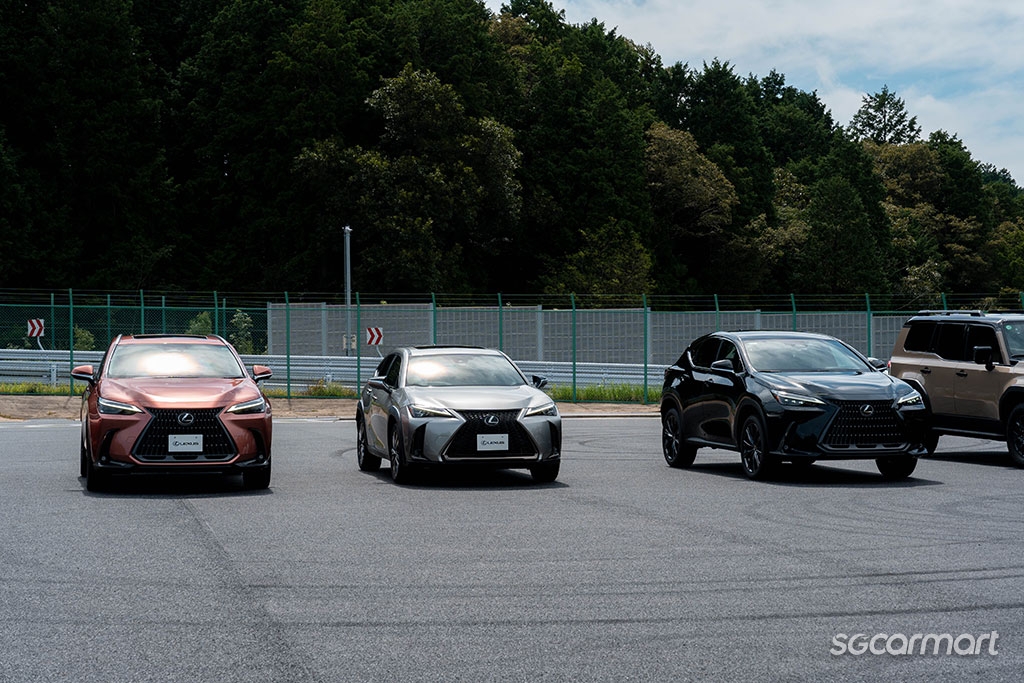
    Introductory notes: What is the Lexus Driving Signature?

    Stuffing all of the above into what is effectively only a 5.3km circuit may sound excessive - but to Lexus, this is likely to register as the bare minimum when taking into consideration what it has been working to establish in recent years. 

    When the heavily facelifted Lexus IS sedan was unveiled to the world in 2020, so too did the brand make sure to slip in the note that it was unlike any other of its cars before: As the first car to bear the Lexus Driving Signature.

    Official notes on the Lexus Driving Signature may seem to vary at first glance, but line them all up together and one should get a rough idea of what Lexus is driving at.
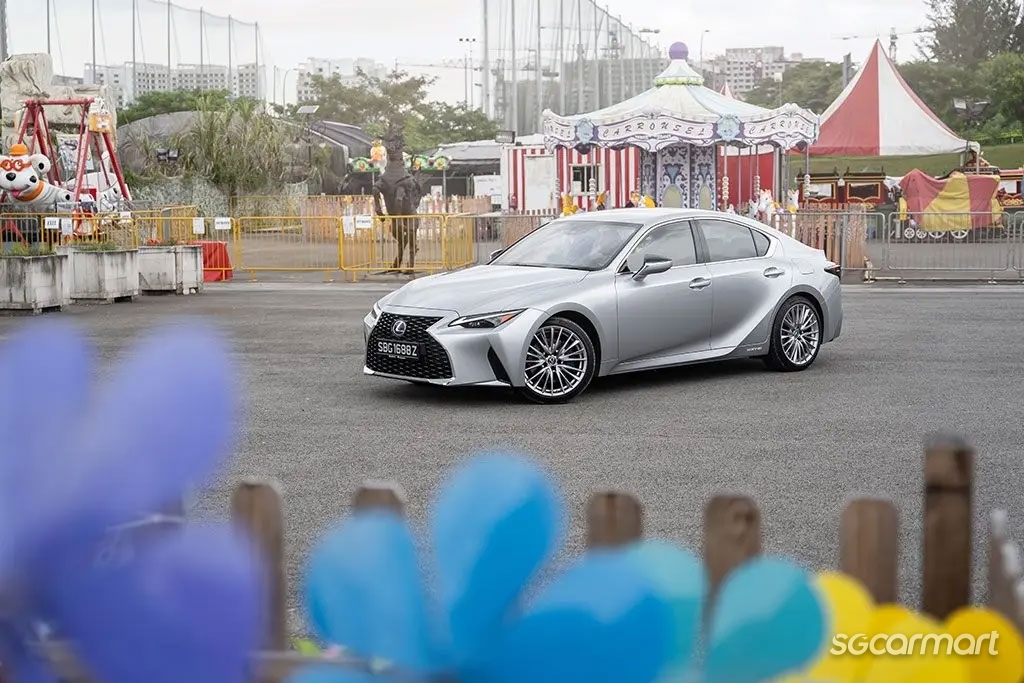
    The facelifted IS Sedan was the first Lexus to officially bear the Lexus Driving Signature

    On the most technical level, it has been dubbed a "new development standard, marked by greater body rigidity and suspension improvements" - "intent on making driving more intuitive". More broadly, Lexus has also referred to it as a "guiding philosophy behind the development of Lexus vehicles", centred on creating a "linear connection" between man and machine.

    But beneath it all, the Lexus Driving Signature (LDS) is interesting for how much it's not supposed to stand out. 

    "The Lexus Driving Signature, in its purest form, is purposefully camouflaged," states the start of a 23-page 'Driving Guide' by Lexus on how a driver would theoretically savour what it has infused into its cars. (It starts even before they climb in.)
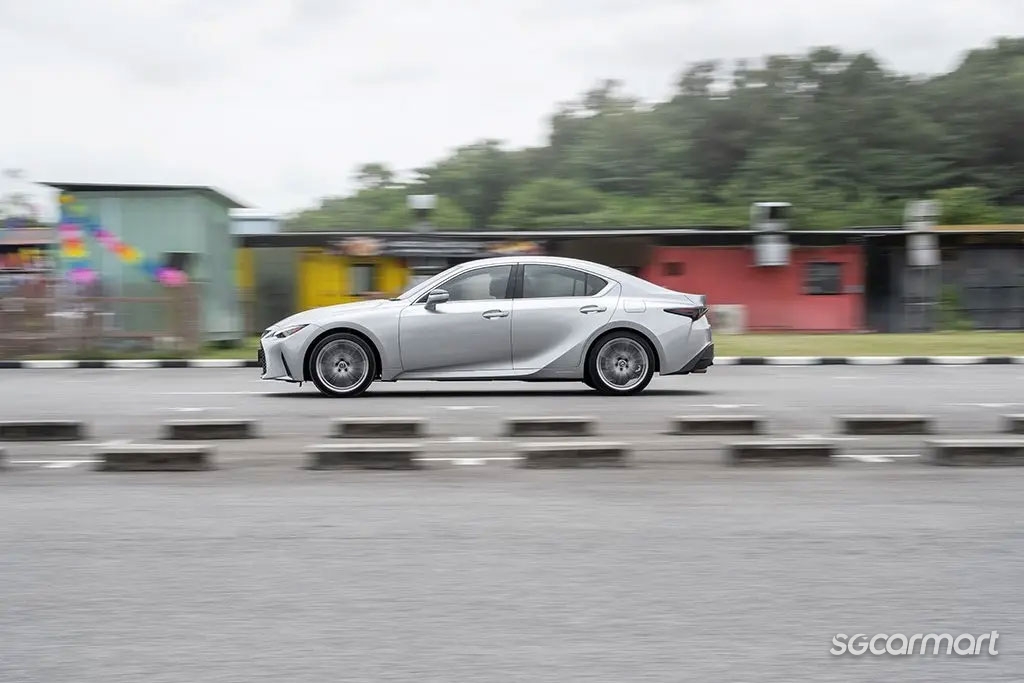
    A natural steering feel, and superior ride comfort and handling, are among the key pillars of the Lexus Driving Signature 

    Within it, a six-prong checklist includes "Natural Steering Feel", "Superior Ride Comfort and Handling", "Seamless Continuity of Operations" and "Joy Beyond Driving" as pillars of the Signature.

    A Michelin-star omakase restaurant would have you dig into each dish in meticulously-prepared chronology, in order to derive the most optimum culinary experience. Likewise, Lexus' brand philosophy of anticipating a guest's (or driver's) needs plays out with the Lexus Driving Signature. Here, ease and intuitiveness, already carefully laid out for the driver, are positioned as the focal points - instead of, say, viscerality and drama, as some other carmakers may be wont to do.
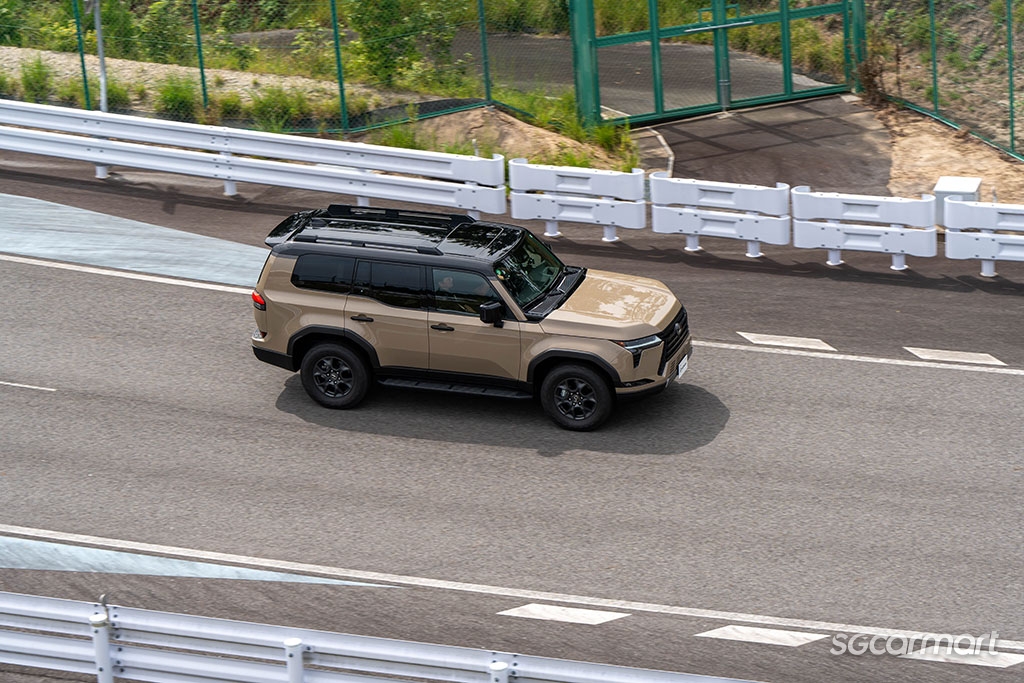
    Every single car that Lexus now builds - from compact crossovers, up to the body-on-frame Lexus GX - is now tested rigorously around the No. 3 Course at Shimoyama

    Digging deeper: The importance of human-car dialogue

    Purposely creating something with the intention of it blending so seamlessly into the background - that it might not even be clear to the end-user at first - may sound like a risky decision.

    But as we hear from one of the key figures in vehicle development and testing at Lexus, the Lexus Driving Signature is not about nailing down one specific thing.

    Shuichi Ozaki is a Lexus Takumi (master craftsman) for vehicle driving dynamics. Going into deeper detail about what drives the process of fine-tuning, he explains that it's "more about [constantly] refining the fundamentals - like body rigidity, [fine-tuning the] engine noise, etc".
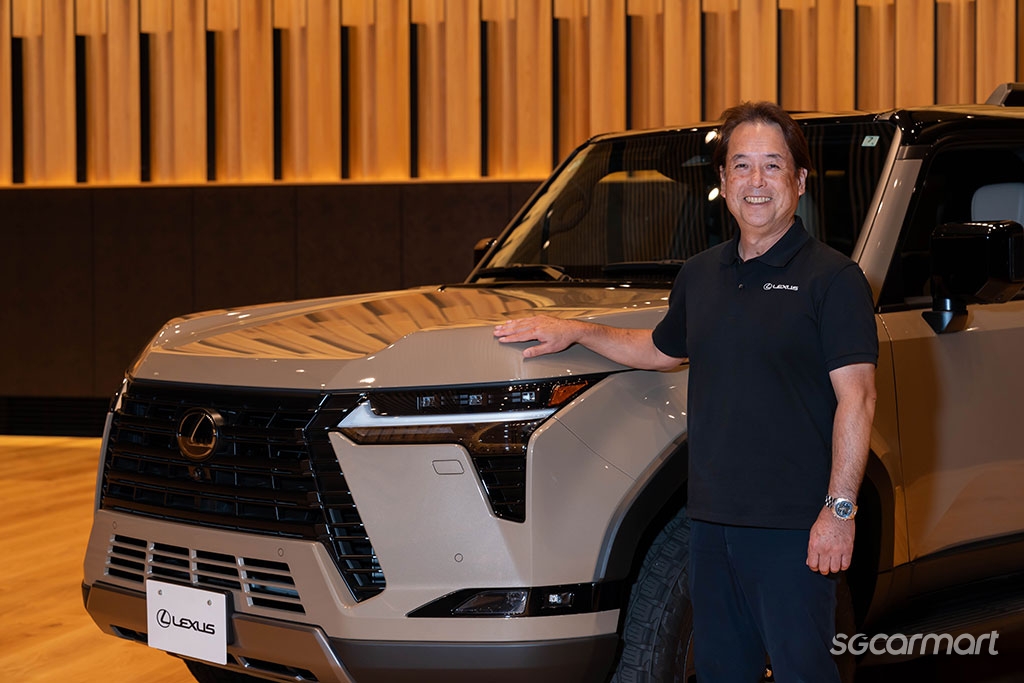
    Ozaki-san, pictured next to the Lexus GX, is one of the key figures in bringing the Lexus Driving Signature to life in every one of its cars

    In turn, the ultimate goal, sensorily, is for the car to "intuitively interact with the driver in a fluid sense, so there's a perfect dialogue between the two".

    The RZ, as the first bespoke battery-electric vehicle (EV) to be built by Lexus - and also its first BEV to be developed with the LDS in mind - holds up a good example against the rest of its hybrid cars. BEVs are inherently silent, but with sound being a key tool of communication, how does the RZ still achieve the same sort of 'linear connection' as the rest of its partially combustion-powered siblings?
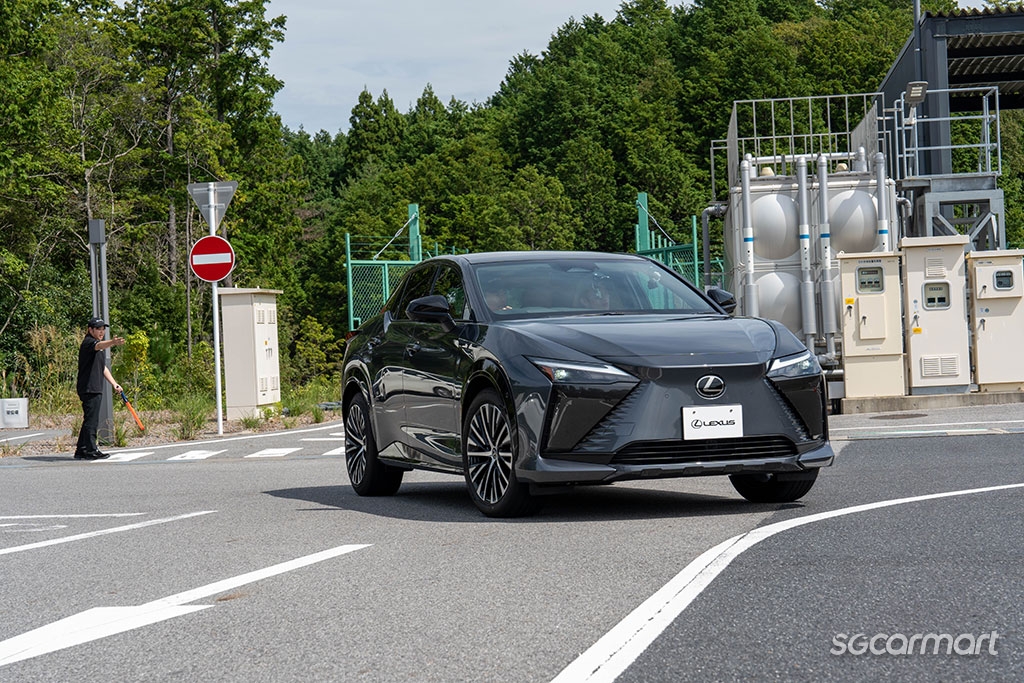
    The remit of a Lexus BEV is still the same as that of its hybrid brethren: It's supposed to be in perfect dialogue with the driver (Pictured: The Lexus RZ out on track)

    Ozaki-san notes, firstly, that the firm's Active Sound Control (ASC) - in essence, a neatly-hidden onboard sound augmenter - allows the firm to "really play with that sound element". But beyond being just a noise generator, the focus comes back again to the notion of human-car dialogue.

    "It's not [just] about how loud the sound is, or how it's coming out. It's meant to be an element that the human driver senses, that then allows them to know what's going on, and then modulate the throttle according to how they feel."

    And above all, perhaps what is most intriguing about the Lexus Driving Signature is the fact that it's not just limited to more driver-oriented machines like the IS; it's supposed to apply to every car in the modern Lexus lineup.
    Back to Shimoyama: Cars shaped by the roads on which they're driven

    Which is why we've just heard some tyre squeal as we tackle our final lap out on the No. 3 Course - again, not in the IS (or ES) sedan, but in the four-seater Lexus LM500h.

    It's one out of a total of seven carefully-selected cars that have been availed to us today. (We get to drive six, leaving the Lexus GX, the firm's flagship body-on-frame SUV - not sold in Singapore - out of the picture.) The goal: To more intimately understand (in as tangible a manner as possible) not just what exactly the LDS entails, but also how this holds across a multitude of cars.

    And on as harsh a proving ground as possible, too. For a brand that prides itself so heavily on the idea of painstaking and artful craftsmanship, it's no surprise that this is the sort of porter's wheel on which every of its cars is moulded into shape. 

    The spread here is notable not just for how it jumps across segments, but also forward and backwards in time.

    With the latter, two pairs of similar-looking cars - a couple of UXes, and a couple of NXes -  have been lined up to illustrate the sorts of improvements enacted when vehicles are upgraded with the Lexus Driving Signature in mind.
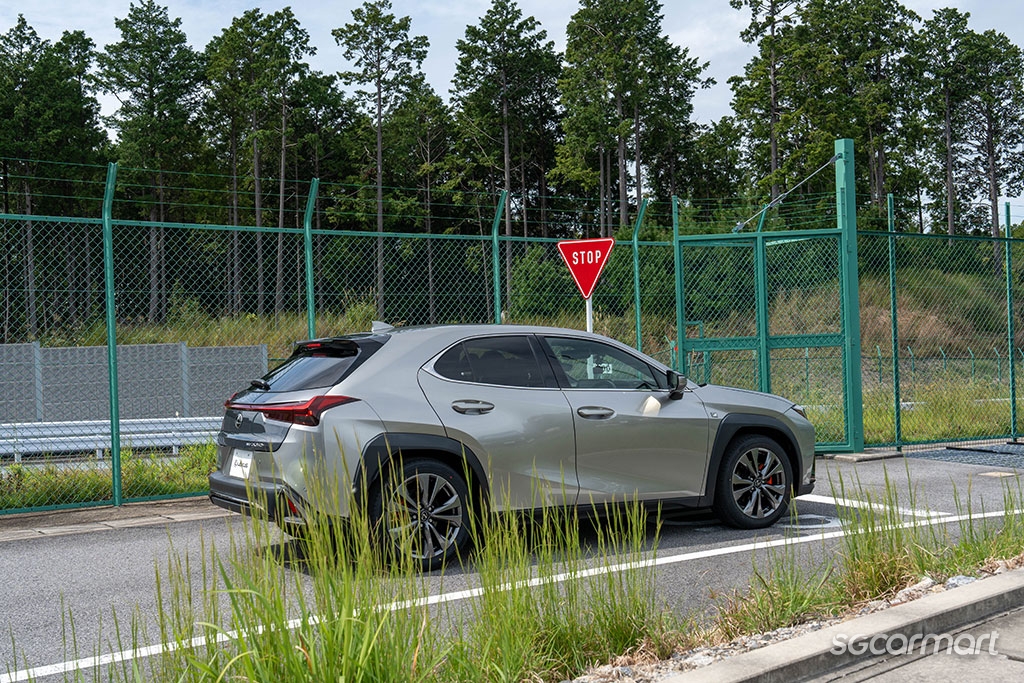
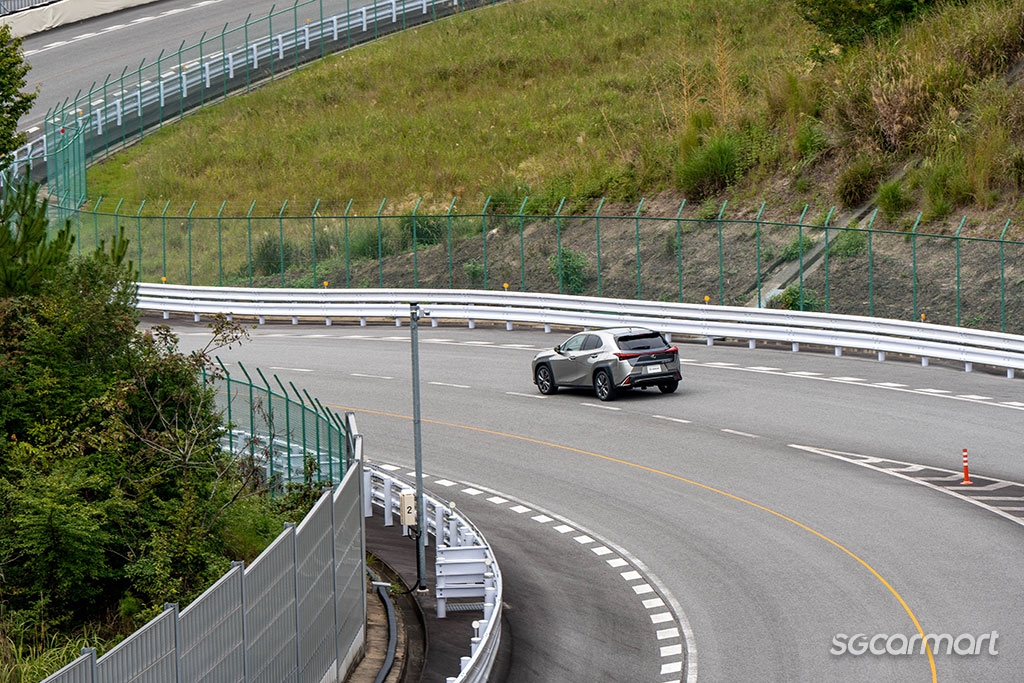
    Pictured: The UX ajmigaki. With the Lexus Driving Signature driving development on this upgraded UX, the compact crossover feels both tighter and more refined than its untouched predecessor around the test track

    Ajimigaki, when directly translated into English, compounds the terms 'flavour' and 'polish'. In Lexus-speak, it's used as a figurative suffix both to indicate that a car has been put through a certain degree of enhancement to, well, polish it up, as well as a reference to the larger dynamic and ever-ongoing process of a car's refinement.

    The difference is most pronounced on the first pair we get to try: An older model year iteration of the Lexus UX, and then the one referred to as the UX ajimigaki. (Lexus is quick to note that there are no concrete plans for the ajimigaki cars we drive to hit the market on a fixed timeline; ajimigaki, it notes, is more of a continuous, ongoing process.)

    On the older UX, the ride feels a bit looser - the car exhibiting more lean down twistier sections, and its steering also lacking quite a fair bit in feedback. With our drive of the car coming in earlier on in the test drive section, too, the material result is that of diminished confidence in pushing the car harder.

    Post-ajimigaki, however, the car's transformation is astounding: Tightened up, although not to the point of harshness, with the car holding the line better around more demanding bends.
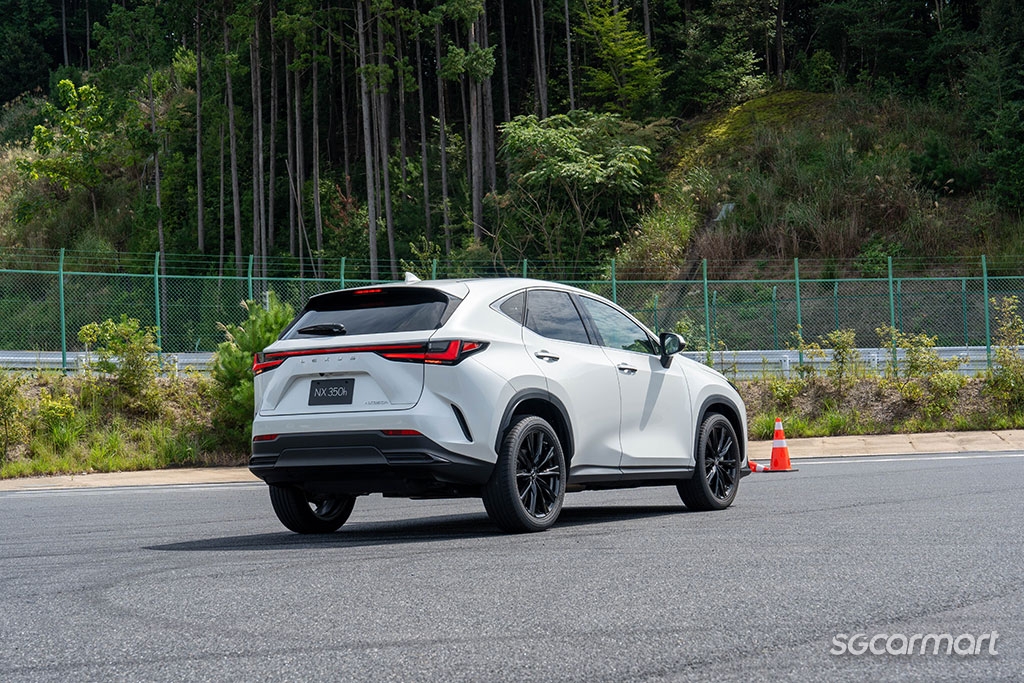
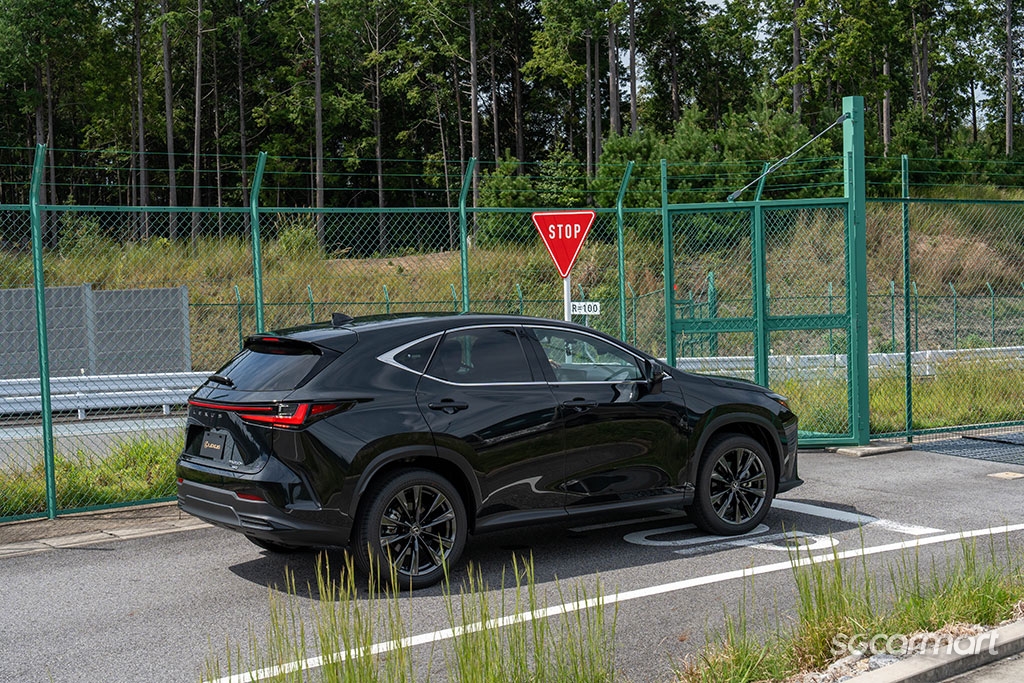
    Lexus states that apart from the IS, the NX functions as the other core model with which the LDS can be understood

    On that note, the ride is a touch firmer, too - yet also tidier and more settled. When the roads open up to simulated highway sections and the UX ajimigaki is travelling at speed, comfort and refinement feel palpably enhanced.

    The same applies for the Lexus NX, although the situation is slightly different here: While the NX ajimigaki follows in the same spiritual vein of the UX ajimigaki, the 'old' NX we drive takes on a pre-production form.

    Given its positioning as a compact-to-midsize SUV, the NX is particularly significant as one of the firm's volume-models. Likewise, the NX ajimigaki thrives in its sense of neutrality and predictability; it's heavier and taller than the UX, but is willing to be pushed without any attempt to catch the drive off guard. As expected of a larger car, refinement is fantastic, too.

    If the enhanced UX is the more playful younger sibling, here, one is able to appreciate how the NX - as one of the core, representative Lexus models - can serve as the 'do-it-all', most accessible basis from which the driving feel that the brand is working towards can be understood.
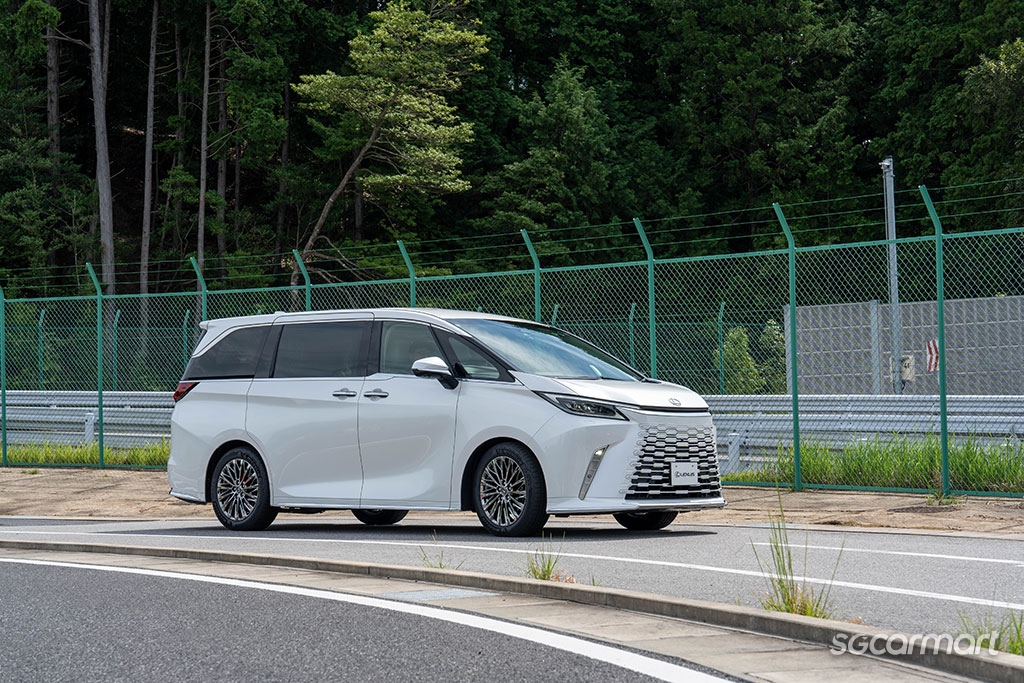
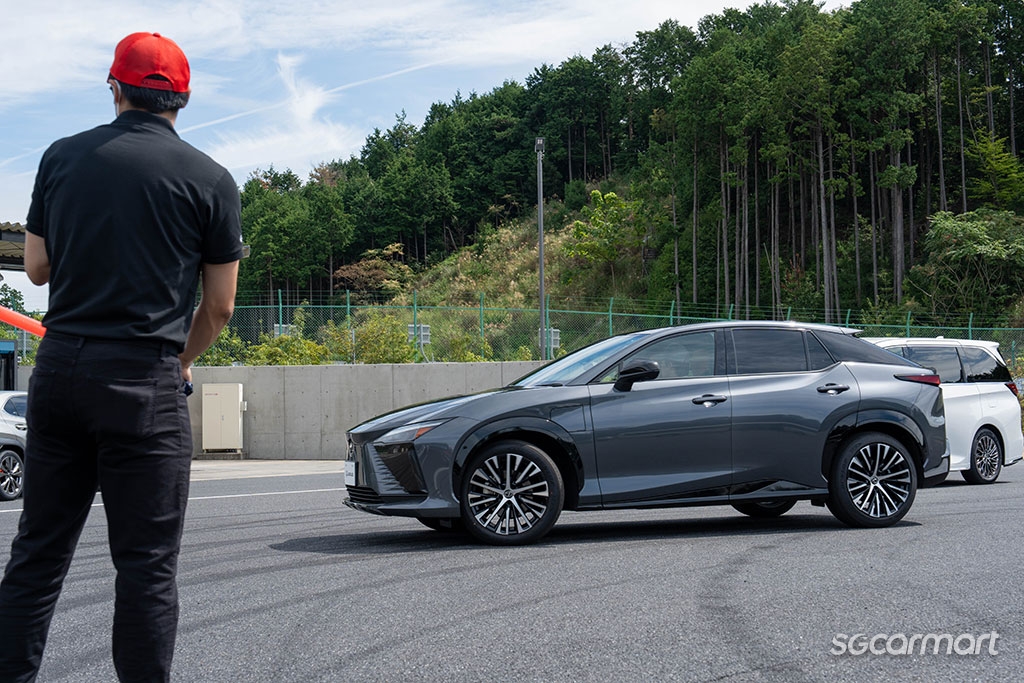
    The LM500h and RZ with steer-by-wire tech both serve as highly differing - and thus, all the more effective - examples of Lexus' effort in maintaining the LDS, no matter the drivetrain and technology type, or body style 

    Cars shaped by the roads on which they're driven, Part 2: Different segments, different technologies

    With the UX and NX pairs serving as examples of what polishing can do, the two remaining cars we get to drive are crucial in elucidating the 'linear connection' between man and machine that the Lexus Driving Signature aims to achieve across body styles, drivetrain types, and even amidst new technologies.

    The Lexus LM500h, as you'd expect, is not a car you expect to be taken out 'on track'. But with Lexus expecting it to rise up to the stringent standards of fluidity in feel as the rest of its smaller and nimbler siblings, it's put through the same 'stress test', no less. 

    Understandably, the LM's sheer size means that when it tackles the same tight hairpins as its smaller siblings, there is more body roll (and of course, extra stress on its tyres). Still, its steering maintains a certain level of reassuring weight and feel - and with its all-wheel drive, the car doesn't lack entirely in grip too.
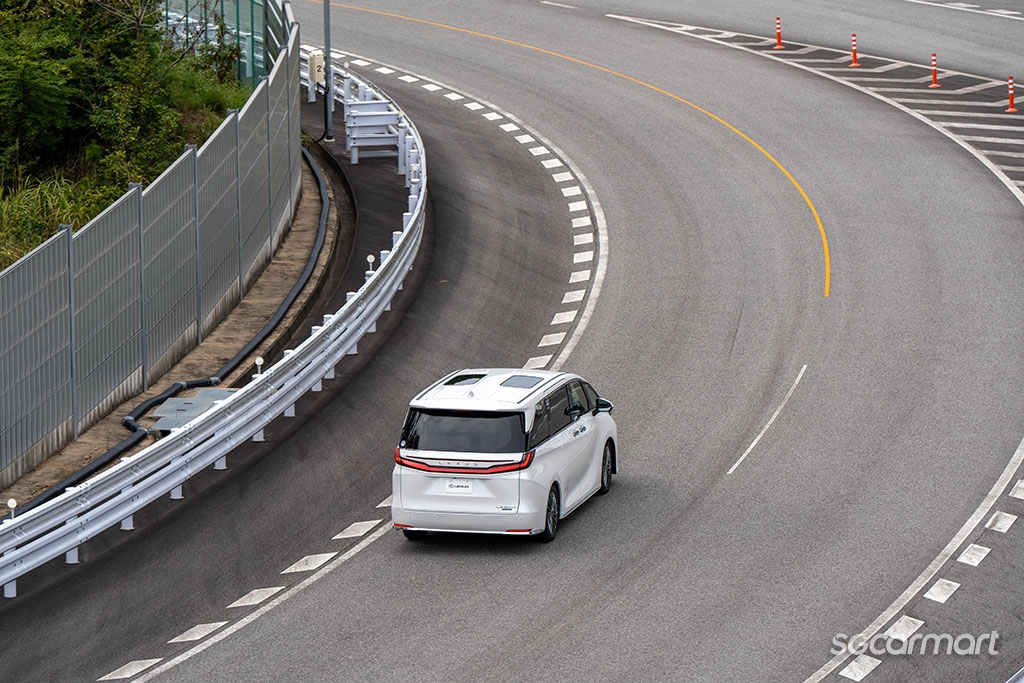
    Although clearly un-sporty, the LM maintains a remarkably similar sense of predictability (for its size) as its siblings - thus making it quite pleasant to be at the helm of still

    It may come with extra weight, but it also has extra power - meaning that off the line, it doesn't feel sluggish. Compared to the UX ajimigaki and NX ajimigaki, the intensity of its sound deadening masks the sense of speed around straights too. The result: It's still immensely pleasant to pilot, and surprisingly, isn't the hapless, clumsy machine you might imagine it to be around a track. 

    On another extreme end resides the other car: A special Lexus RZ. 

    The RZ we have today is not just special because it's the only battery-electric vehicle on hand; it also has a steering yoke that incorporates Lexus' in-development steer-by-wire tech. That's already two stark contrasts: A different drivetrain (bringing with it its own uniqueness in power and sound delivery), and a different steering setup.
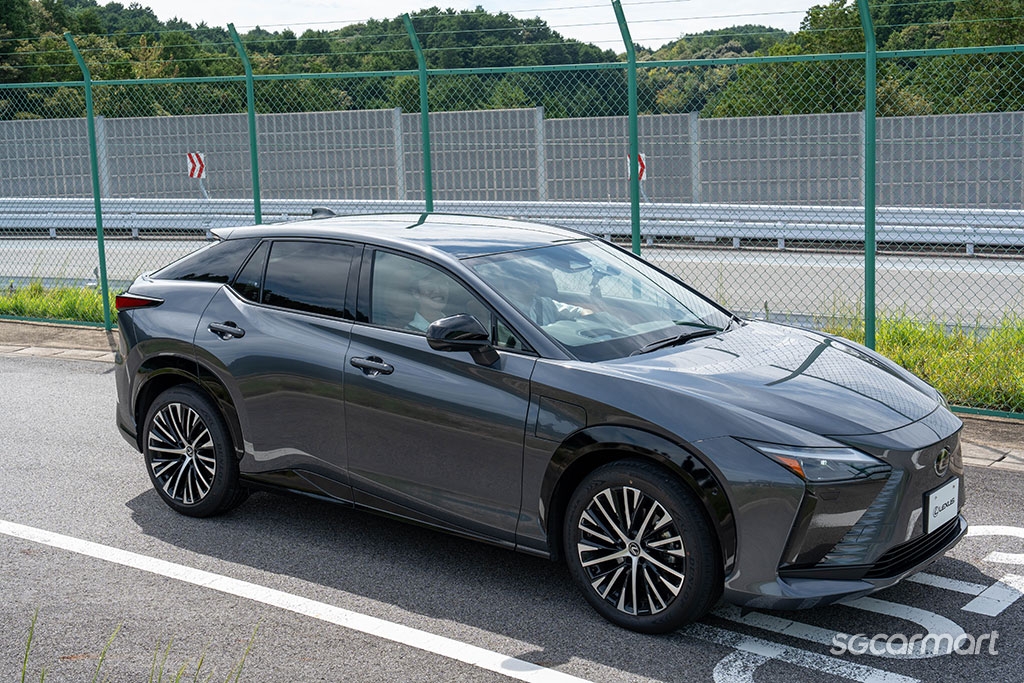
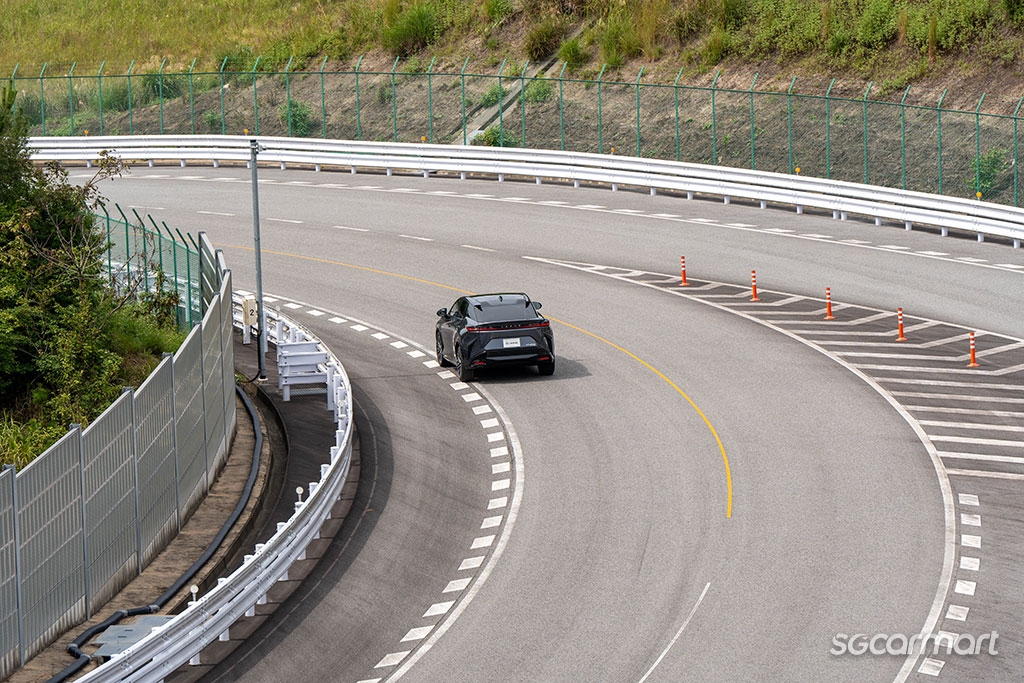
    In the face of something foreign, the human mind initially defaults to tentativeness (and some scepticism). Will the steering feel be too sensitive? How will micro-adjustments be implemented mid-turn? Less than a minute into the drive, however, all that fades to the back of the mind.

    True to the promise of the LDS, the three example-Lexuses above (the UX ajimigaki, the NX ajimigaki, and the LM, to be clear) are united above all by their sense of silkiness and linearity. Likewise, the standout quality of this steer-by-wire RZ is its disarming sense of familiarity. 

    That the power from its electric motors is instant, and that the car feels planted thanks to the underfloor placement of its batteries helping to lower its centre of gravity, are but added boons to its delightful sense of silkiness around the No. 3 Course. 

    In constant pursuit of a more clearly-crystallised vision of perfection

    One wonders whether another carmaker would be so eager to, effectively, narrow the band of variation between its cars.

    But Lexus is clear that this one quality - of the finding the most natural-feeling balance - is meant to hold across different body styles, even if how that manifests is given the space to differ.

    As Ozaki-san shares, the work is never complete nor perfect. Nonetheless, the brand's vision of understanding what it means for a car to be in dialogue with its driver is - and now that it's more crystallised than ever, Lexus will keep working towards it. 

    Mattheus Wee
    Story by Mattheus Wee in Nagoya, Japan
    Mattheus is happy he lives in a world with (hot) hatchbacks and good coffeeshops. He also genuinely appreciates an honest MPV.
    Photos by Lexus International, Editorial Team
    24.4k

    Tags

    overseas drive lexus lexus driving signature shimoyama test circuit test track takumi master ajimigaki lexus lm lexus lm500h lexus ux lexus ux250h lexus ux350h lexus nx

    Newsletter

    Be Notified On The Latest News

    Newsletter

    Be Notified On The Latest News

    lexus nx350
    lexus rz
    steer-by-wire
    lexus nx350
    lexus rz
    steer-by-wire

    Related Articles

    Should I buy a car in July / August / September 2026?

    Should I buy a car in July / August / September 2026?

    16 noteworthy production models at the 2026 Auto Beijing!

    16 noteworthy production models at the 2026 Auto Beijing!

    Opinion: Why do we even need green number plates?

    Opinion: Why do we even need green number plates?

    Us against the world: Which is the best off-roader?

    Us against the world: Which is the best off-roader?

    The all new XPENG Mona L03 is one smart coupe SUV

    The all new XPENG Mona L03 is one smart coupe SUV

    Ferrari 849 Testarossa Spider - with the sky included

    Ferrari 849 Testarossa Spider - with the sky included

    The 5 main things you must know about the XPENG L03

    The 5 main things you must know about the XPENG L03

    Designing around real life: The BMW iX3 in Bangkok

    Designing around real life: The BMW iX3 in Bangkok

    Related Articles

    Should I buy a car in July / August / September 2026?

    Should I buy a car in July / August / September 2026?

    16 noteworthy production models at the 2026 Auto Beijing!

    16 noteworthy production models at the 2026 Auto Beijing!

    Opinion: Why do we even need green number plates?

    Opinion: Why do we even need green number plates?

    Us against the world: Which is the best off-roader?

    Us against the world: Which is the best off-roader?

    The all new XPENG Mona L03 is one smart coupe SUV

    The all new XPENG Mona L03 is one smart coupe SUV

    Ferrari 849 Testarossa Spider - with the sky included

    Ferrari 849 Testarossa Spider - with the sky included

    The 5 main things you must know about the XPENG L03

    The 5 main things you must know about the XPENG L03

    Designing around real life: The BMW iX3 in Bangkok

    Designing around real life: The BMW iX3 in Bangkok

    You May Also Like

    Get your next rental from AKA Car Rental

    Get your next rental from AKA Car Rental

    New to driving? Here's how to become a better driver

    New to driving? Here's how to become a better driver

    Sgcarmart Explores: 2026 National Day Edition!

    Sgcarmart Explores: 2026 National Day Edition!

    Dunlop's new tyres for an electrified world

    Dunlop's new tyres for an electrified world

    Corvette Stingray Review

    Corvette Stingray Review

    Omoda & Jaecoo is forging ahead with its Super AI cockpit

    Omoda & Jaecoo is forging ahead with its Super AI cockpit

    A first look at the Sitrak Light eTruck!

    A first look at the Sitrak Light eTruck!

    The new Pirelli Cinturato Rosso with Seal Inside Tech!

    The new Pirelli Cinturato Rosso with Seal Inside Tech!

    You May Also Like

    Get your next rental from AKA Car Rental

    Get your next rental from AKA Car Rental

    New to driving? Here's how to become a better driver

    New to driving? Here's how to become a better driver

    Sgcarmart Explores: 2026 National Day Edition!

    Sgcarmart Explores: 2026 National Day Edition!

    Dunlop's new tyres for an electrified world

    Dunlop's new tyres for an electrified world

    Corvette Stingray Review

    Corvette Stingray Review

    Omoda & Jaecoo is forging ahead with its Super AI cockpit

    Omoda & Jaecoo is forging ahead with its Super AI cockpit

    A first look at the Sitrak Light eTruck!

    A first look at the Sitrak Light eTruck!

    The new Pirelli Cinturato Rosso with Seal Inside Tech!

    The new Pirelli Cinturato Rosso with Seal Inside Tech!