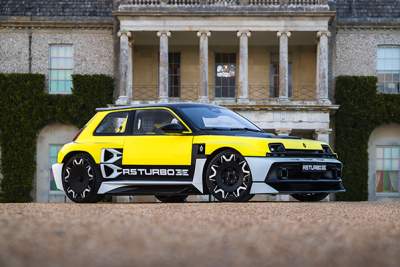
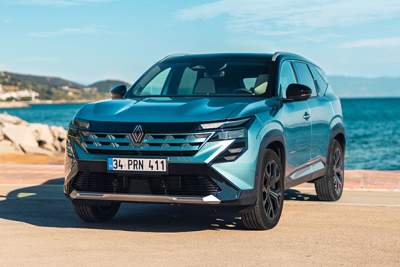
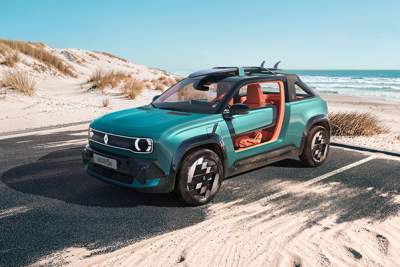
Renault has lifted the lid on two innovations based on its EOLAB prototype, both of which are scheduled to appear in production cars in 2015. At the same time the innovative French company has revealed three longer-term approaches to low fuel consumption, low emissions mobility.
All of them were unveiled at an Innovations@Renault event in Paris, where the company's Co-operative Innovations Laboratory (LCI) - a think tank that unites engineers, designers and customer survey specialists - gave a behind-the-scenes peek into how Renault powertrains and propulsion systems might evolve in the next few years.
Renault has developed a new, more efficient and more compact electric motor and a new turbocharged petrol engine adapted for use with liquified petroleum gas (LPG), both of which are scheduled for introduction next year.
Looking further ahead, Renault and its partners are looking at a mild hybrid diesel prototype (HYDIVU project), a diminutive two-stroke diesel engine (POWERFUL project) and a small electric delivery vehicle based on the Twizy (VELUD project) as the basis for clean, low-cost urban mobility.
All these projects are the work of LCI, a group within Renault which has been given the freedom to step outside the framework of conventional product programmes and come up with completely original mobility solutions. The Twizy, Renault's NEXT TWO autonomous connected vehicle prototype and EOLAB are just some of the solutions already created by LCI.